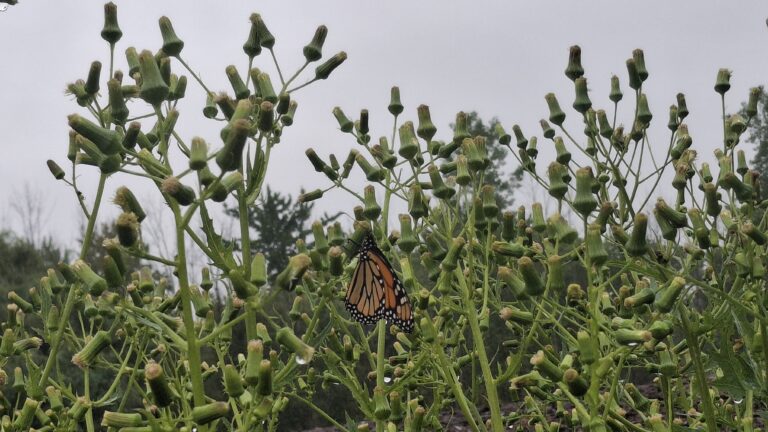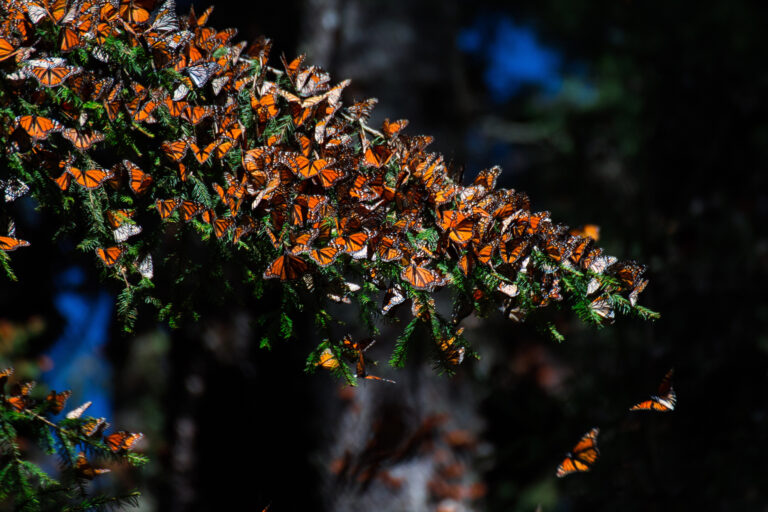
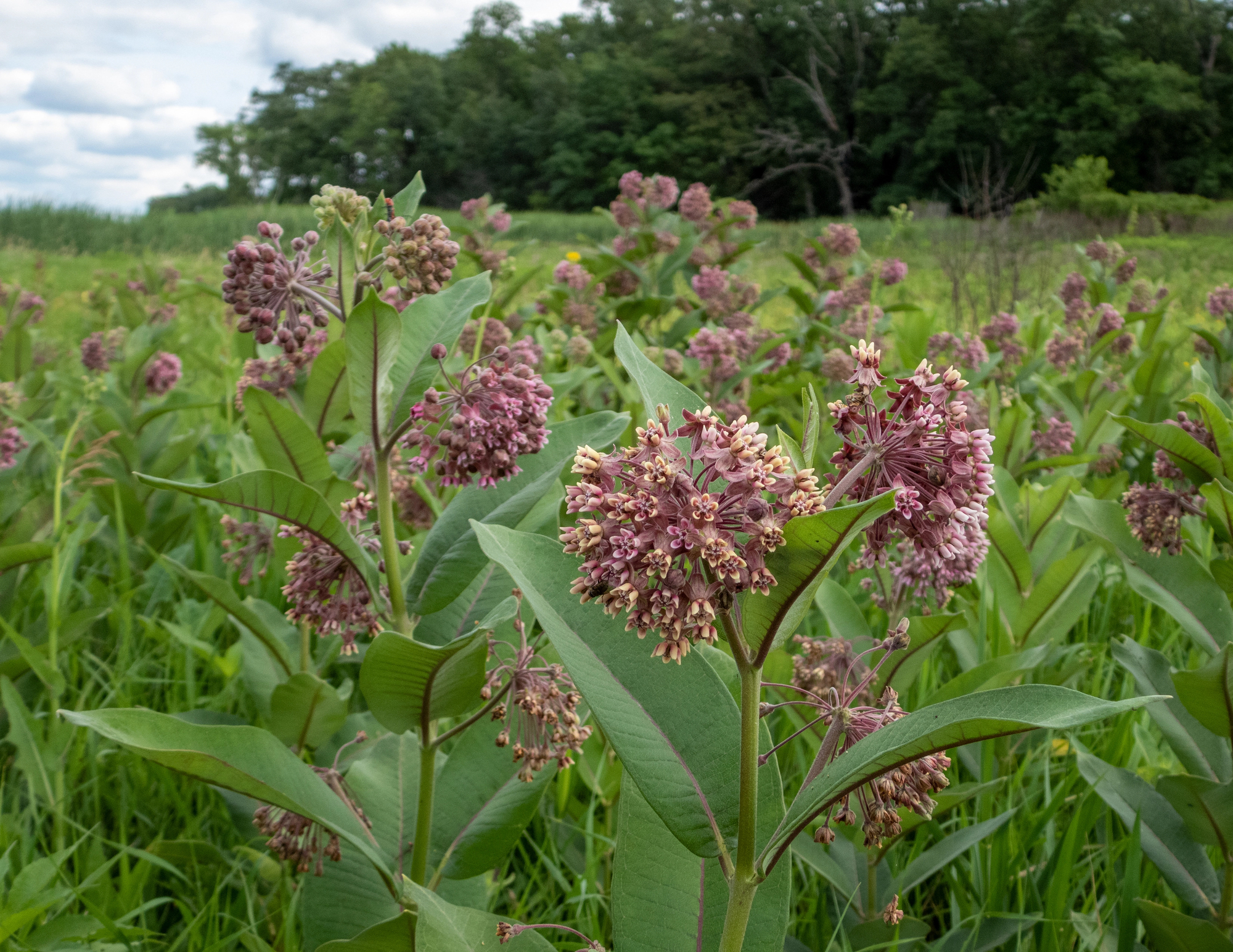

Female monarch butterflies are selective about where they lay their eggs. Even in a yard filled with milkweed, they may inspect dozens of plants before choosing one. Some patches may receive several eggs, while others are completely ignored.
Factors that influence where a monarch lays eggs include:
- Plant species
- Plant size and age
- Sunlight
- Wind exposure
- Competition from other insects
- Nearby nectar sources
Researchers still don’t fully understand all the factors that influence a monarch’s choices.
Timing Matters
One of the most common reasons you don’t see caterpillars is simply that it’s too early or too late.
Monarchs arrive at different times depending on where you live. In the Northeast, numbers often increase as the summer progresses, with egg-laying continuing well into August.
Even if you’ve seen several adult butterflies, they may only be passing through or feeding before moving on to lay eggs elsewhere.
Tiny Eggs Are Easy to Miss
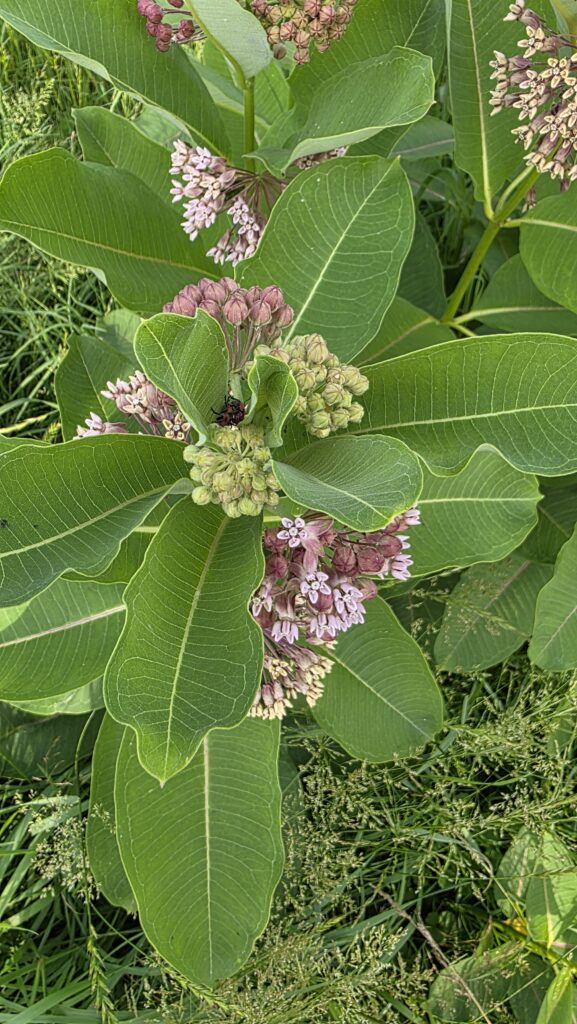
A monarch egg is about the size of a pinhead. It’s creamy white and usually attached to the underside of a milkweed leaf.
Unless you’re looking closely, you can easily overlook dozens of eggs.
Try checking:
- The undersides of young leaves
- Tender new growth
- Leaves near the top of the plant
A magnifying glass can make the search much easier.
Caterpillars Don’t Stay Small for Long
Freshly hatched monarch caterpillars are tiny. During their first few days, they often feed in small areas that are difficult to notice.
Instead of large holes, you may only see:
- Small scrape marks
- Tiny pinholes
- Missing leaf edges
- Black droppings (frass)
Within a week or two, larger caterpillars become much easier to spot.
Predators Take a Heavy Toll
Not every monarch egg becomes a butterfly. Spiders, ants, wasps, lady beetles, assassin bugs, lacewing larvae, birds, and other predators eat monarch eggs and young caterpillars every day.
Scientists estimate that only a small percentage of monarch eggs survive to adulthood in the wild. Finding no caterpillars doesn’t necessarily mean no eggs were laid.
Weather Can Affect Survival
Heavy rain, strong winds, and unusually hot or cold temperatures can reduce survival. Young caterpillars are especially vulnerable during storms. A stretch of difficult weather may remove many eggs before you ever notice them.
Healthy Milkweed Is Still a Success
It can be frustrating to see beautiful milkweed with no feeding damage, but healthy plants are still an important part of the monarch’s habitat. Milkweed patches often become more productive over time as local butterfly populations discover them. Patience is part of creating wildlife habitat.
Should You Buy Monarch Eggs or Caterpillars?
Some companies sell monarch eggs or caterpillars for educational purposes.
While raising monarchs can be rewarding, many conservation groups encourage gardeners to focus first on creating high-quality habitat. Healthy milkweed, diverse nectar plants, clean water, and pesticide-free landscapes naturally support monarchs and many other beneficial insects.
Before purchasing eggs or caterpillars, check current recommendations from your state’s conservation agencies or local extension office.
How to Make Your Yard More Attractive to Monarchs
If monarchs visit but rarely leave eggs, consider improving the habitat by:
- Planting several species of native milkweed.
- Adding nectar flowers that bloom from spring through fall.
- Avoiding insecticides whenever possible.
- Leaving some areas of the yard natural.
- Planting milkweed in sunny locations.
- Growing larger patches instead of single plants.
These changes also benefit native bees, butterflies, hummingbirds, and many other pollinators.
Frequently Asked Questions
Why do I have milkweed but no monarch caterpillars?
Monarchs may not have laid eggs yet, eggs may have been eaten by predators, or the caterpillars may still be too small to notice.
Can monarch butterflies find one milkweed plant?
Yes, but larger patches are generally easier for female monarchs to locate and often receive more eggs.
Should I move monarch eggs indoors?
Most conservation organizations recommend allowing monarchs to complete their life cycle naturally whenever possible. Outdoor habitat supports healthier ecosystems and avoids many of the challenges of raising caterpillars indoors.
Do monarch caterpillars eat all milkweed species?
Most native milkweed species serve as host plants for monarch caterpillars, although some species are used more frequently than others depending on your region.
Every Milkweed Patch Makes a Difference
Even if you don’t see caterpillars this year, your milkweed is providing valuable habitat. Monarch populations naturally rise and fall from year to year, and it can take time for butterflies to discover new patches. By continuing to grow milkweed and other native flowering plants, you’re helping create the connected habitats monarchs and countless other pollinators need to survive.
If you’re interested in Monarchs, see our other articles: A Rare Win Story for Monarch Butterflies, Where Butterflies Go in Fall, The Monarch Butterfly Population Rebound, and A Potential Win for Monarchs Happening Along Roadsides.
🌿 Gear Up for a Bee-Friendly Garden
Contains affiliate links, for full disclosure, see FTC Disclosure, here.
Looking for tools that actually work?
We’ve pulled together our favorite picks for beekeeping, gardening, and pollinator-friendly seeds—everything you need to support bees and grow a thriving space.
Browse the full list on Amazon — all in one spot.