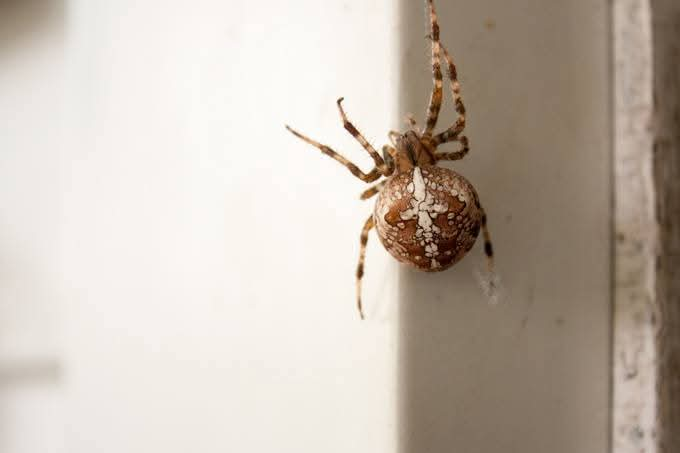
Orb weaver spiders become a familiar sight in late summer and fall, stretching their round webs between garden plants, porch posts, and tree branches. Many have spent months growing nearby, but their larger bodies and webs make them much harder to miss as the season winds down, especially when one takes up residence beside a doorway or across a garden path.
We haven’t discussed spiders much on Bees Haven, but spiders, Arachnids, are an important part of our natural world. They eat lots of insects that are pests to humans and wildlife. They also feed on insects that are plant pests.
Why Are Orb Weavers So Noticeable in Fall?
Many orb weavers hatch earlier in the year and grow through the warmer months. The tiny spiders that were easy to overlook in spring become much more noticeable as adults, with females often drawing the most attention.
Their timing puts them right alongside pumpkins, falling leaves, and Halloween decorations. Large orb weavers around porches and ornamental plants are a normal late-season sight.
What Is an Orb Weaver?
The name describes the rounded web these spiders build. Silk strands stretch outward from the center like spokes on a wheel, with more silk forming circles around them.
An orb weaver may wait near the middle of the web or hide in a sheltered spot beside it. When an insect becomes caught, vibrations travel through the silk and alert the spider. The web serves as both a trap and a way to sense what is happening beyond the spider’s reach.
Orb weavers are a group of spiders, not a single species. Their colors, markings, body shapes, and preferred web locations vary, so a round web alone cannot identify its builder.
Why Do They Build Webs Near Porch Lights?
A lighted porch can provide a steady supply of flying insects. Orb weavers take advantage of that activity by building where prey is likely to pass.
Cornell notes that web-building spiders often settle near lights or reflective surfaces because those places attract insects. A spider beside the porch light has found a useful hunting spot, even if it’s inconvenient for everyone walking through the door.
Do Orb Weavers Eat Bees?
They can. An orb web catches insects that fly or tumble into it, including pollinators and insects that damage plants.
A pollinator garden supports more than the animals visiting its flowers. Predators also live there, taking advantage of the food and shelter the habitat provides. An occasional bee caught in a web does not make the spider an intruder that needs removing.
Spiders are also prey themselves. Birds, other spiders, and some wasps feed on them, placing orb weavers within the same food web as the insects they catch.
Are Orb Weaver Spiders Dangerous?
Common garden orb weavers generally pose little risk to people. They focus on catching prey, and watching from a comfortable distance gives them little reason to defend themselves.
They should still be left unhandled. A spider that is grabbed or squeezed may bite in defense, so there is no need to pick one up to get a closer look.
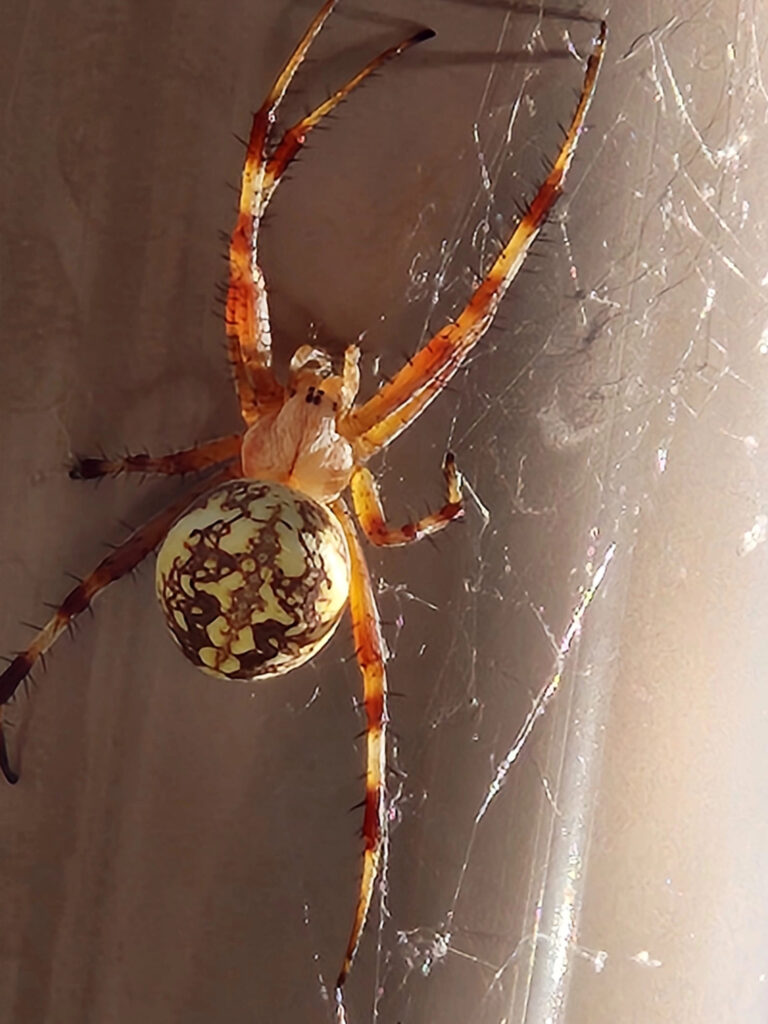
What Happens to Orb Weavers in Winter?
The answer depends on the species, but many familiar garden orb weavers leave egg sacs behind as their adult lives end in fall. Those protected eggs carry the next generation through winter.
Marbled orb weavers are one example. Their eggs spend winter inside silk sacs tucked among leaves and twigs, then hatch in spring. The adults do not survive the winter, even when a large female remains visible well into the cooler weather.
This is another reason to look carefully before clearing every stem and scrap of vegetation from the garden. An apparently empty corner may hold an egg sac that is easy to overlook.
Making Room for the Web Builders
A web stretched across a doorway may need to go, but one tucked between shrubs can usually stay. When practical, leaving the spider undisturbed lets it keep hunting without any work from the gardener.
If spiders repeatedly gather around an entrance, reducing unnecessary outdoor lighting can make that spot less attractive to their prey. Cornell also notes that repeatedly removing webs can encourage spiders to move elsewhere.
Fall garden cleanup leaves plenty of decisions about what to cut, rake, and carry away. A web in an unused corner is one thing that can stay right where it is.
🌿 Gear Up for a Bee-Friendly Garden
Contains affiliate links, for full disclosure, see FTC Disclosure, here.
Looking for tools that actually work?
We’ve pulled together our favorite picks for beekeeping, gardening, and pollinator-friendly seeds—everything you need to support bees and grow a thriving space.
Browse the full list on Amazon — all in one spot.