
Plants are the foundation of any hummingbird garden. While feeders provide a quick source of sugar water, hummingbirds rely on flowering plants for natural nectar, tiny insects, shelter, and safe places to rest. A garden filled with a variety of blooming plants can attract hummingbirds from spring through fall while also supporting bees, butterflies, and other important pollinators.
Plants Hummingbirds Love
Choosing the right plants can turn an ordinary yard into a hummingbird paradise. Brightly colored, nectar-rich flowers provide the energy hummingbirds need to fuel their incredibly fast metabolism. Native plants are often the best choice because they bloom at the right time and are well suited to local growing conditions.
What Makes a Plant Attractive to Hummingbirds?
Hummingbirds are drawn to flowers that:
- Produce lots of nectar
- Have tubular or trumpet-shaped blooms
- Bloom over a long period
- Grow in clusters for easy feeding
- Are red, orange, pink, or purple (although hummingbirds visit many flower colors)
Unlike bees, hummingbirds rely more on sight than smell when searching for flowers.
Best Perennial Flowers for Hummingbirds
Perennials return every year, making them an easy way to provide a dependable nectar source.
Bee Balm (Monarda)
Bee balm is one of the best hummingbird plants. Its bright red, pink, or purple flowers bloom in midsummer when hummingbirds are raising young.
- USDA Zones: 3–9
- Sun: Full sun to partial shade
- Bloom: Summer
Cardinal Flower (Lobelia cardinalis)
The brilliant red flowers seem almost designed for hummingbirds. It grows best in moist soils.
- Zones: 3–9
- Sun: Full sun to partial shade
- Bloom: Mid to late summer
Salvia
Both annual and perennial salvias produce spikes of nectar-rich flowers for weeks.
- Zones: Vary by species
- Sun: Full sun
- Bloom: Summer through frost
Columbine (Aquilegia)
One of the first nectar plants to bloom in spring, columbine provides an early food source for migrating hummingbirds.
- Zones: 3–8
- Sun: Partial shade to full sun
- Bloom: Spring
Penstemon
Native penstemons produce tubular flowers that hummingbirds visit repeatedly.
- Zones: Vary
- Sun: Full sun
- Bloom: Late spring to summer
Best Annual Flowers
Annuals provide color and nectar all season long.
Some favorites include:
- Petunias
- Zinnias
- Nasturtiums
- Nicotiana (Flowering Tobacco)
- Cuphea (Cigar Plant)
- Verbena
- Lantana (warmer climates)
- Cleome
Planting several annuals around patios or decks makes it easy to watch hummingbirds up close.
Native Wildflowers
Native plants benefit far more than hummingbirds. Many also support native bees, butterflies, and beneficial insects.
Excellent native choices include:
- Wild Bergamot
- Cardinal Flower
- Great Blue Lobelia
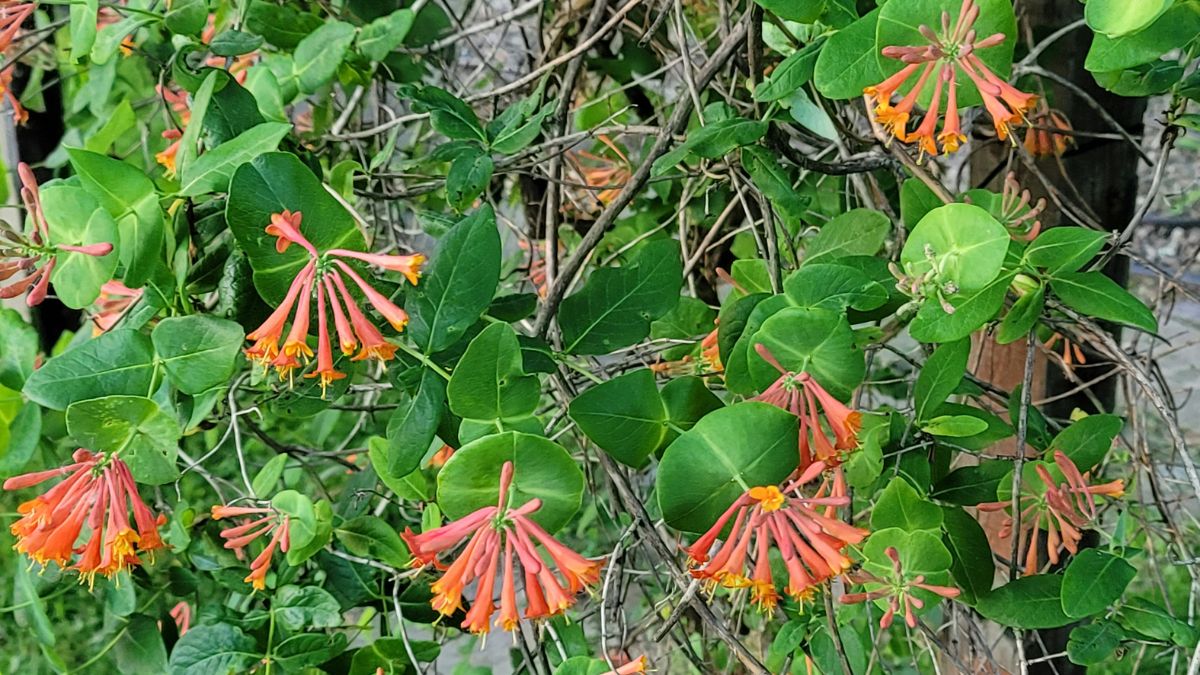
- Coral Honeysuckle
- Jewelweed
- Trumpet Honeysuckle
Flowering Shrubs
Shrubs provide nectar as well as nesting and resting cover.
Good choices include:
- Weigela
- Buttonbush
- Elderberry
- Red Buckeye (southern regions)
- Serviceberry
- Azalea
- Rhododendron
Shrubs also provide protection from predators and harsh weather.

Flowering Vines
Vines can transform fences, pergolas, or arbors into hummingbird feeding stations.
Popular choices include:
- Trumpet Vine (Campsis radicans)
- Coral Honeysuckle (Lonicera sempervirens)
- Cypress Vine
Avoid invasive Japanese honeysuckle whenever possible. Native coral honeysuckle provides excellent nectar without becoming invasive in many areas.
Trees Hummingbirds Visit
Many people overlook trees when planning hummingbird gardens. Flowering trees can provide thousands of blossoms at one time.
Good options include:
- Eastern Redbud
- Crabapple
- Tulip Tree
- Buckeye
- Catalpa
- Serviceberry
Large trees also provide favorite perches where hummingbirds can rest and watch over their feeding territory.
Plants That Provide Shelter
Flowers are only part of a successful hummingbird habitat.
Hummingbirds also need:
- Dense shrubs for protection
- Small trees for nesting
- Evergreen trees for shelter during storms
- Fine plant fibers and lichens for nest building
Leaving some natural areas in your landscape gives hummingbirds safe places to rest between feedings.
Avoid These Common Mistakes
Even beautiful flowers may not benefit hummingbirds if they:
- Have double blooms that block nectar.
- Are heavily treated with pesticides.
- Bloom for only a short period.
- Replace native plants with invasive species.
Using pesticides can also reduce the tiny insects hummingbirds depend on for protein, especially while feeding young.
Tips for Creating a Hummingbird Garden
- Plant flowers that bloom from early spring through fall.
- Group several plants of the same variety together.
- Include native species whenever possible.
- Add a shallow water source or mister.
- Leave small trees and shrubs for shelter.
- Skip insecticides whenever possible.
- Supplement with a clean hummingbird feeder during migration and nesting season.
A mix of trees, shrubs, perennials, annuals, and native plants will provide food and shelter throughout the growing season.
Frequently Asked Questions
What is a hummingbird’s favorite flower?
Bee balm, cardinal flower, salvia, trumpet vine, and coral honeysuckle are among the flowers hummingbirds visit most often because they produce abundant nectar.
Should I plant red flowers for hummingbirds?
Red flowers naturally attract hummingbirds, but they also visit pink, orange, purple, blue, and even white flowers if they produce plenty of nectar.
Do hummingbirds prefer native plants?
Native plants are often the best choice because they bloom at the right time, require less maintenance, and support the insects hummingbirds eat.
Can hummingbirds survive without feeders?
Yes. Hummingbirds lived for millions of years before feeders existed. Flowering plants and tiny insects make up the majority of their natural diet. Feeders simply provide an additional food source.
What plants bloom all summer for hummingbirds?
Salvia, bee balm, zinnias, verbena, cuphea, petunias, and lantana can provide nectar for much of the growing season, especially when deadheaded regularly.
Do hummingbirds eat insects?
Yes. Tiny insects and spiders provide the protein hummingbirds need, especially when raising young.
More Ways to Help Hummingbirds
A healthy hummingbird habitat includes much more than flowers. Providing a variety of nectar-rich plants, clean water, natural shelter, and pesticide-free spaces creates a welcoming environment throughout the growing season. Even a small garden filled with the right plants can become a favorite stop for hummingbirds year after year.
For more information on hummingbirds, see Where do hummingbirds sleep? and Hummingbird-friendly container gardens.
🌿 Gear Up for a Bee-Friendly Garden
Contains affiliate links, for full disclosure, see FTC Disclosure, here.
Looking for tools that actually work?
We’ve pulled together our favorite picks for beekeeping, gardening, and pollinator-friendly seeds—everything you need to support bees and grow a thriving space.
Browse the full list on Amazon — all in one spot.