Asters, in the genus Symphyotrichum spp., formerly classified as Aster spp., are late-season flowering plants that provide an important source of food for bees, butterflies, and birds. Most are perennials, although there are also annual and biennial species. Their daisy-like flowers range from purple and blue to pink and white.
Depending on the species, asters can grow from about 1 to 6 feet tall. Most prefer full sun to partial shade and are an excellent addition to a pollinator garden, especially because they bloom when many summer flowers are beginning to fade.
We have found six species growing around Bees Haven, and in late summer and fall they are almost always buzzing with bees. Once we started looking closely, we realized just how many different asters were growing right under our noses.
Why Asters Are Important for Pollinators
Asters bloom from late summer into fall, when many other flowers are starting to fade. That makes them an important late-season source of nectar and pollen for bees, butterflies, moths and other insects.
On warm fall days, the asters here are covered with activity. Bumble bees are especially easy to spot, but smaller native bees visit them too. Butterflies use the flowers for nectar before cold weather arrives and, for some species, before migration.
Once the flowers fade, asters still have value in the garden. Their seeds can provide food for birds, and the dried stems and seed heads give insects places to shelter through the winter.
That is one reason we leave our asters standing instead of cutting everything down in fall.
Are Asters Native to New York?
Many asters are native to New York and the northeastern United States. The naming can get confusing because most of the North American plants once called Aster were moved into other genera after botanists studied their relationships more closely.
Many of the asters we see growing wild in New York are now classified in the genus Symphyotrichum. Other native plants still called asters belong to genera such as Eurybia and Doellingeria.
Thankfully, nobody says, “Look at that beautiful Symphyotrichum” while walking through the field. We still call them asters.
Six Asters We Found Growing at Bees Haven
We didn’t set out to collect six kinds of asters. We simply started paying closer attention to what was already growing here.
Once the flowers opened in late summer, we realized that plants we had been lumping together as “white asters” or “purple asters” were actually very different.
These are the six species we have identified so far.
New England Aster
Symphyotrichum novae-angliae
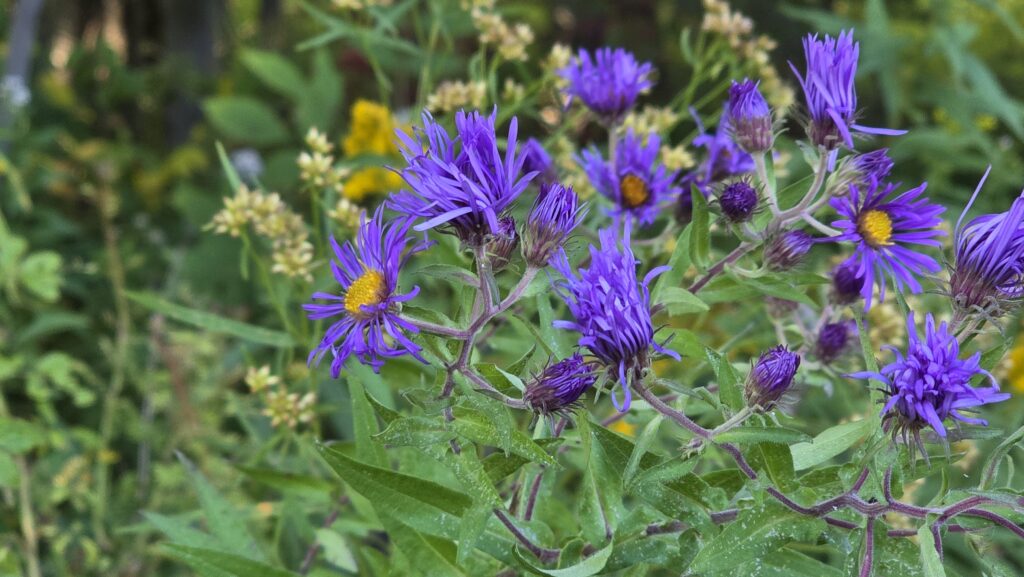
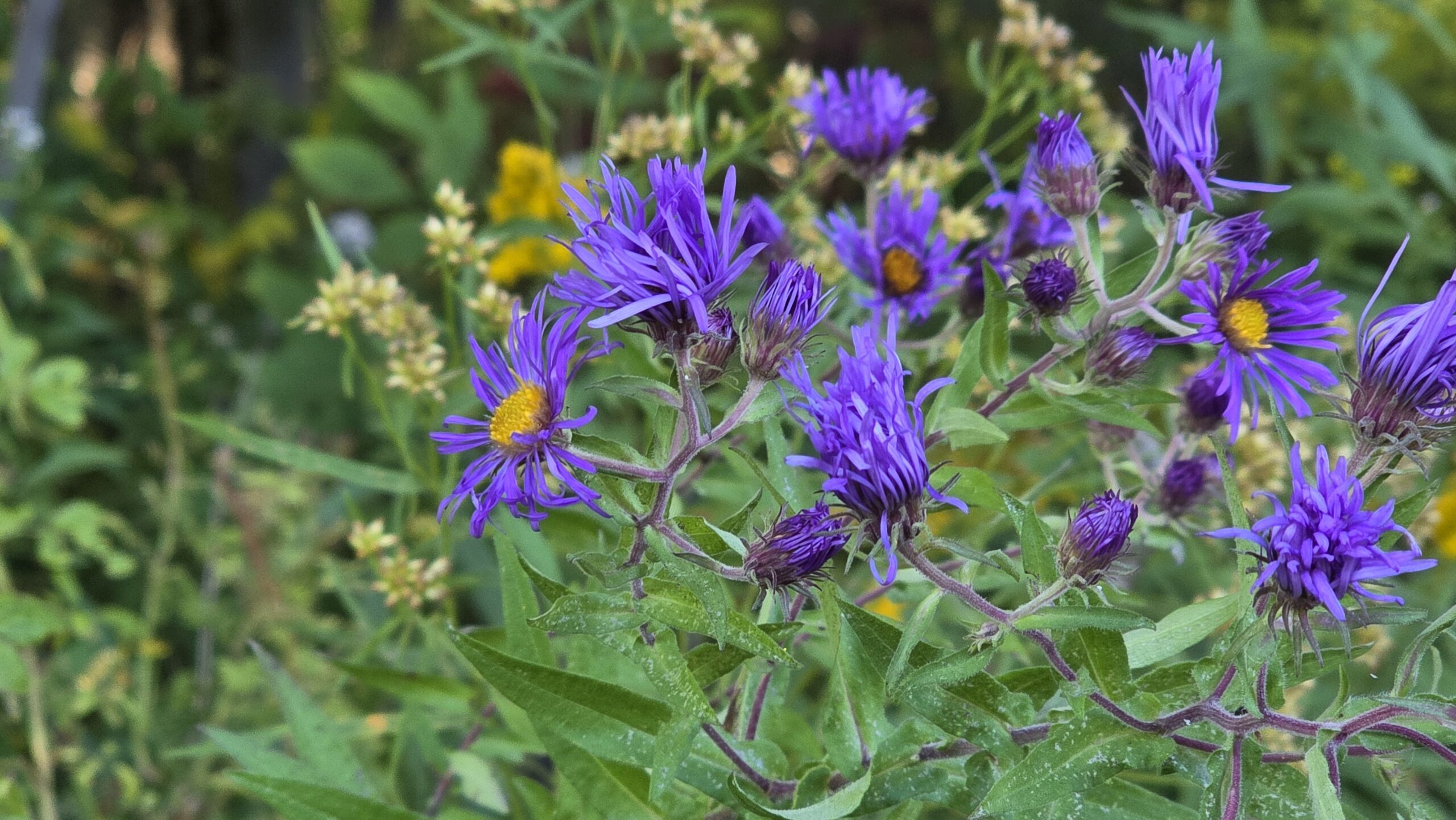
New England aster is one of the easiest native asters to notice because of its bright purple to pink-purple flowers.
The plants can grow several feet tall and produce masses of flowers near the tops of the stems. The flower centers begin yellow and become darker as the blooms age.
Ours grow in open areas with plenty of sun, where they attract bees constantly once they begin flowering.
Look for: large purple flowers, tall stems and narrow leaves that clasp the stem.
New York Aster
Symphyotrichum novi-belgii
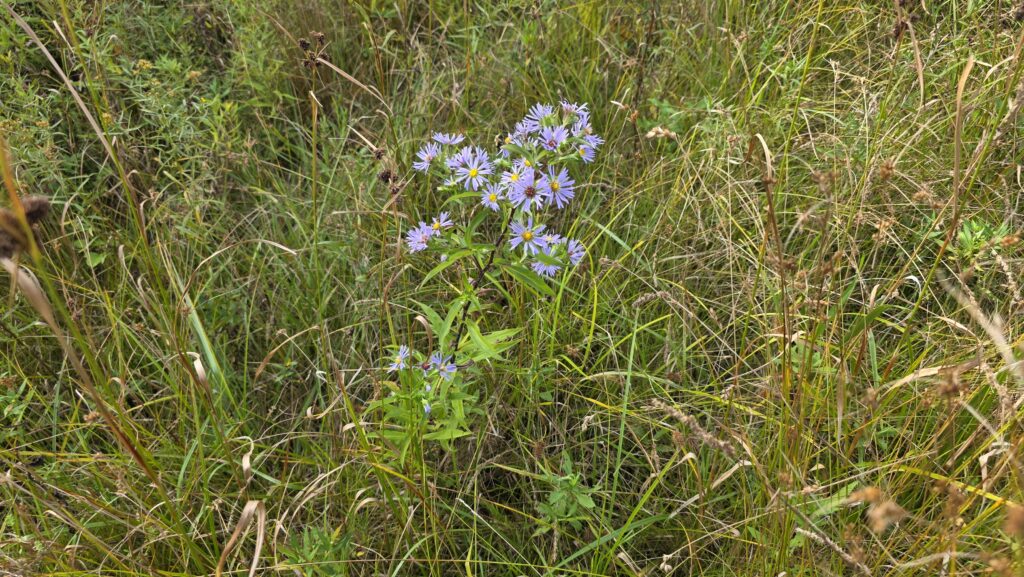
New York aster looks similar to New England aster at first glance. The flowers can be blue, violet or purple with yellow centers.
One useful difference is the foliage. New York aster usually has smoother stems and narrower leaves, while New England aster tends to look rougher and hairier.
This is one of those plants where getting photographs of the stem and leaves is just as important as getting a picture of the flower.
Heart-Leaved Aster
Symphyotrichum cordifolium
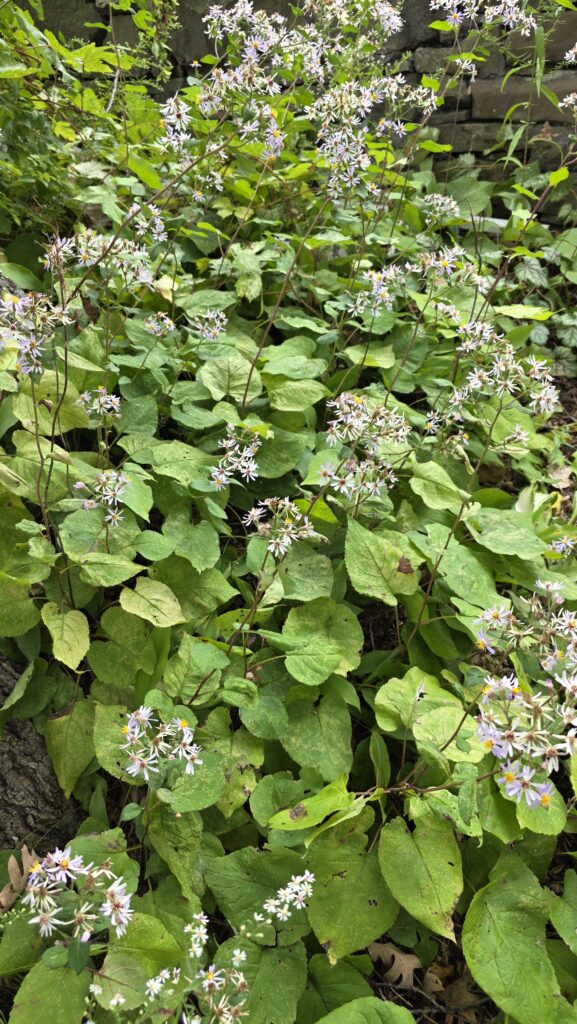
Heart-leaved aster is also called blue wood aster. This one was much easier to recognize once we looked at the leaves. The lower leaves are broad and noticeably heart-shaped.
The plant produces loose sprays of small white to pale blue to lavender flowers. It can grow in partly shaded woodland edges, making it useful in places where some of the more sun-loving asters may not perform as well. Our plants were growing in a large colony and were covered with flowers.
Look for: heart-shaped leaves and branching sprays of pale lavender flowers.
Calico Aster
Symphyotrichum lateriflorum
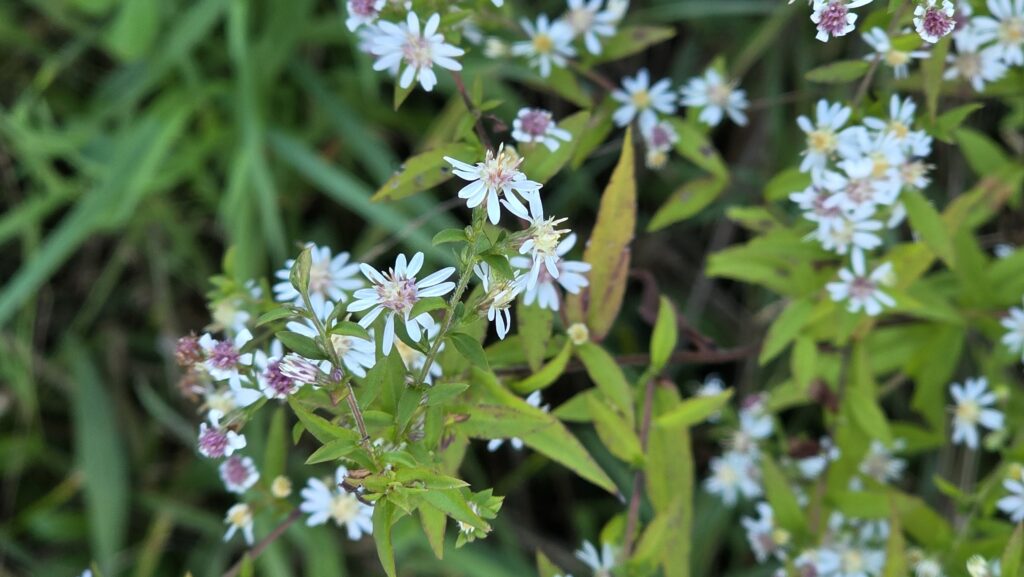
Calico aster has much smaller flowers than some of the showier purple asters. The flowers are usually white with yellow centers, but the centers often change to pink, reddish purple or brown as they age. A single plant can have flowers with several different center colors at once, which is where the name “calico” comes from.
The flowers grow along spreading branches rather than forming one large cluster at the top. It is easy to walk right past this plant until it blooms.
Look for: tiny white flowers lining the branches and flower centers in several colors.
Heath Aster
Symphyotrichum ericoides
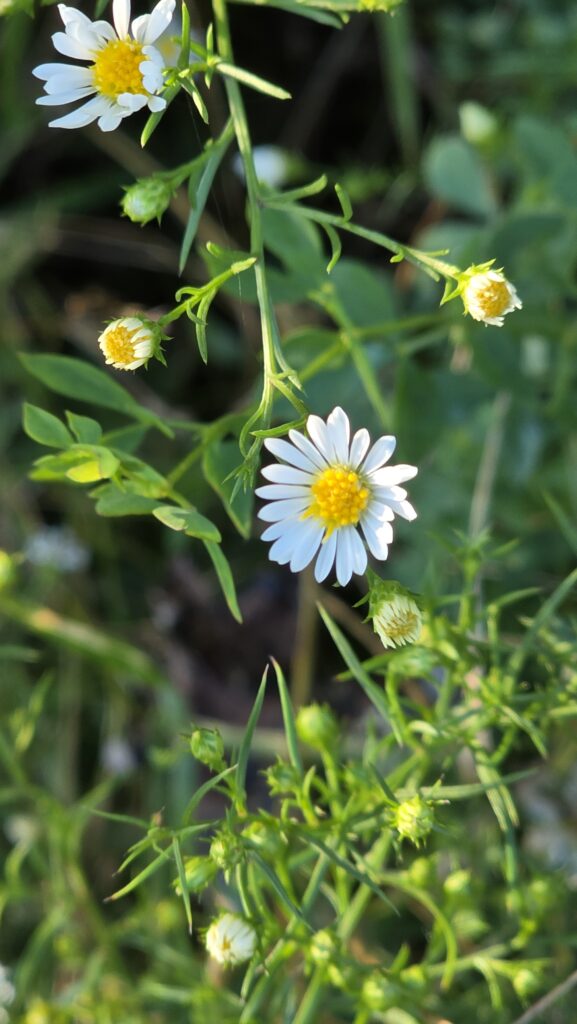
Heath aster is another small white-flowered native aster, but its foliage helps separate it from the others. The leaves are small and narrow, giving the plant a much finer texture. When it blooms, dozens or even hundreds of tiny white flowers can cover the stems.
This is one of the reasons identifying white asters can get frustrating. From several feet away, heath aster, calico aster, and panicled aster can all look like clouds of tiny white flowers. The leaves, stems, and flower arrangement tell the real story.
Panicled Aster
Symphyotrichum lanceolatum
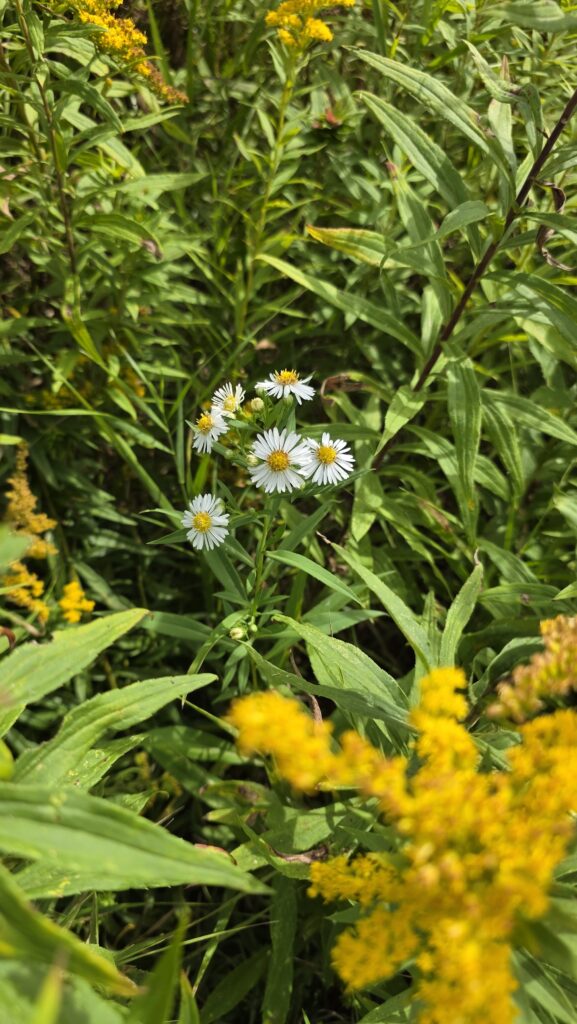
Panicled aster, sometimes called white panicle aster, also produces clusters of small white flowers with yellow centers. Its leaves are longer and more lance-shaped than those of heath aster. The flowers are carried in loose, branching clusters.
We found this one growing with other late-season wildflowers, including goldenrod, a common fall combination.
Look for: narrow, lance-shaped leaves and loose sprays of white flowers.
How to Tell Asters Apart
Identifying an aster from the flower alone can drive a person crazy. Many species have almost identical daisy-shaped flowers. When identifying one, photograph the entire plant as well as the flowers.
Also photograph:
- the upper and lower leaves
- where the leaves attach to the stem
- the stem itself
- the underside of the leaves
- the branching pattern
- the flower from the side
- the habitat where the plant is growing
Hairy versus smooth stems can matter. So can leaf shape, whether the leaves have teeth, and whether they clasp the stem. We learned that lesson quickly after photographing a lot of very pretty flowers and then realizing we hadn’t photographed the parts needed to identify them. 😂
Growing Native Asters in a Pollinator Garden
Native asters are relatively easy additions to a pollinator garden because there is a species for almost every situation. Some prefer full sun and open fields, while others naturally grow along woodland edges or in partial shade. Depending on the species, they can tolerate anything from fairly dry soil to moist ground.
Most established native asters need little care. Avoid cutting all of the plants down immediately after flowering. Leaving at least some stems and seed heads standing through winter provides habitat for insects and food for wildlife. Asters can also spread, which is either a benefit or a problem depending on where they are growing. In a naturalized pollinator garden like ours, we are perfectly happy to let them wander where they please.
Asters and Goldenrod Belong Together
Asters and goldenrod often bloom at the same time, and seeing the two together is a familiar sign of fall in Upstate New York. They are also an excellent combination for wildlife. Both provide late-season nectar and pollen, and their different flower shapes attract a wide range of insects.
Purple and white asters mixed with yellow goldenrod also happen to look pretty spectacular.
🌿 Gear Up for a Bee-Friendly Garden
Contains affiliate links, for full disclosure, see FTC Disclosure, here.
Looking for tools that actually work?
We’ve pulled together our favorite picks for beekeeping, gardening, and pollinator-friendly seeds—everything you need to support bees and grow a thriving space.
Browse the full list on Amazon — all in one spot.