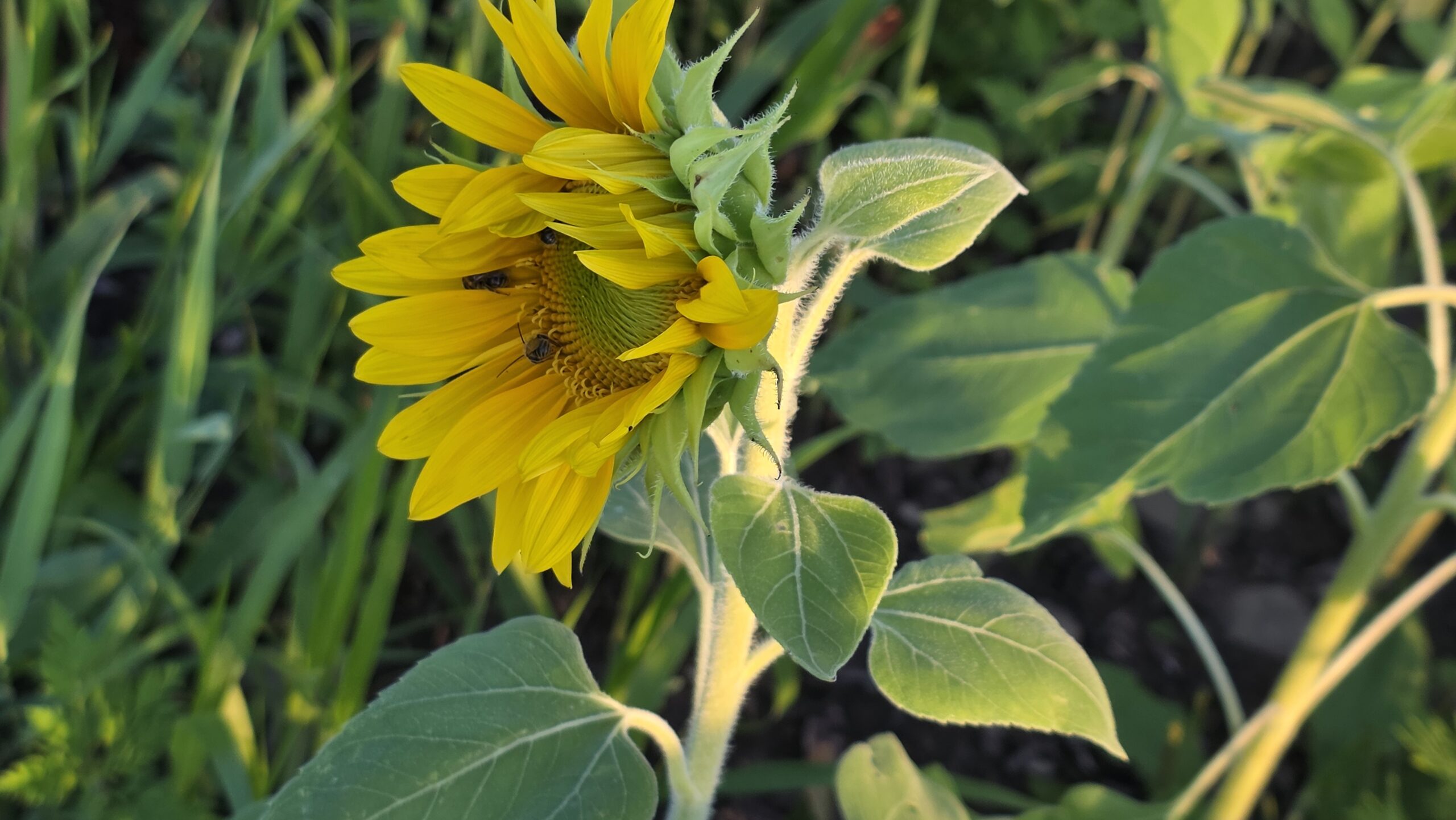
Sunflowers are hard to miss once they begin blooming. Their large flower heads stand above the garden, sometimes covered with bees, beetles, butterflies, and other insects searching for food. Even shorter sunflowers can become some of the busiest plants in the yard.
We planted a big sunflower patch this year. And they are some of the busiest flowers in the yard. We planted 6 varieties ranging from 4 to 12 feet tall. We also got a variety of colors: white, burgundy, yellow, a very dark, almost black one, and a bronze, orange, and yellow variety.
They germinated well, and we’ve finally gotten the first variety to bloom, and the pollinators are quite pleased.
After a slow start to bee activity this year, the sunflowers finally gave us some of the best bee sightings of the summer.
Why Do Pollinators Like Sunflowers?
What looks like one sunflower is actually made up of hundreds, or sometimes thousands, of tiny individual flowers. Each of those flowers will produce one sunflower seed.
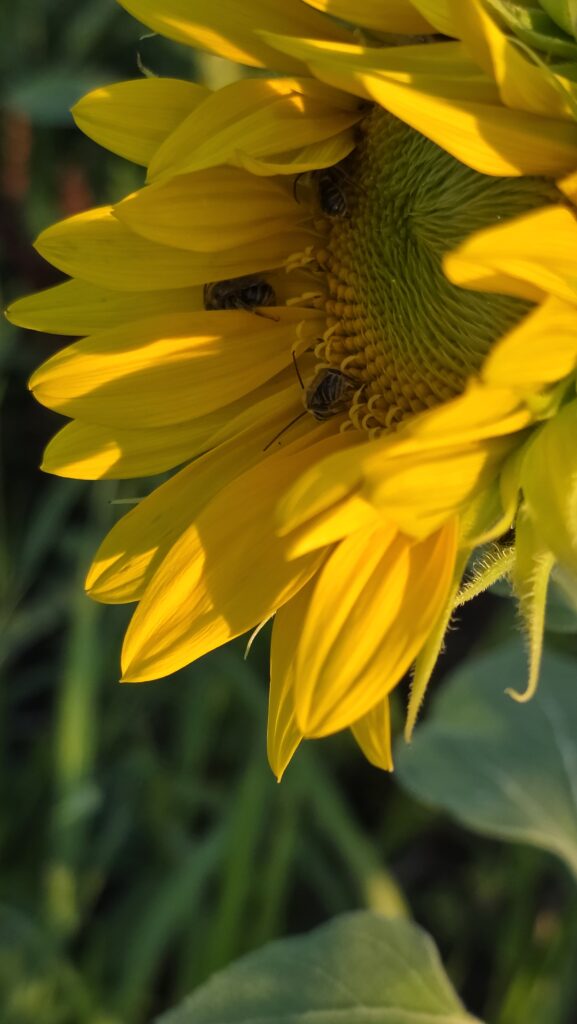
The large petals around the outside are called ray flowers. They help make the flower easy for insects to see. The dark or golden center is filled with small disk flowers arranged in a spiral pattern.
Each disk flower can produce pollen and nectar. Instead of visiting a single flower and leaving, a bee can walk across the sunflower head and feed from many tiny flowers in one stop.
That makes a sunflower an efficient food source. The large blooms can feed hundreds of bees, wasps, and other pollinators.
Sunflowers Provide Both Pollen and Nectar
Bees visit flowers for two main reasons. Nectar provides carbohydrates and quick energy. Pollen supplies protein, fats, vitamins, and minerals. Bees need pollen to feed developing larvae and support the colony.
Sunflowers provide both. A bee may arrive looking fairly clean and leave dusted with yellow pollen. As it crawls across the flower head, pollen sticks to the hairs on its body. Some of that pollen is carried to other flowers, helping the sunflower produce seeds.
Honey bees often pack the pollen into the pollen baskets on their back legs. Bumble bees and many native bees may carry it on dense patches of hair on their legs or underneath their bodies.
What Pollinates Sunflowers?
Sunflowers attract much more than honey bees.
Depending on the location and the sunflower variety, visitors may include:
- Bumble bees
- Sweat bees
- Long-horned bees
- Leafcutter bees
- Small native bees
- Butterflies
- Moths
- Beetles
- Flies
- Wasps
Not every insect on a sunflower is a major pollinator, but the flower head creates a busy feeding area that supports many parts of the garden food web. Predatory insects may also visit. Some wasps and flies feed on nectar as adults while helping control garden pests during their larval stage.
Native Bees Are Important Sunflower Visitors
Honey bees are easy to recognize, but many sunflower visitors are native bees. North America is home to thousands of native bee species. Most do not live in large colonies or make honey. Many are solitary, with each female building and supplying her own nest.
Sunflowers are especially useful because the wide, open flower heads are easy for many sizes of bees to land on. Large bumble bees can move quickly across the center, while tiny bees can feed from individual disk flowers.
Watching a sunflower closely often reveals insects that would otherwise go unnoticed.
Sunflowers Bloom When Pollinators Need Food
Summer can be an uneven time for pollinators. Some spring flowers have finished blooming, while late-summer and fall flowers have not yet opened. A large patch of sunflowers can help fill that gap.
The flowering period depends on the variety, planting date, and weather. A single sunflower head does not produce fresh pollen and nectar forever. The tiny disk flowers generally open in stages, moving gradually from the outside of the flower head to the inside.
This is why bees may continue working the same sunflower for several days. Planting more than one variety or sowing seeds at different times can extend the overall bloom period. Branching varieties may also produce multiple flowers instead of one large bloom.
Do All Sunflowers Help Pollinators?
Most open-pollinated sunflowers can provide food for insects, but some are better choices than others.
Pollenless sunflowers are popular with florists because they do not drop yellow pollen on tables, clothing, or tablecloths. They may still produce nectar, but they do not provide the same pollen supply as traditional pollen-producing varieties.
For a pollinator garden, look for varieties that produce pollen. Single-flowered forms are generally easier for insects to use than heavily doubled flowers. In double varieties, extra petals may replace or block some of the pollen- and nectar-producing flower parts.
How to Plant Sunflowers for Pollinators
Sunflowers grow best in a sunny location. Most need at least six hours of direct sunlight, although more sun usually produces stronger plants and more flowers.
They also need enough room, water, and nutrients to support their rapid growth.
A few simple practices can make a sunflower patch more useful to pollinators:
- Plant several sunflowers together so insects can move easily between blooms.
- Grow more than one variety to provide different flower sizes and bloom times.
- Avoid spraying insecticides on or near open flowers.
- Leave some flower heads standing long enough to produce mature seed.
- Include other summer and fall flowers nearby.
Sunflowers do not need to reach 10 or 12 feet tall to help pollinators. Our Skyscraper plants were much shorter than the seed listing suggested, but they still produced plenty of buds and flowers. Flower production matters more than height.
What to Plant With Sunflowers
A sunflower patch becomes even more useful when it is surrounded by other pollinator plants.
Good companions may include:
- Zinnias
- Asters
- Goldenrod
- Mountain mint
- Bee balm
- Coneflowers
- Black-eyed Susans
- Milkweed
- Joe-Pye weed
- Native grasses
The goal is to provide something in bloom from early spring through fall.
Sunflowers can carry a garden through part of the summer, but no single plant can feed pollinators for the entire growing season.
Sunflowers Also Feed Birds and Wildlife
Pollinator activity is only the first part of the sunflower’s value. Once the disk flowers have been pollinated, seeds begin developing. Goldfinches and other seed-eating birds may arrive before the flower heads are completely dry.
Squirrels, chipmunks, and other wildlife may also take advantage of the crop. Gardeners who want to save seed can cover maturing flower heads with mesh produce bags after pollination is finished. The mesh allows air to circulate while making it harder for birds to remove every seed.
Each sunflower head will produce hundreds of seeds, so you only need to cover a few to have enough to plant next year. Leave the rest of the heads uncovered to provide natural food for wildlife.
A Sunflower Patch Is Worth Growing
Sunflowers do not have to be perfect to be useful.
They may grow shorter than expected. Some stems may lean. Birds may steal seeds, and insects may chew a few leaves. None of that prevents the flowers from becoming an important summer food source.
Our patch was planted partly for its height and beauty, but mostly for the bees. Smaller varieties can be planted in smaller years or even in large pots, so you can really grow them in any yard.
For more information for what flowers to plant to attract pollinators, see our articles 20 of the Best Seeds Perfect for Fall Planting for Bees and 15 of the Best Flowers for Bees They’d Swipe Right On.
🌿 Gear Up for a Bee-Friendly Garden
Contains affiliate links, for full disclosure, see FTC Disclosure, here.
Looking for tools that actually work?
We’ve pulled together our favorite picks for beekeeping, gardening, and pollinator-friendly seeds—everything you need to support bees and grow a thriving space.
Browse the full list on Amazon — all in one spot.