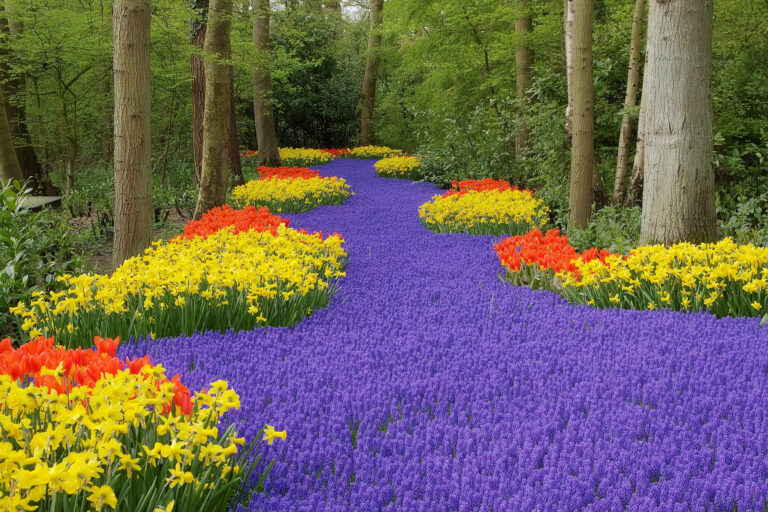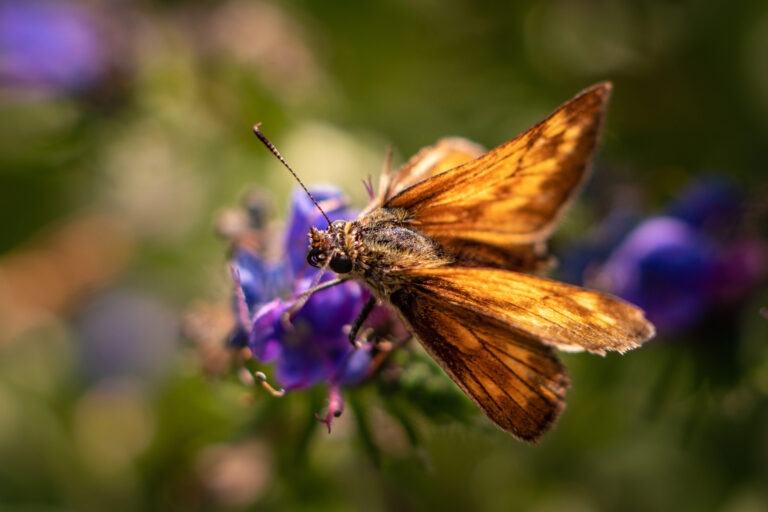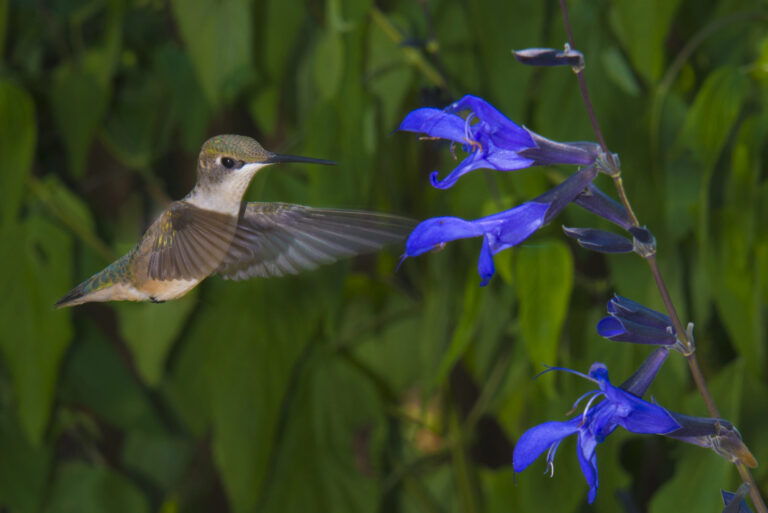
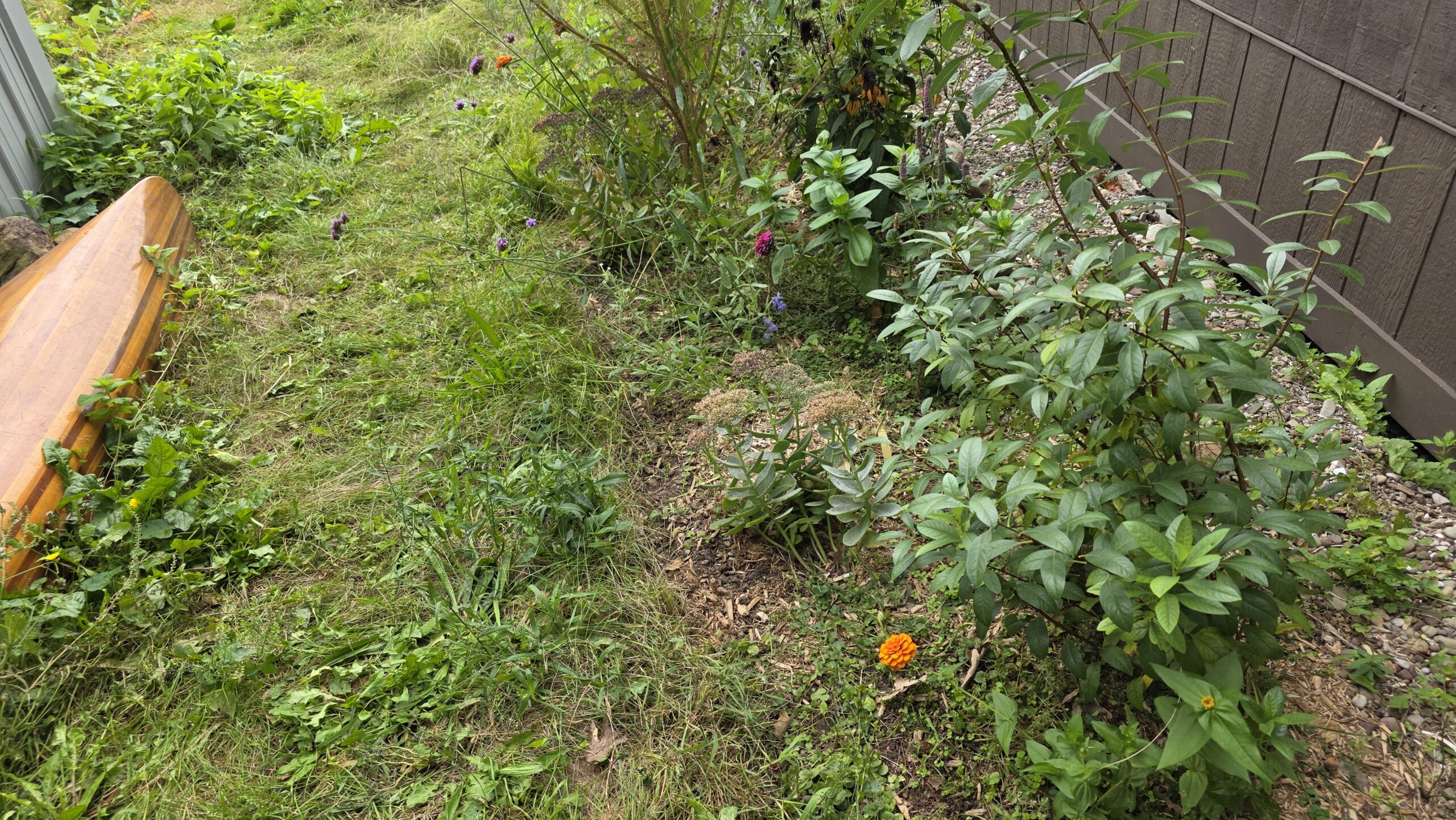
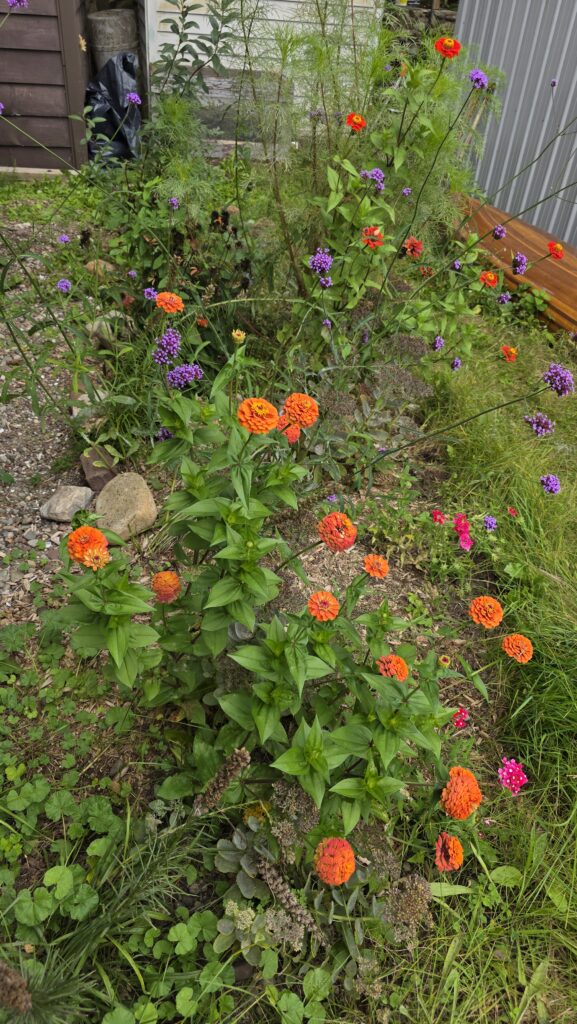
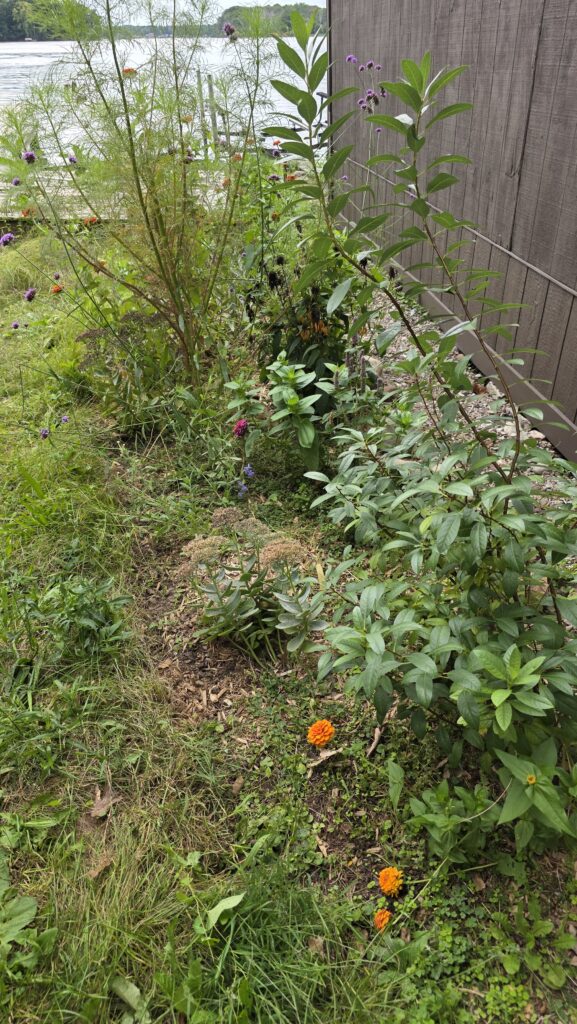
A pollinator garden doesn’t have to be a huge meadow or a field filled with wildflowers. A small garden around a cottage, a narrow bed along the house, or even a few containers can provide nectar, pollen, host plants, and shelter for bees, butterflies, and other beneficial insects when the right plants are included. Kate’s cottage gardens are a perfect example.
Her gardens aren’t huge. They wrap around the house and fit into the existing landscape, but they are packed with flowering plants and shrubs.
Small Pollinator Gardens Still Matter
It is easy to look at a big pollinator field and think you need a lot of land to make a difference. You don’t. Even small patches of flowering plants add habitat. The Xerces Society notes that pollinator gardens do not need to be large to be useful. Even containers on a balcony can provide food and habitat for pollinators.
That means almost anyone with a little outdoor space can help. A small bed can also become part of a larger network. Bees and butterflies move from yard to yard looking for food, shelter, and places to reproduce.
Plant More Than One Kind of Flower
One of the things that works so well in Kate’s garden is the variety. Instead of planting one type of flower and calling it finished, she has different plants blooming at different times. That matters because pollinators need food for much more than a couple of weeks in July.
Cornell Cooperative Extension recommends choosing plants with different bloom times so flowers are available from spring through fall. They also recommend planting several plants of the same species together, which makes them easier for pollinators to find.
Think of the garden in three parts:
- Spring flowers feed pollinators when they first become active.
- Summer flowers provide the biggest buffet.
- Fall flowers help bees and migrating butterflies prepare for winter.
Asters and goldenrods are especially valuable late in the season when many summer flowers have finished blooming.
Shrubs Count Too
Pollinator gardens don’t have to be made entirely of perennials and annual flowers. Flowering shrubs can provide a lot of blooms in a relatively small footprint. Kate has a Western sand cherry in her garden. It was chosen partly because it can tolerate less-than-perfect soil, something many gardeners can relate to.
Shrubs can also give a small garden some structure so it doesn’t look like a patch of flowers stuck in the lawn. Trees and shrubs that bloom in spring can be especially useful because fewer flowers are available then.
Choose Plants for the Space You Have
A pollinator plant isn’t very useful if it dies because it was planted in the wrong place. Look at the site first. How many hours of sun does it get? Is the soil wet, dry, or somewhere in between? Does water sit there after a heavy rain?
Then choose plants that actually like those conditions. The Xerces Society recommends matching plants to the amount of sun, moisture, and soil conditions already present. Healthy plants are better able to handle insects, disease, and weather stress. This is especially important in a small garden because every plant has to earn its space.
Native Plants Are Important, But the Garden Doesn’t Have to Be Perfect
Native plants are an excellent foundation for a pollinator garden because local insects evolved with them. Some butterflies and moths are especially particular. Their caterpillars can only eat certain host plants. But that doesn’t mean every nonnative flower has to be ripped out of the garden.
A garden can include useful herbs, annual flowers, and favorite ornamentals along with native plants. The goal is to provide plenty of accessible flowers while also including native species whenever possible.
Simple, open flowers are usually easier for bees and other insects to reach than heavily doubled flowers. Cornell Cooperative Extension cautions that some highly hybridized and double-flowered plants may provide little pollen or nectar.
Don’t Make the Garden Too Clean
This might be the easiest gardening advice ever. Do a little less. Pollinators need more than flowers. They also need places to live. About 70 percent of native bee species nest in the ground, while many others use hollow stems, dead wood, and small cavities.
Leaving a little exposed soil, some standing stems, a small pile of sticks or a few leaves gives insects places to nest and overwinter. A pollinator garden does not need to look abandoned, but it doesn’t need to be scrubbed clean either.
Be Careful With Pesticides
Manage a pollinator garden with pollinators in mind. Avoid spraying insecticides on blooming plants, or anywhere bees are actively feeding. Even some products labeled natural or organic can harm beneficial insects. A few chewed leaves aren’t necessarily a problem.
In fact, sometimes they mean the garden is working. A caterpillar eating a leaf may become a butterfly or moth. Aphids may attract lady beetles and other predators. A pollinator garden should have insects in it.
Start With One Small Bed
You don’t have to dig up the entire lawn. Start with one bed. Add a few plants that flower in spring, several that bloom through summer, and something that keeps blooming into fall. Include a shrub if there is room.
Watch what visits. You will probably start noticing insects you never paid attention to before. That little flower bed may not look anything like a huge wildflower meadow, but to a hungry bee flying through the neighborhood, it can still be a very important stop.
🌿 Gear Up for a Bee-Friendly Garden
Contains affiliate links, for full disclosure, see FTC Disclosure, here.
Looking for tools that actually work?
We’ve pulled together our favorite picks for beekeeping, gardening, and pollinator-friendly seeds—everything you need to support bees and grow a thriving space.
Browse the full list on Amazon — all in one spot.