
Bringing more bees into your yard starts with the right plants. Whether you are working with a balcony, a backyard, or a few sunny pots, the seeds you choose can make a huge difference for pollinators.
This page is packed with bee-friendly seeds and plants that offer plenty of nectar, pollen, and habitat. We focus on easy-to-grow varieties, native options, and plants that keep blooming throughout the season to support bees at every stage.
If you are ready to turn your space into a buzzing haven, you are in the right place. Scroll through the collections below to find flowers, herbs, and wildflower mixes that bees truly love.
How This List Is Organized
Plants are listed alphabetically by their common names, with scientific names shown in italics. This makes it easy to find familiar favorites while keeping things clear, especially when one plant has several common names. If you are looking for a specific Latin name, use your keyboard’s find function (Ctrl+F or Command+F) to search this page quickly.
Bee Seeds
You don’t need a huge garden to help pollinators. Just a few well-chosen flowers can give native bees, honeybees, and butterflies the food and shelter they need. These seed picks are easy to grow, good for your local bees, and available to order right now.
Each one includes a quick note on why it’s helpful. Add the ones that fit your space and plant them wherever you’ve got dirt and sun.
This is a dynamic list that is constantly being updated with new plants.
Anise Hyssop (Agastache foeniculum)

Tall spikes packed with nectar bees love.
Agastache foeniculum
Bee Balm (Monarda spp.)

Tubular blooms are perfect for bumblebees.
Monarda spp.
Black Willow (Salix nigra)

Early catkins provide vital spring nectar and pollen.
Salix nigra
Black-Eyed Susan (Rudbeckia hirta)

Sunny blooms keep nectar and pollen coming late season.
Rudbeckia hirta
Blanket Flower (Gaillardia spp.)

Open blooms give bees easy landings all summer.
Gaillardia spp.
Blue Vervain (Verbena hastata)

Sequential blooms feed bees for weeks.
Verbena hastata
Borage (Borago officinalis)

Fast grower with starry blue flowers bees crave.
Borago officinalis
Brunnera (Brunnera macrophylla)

Forget‑me‑not‑style spring blooms that wake up early pollinators.
Brunnera macrophylla
Butterfly Weed (Asclepias tuberosa)

Bright clusters support many native pollinators.
Asclepias tuberosa
Calendula (Calendula officinalis)

Cheerful orange blooms feed bees for months.
Calendula officinalis
Catmint (Nepeta faassenii)

Reliable waves of nectar on tidy mounds.
Nepeta faassenii
Chives (Allium schoenoprasum)
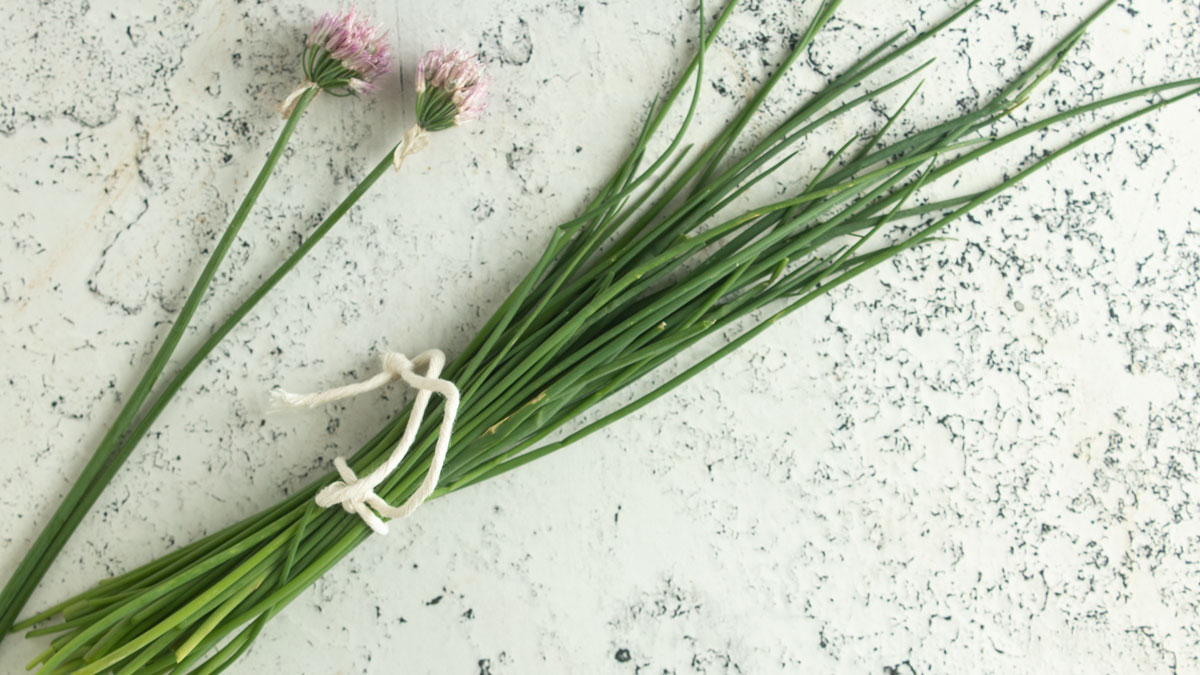
Hardy clumps with edible blossoms that bees adore.
Allium schoenoprasum.
Cilantro (Coriandrum sativum)

Alt text: White cilantro flowers in a field of green.
When it bolts, cilantro produces small white blooms that attract a variety of native bees. The plant also yields coriander seeds, used in cooking and pickling.
Coriandrum sativum.
Clover (Trifolium spp.)

Low care flowers that fuel bees in lawns and meadows.
Trifolium spp.
Coltsfoot (Tussilago farfara)

Yellow daisies appear before the leaves, feeding bees in very early spring.
Tussilago farfara
Common Milkweed

Essential host for monarchs and rich nectar source.
Asclepias syriaca
Coreopsis (Coreopsis spp.)

Blooms like crazy and supports many native bees.
Coreopsis spp.
Cornflower (Centaurea cyanus)

Bold blue blooms that attract bees in droves.
Centaurea cyanus
Cornelian Cherry (Cornus mas)

Early yellow blossoms feed bees when little else blooms.
Cornus mas
Cosmos (Cosmos bipinnatus)

Easy, drought-tolerant flowers with plentiful pollen.
Cosmos bipinnatus
Crocus (Crocus spp.)

One of the first flowers open for bees in late winter.
Crocus spp.
Dill (Anethum graveolens)

An aromatic herb that doubles as a pollinator magnet, attracting beneficial wasps, hoverflies, and butterflies. Its bright yellow umbels bloom for weeks if left to seed.
Anethum graveolens.
Fennel (Foeniculum vulgare)

Alt text: Flowering fennel with a green background.
Fennel’s golden umbels are a long-lasting food source for pollinators and a host plant for swallowtail caterpillars. Its mild anise flavor is prized in many culinary dishes.
Foeniculum vulgare.
Goldenrod (Solidago spp.)

Late-season blooms that fuel migrating pollinators.
Solidago spp.
Globe Thistle (Echinops ritro)

Spiky blue globes bees and butterflies love.
Echinops ritro
Heather (Calluna vulgaris)

Summer nectar that withstands heat and drought.
Calluna vulgaris
Hellebore (Helleborus orientalis)

Winter‑to‑spring blooms that feed bees on mild days.
Helleborus orientalis
Heliotrope (Heliotropium arborescens)

Sweet-scented clusters with steady bee traffic.
Heliotropium arborescens
Hollyhock (Alcea rosea)

Deep cups are perfect for big bumblebees.
Alcea rosea
Joe-Pye Weed (Eutrochium purpureum)

Tall umbels draw bees and butterflies in late summer.
Eutrochium purpureum
Larkspur (Delphinium spp.)

Elegant spires keep pollinators coming back.
Delphinium spp.
Lavender (Lavandula angustifolia)

Fragrant spikes rich in nectar for summer bees.
Lavandula angustifolia
New England Aster (Symphyotrichum novae-angliae)

Fall flowers that fuel migrating pollinators.
Symphyotrichum novae-angliae
Oxeye Daisy (Leucanthemum vulgare)

Open blooms make nectar and pollen easy to reach.
Leucanthemum vulgare
Oregon Grape Holly (Mahonia aquifolium)

Fragrant yellow clusters feed bees before leaf-out.
Mahonia aquifolium.
Parsley (Petroselinum crispum)

Alt text: Parsley plants in bloom.
Parsley blooms in its second year, feeding pollinators and hosting black swallowtail caterpillars. Its fresh, clean flavor makes it a versatile kitchen herb.
Petroselinum crispum
Perennial Pea (Lathyrus latifolius)

Vining blooms loved by bees and butterflies.
Lathyrus latifolius
Pussy Willow (Salix discolor)

Soft catkins offer vital early nectar and pollen.
Salix discolor
Queen Anne’s lace – Daucus carota

This wildflower, also known as wild carrot, produces delicate white umbels in midsummer. It provides nectar for bees and butterflies and serves as a host plant for black swallowtail caterpillars.
Daucus carota.
Red Maple (Acer rubrum)

Early tree flowers loaded with pollen for spring bees.
Acer rubrum
Scabiosa (Scabiosa caucasica)

Pincushion blooms with easy nectar access.
Scabiosa caucasica
Silky Dogwood (Cornus amomum)

Clustered blooms feed bees, berries feed birds.
Cornus amomum
Skunk Cabbage (Symplocarpus foetidus)

Emerges at snowmelt and offers some of the season’s first pollen.
Symplocarpus foetidus
Snapdragon (Antirrhinum majus)

Fun hinged blooms that bumblebees pry open.
Antirrhinum majus
Snowdrops (Galanthus nivalis)

Tiny bells that bloom at snowmelt and offer early pollen.
Galanthus nivalis
Sunflower (Helianthus annuus)

Iconic blooms packed with pollen and nectar.
Helianthus annuus
Thyme (Thymus vulgaris)
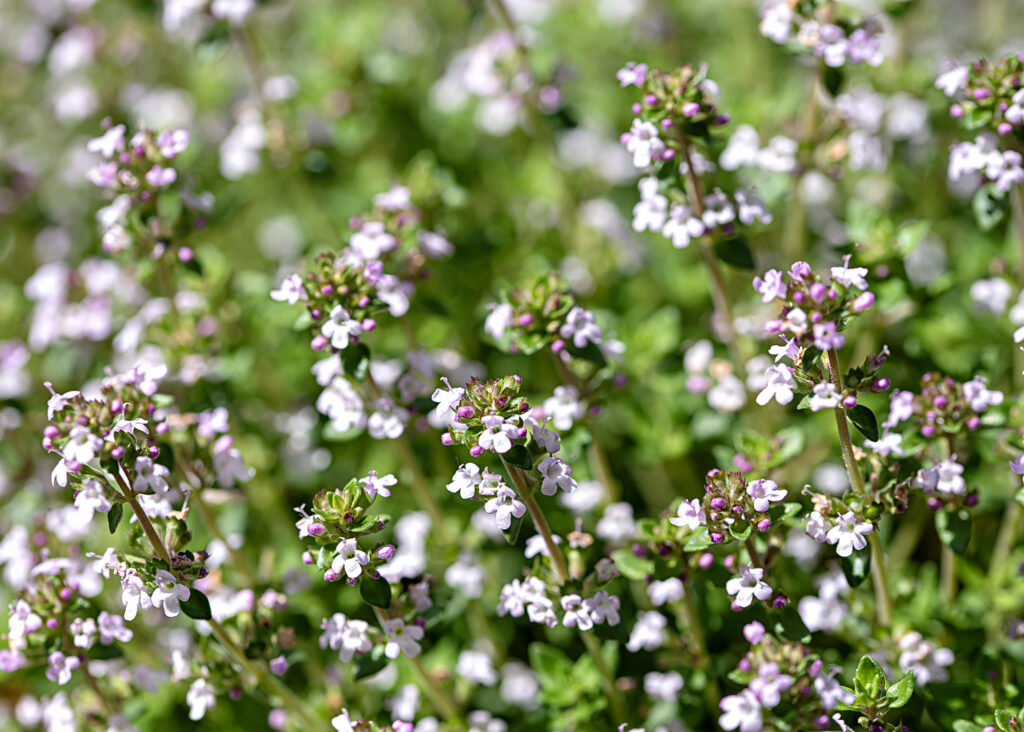
Low mats with tiny flowers bees flock to.
Thymus vulgaris
Viola (Viola spp.)

Early low-growing blooms that attract small native bees.
Viola spp.
Wild Lupine (Lupinus perennis)

Hosts native bees and the Karner blue butterfly.
Lupinus perennis
Winter Aconite (Eranthis hyemalis)

Bright golden cups open as snow melts, offering early pollen.
Eranthis hyemalis
Witch Hazel (Hamamelis × intermedia)

Fragrant ribbon flowers open in late winter when bees first fly.
Hamamelis × intermedia
Zinnia (Zinnia elegans)

Bright single blooms keep nectar flowing to frost.
Want More?
If you’re not sure where to start, try mixing early bloomers (like borage) with late-season anchors (like black-eyed Susan). And remember, don’t forget to skip the sprays. Flowers only help if they’re safe to land on.
Want to know what happens when bees find these flowers? Take a look at Caught in the Act to see them in action.