This April planting guide is all about helping pollinators. From early wildflowers to native shrubs and trees, these plants give bees and butterflies the boost they need when spring starts.
Here’s what to focus on this month:
Native Wildflowers That Bloom Early
Start with perennials that will feed early risers like mason bees and mining bees.
Good choices:
Columbine (Aquilegia canadensis)

Nods gently in the breeze and offers nectar right when bees need it.
Bloom time: April–June
Care: Prefers part shade and well-drained soil. Self-seeds readily. Great for hummingbirds and early bees.
Aquilegia spp.
Golden Alexanders (Zizia aurea)

One of the earliest umbels to flower. Loved by small native bees.
Bloom time: Late April–June
Care: Native umbel with bright yellow flowers. Grows in moist to medium soils and sun to part shade. Host plant for black swallowtail butterflies.
Zizia aurea.
Virginia Bluebells (Mertensia virginica)

A favorite of bumblebees. Once it’s in, it spreads gently and comes back every spring.
Bloom time: April–May
Care: Dies back by summer, so plant among later bloomers. Thrives in moist, rich soil in part shade. Loved by bumblebees.
Mertensia virginica.
Flowering Shrubs and Trees
Pollinators need more than just ground-level blooms. April’s a great time to plant larger structure plants that will feed bees year after year. Plant now:
Redbud (Cercis canadensis)
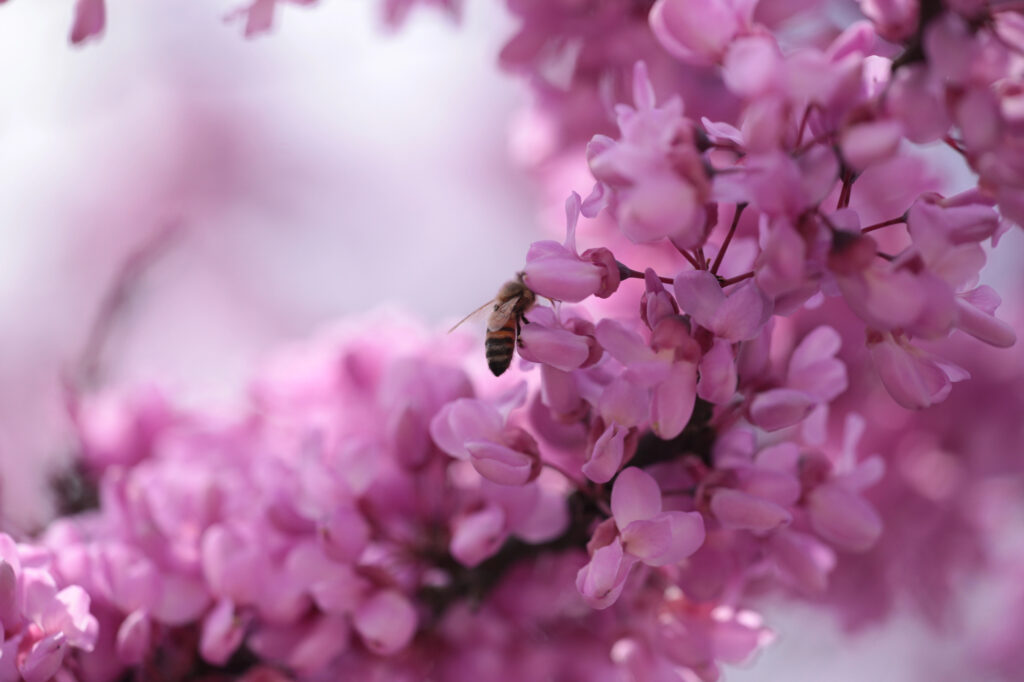
Bright pink flowers pop before the leaves do.
Bloom time: April–May
Care: Small native tree with pink flowers on bare branches. Tolerates a range of soils, best in full sun to part shade.
Cercis canandensis.
Serviceberry (Amelanchier spp.)

Amelanchier blooms early and feeds bees, birds, and people.
Bloom time: April–May
Care: Multi-season shrub with edible berries. Tolerates sun or part shade. Flowers provide nectar for early pollinators.
Amelanchier spp.
Pussy Willow (Salix discolor)

Pussy willow is one of the earliest bloomers. Its fuzzy catkins are loaded with pollen.
Bloom time: March–April
Care: Crucial early nectar and pollen. Best near moist soils. Needs space as it can grow into a large shrub or small tree.
Salix discolor.
Herbs You Can Start Outdoors
These multitaskers feed bees when they flower and you when they grow. Sow or transplant:
Chives (Allium schoenoprasum)
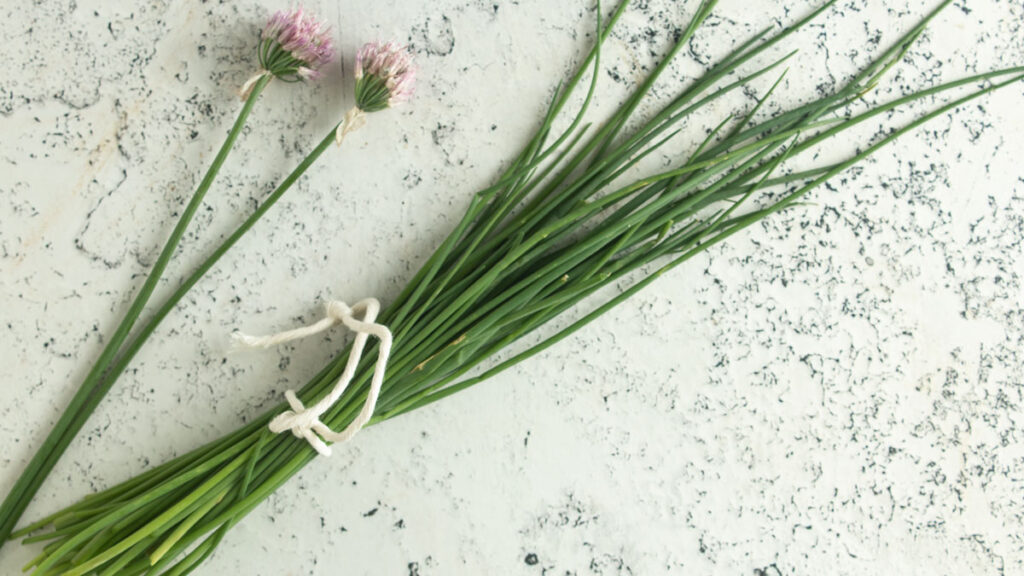
Bees love the purple pom-poms.
Bloom time: May–June
Care: Easy perennial herb. Full sun, average soil. Bees flock to the globe-shaped purple flowers.
Allium schoenoprasum.
Thyme (Thymus vulgaris)
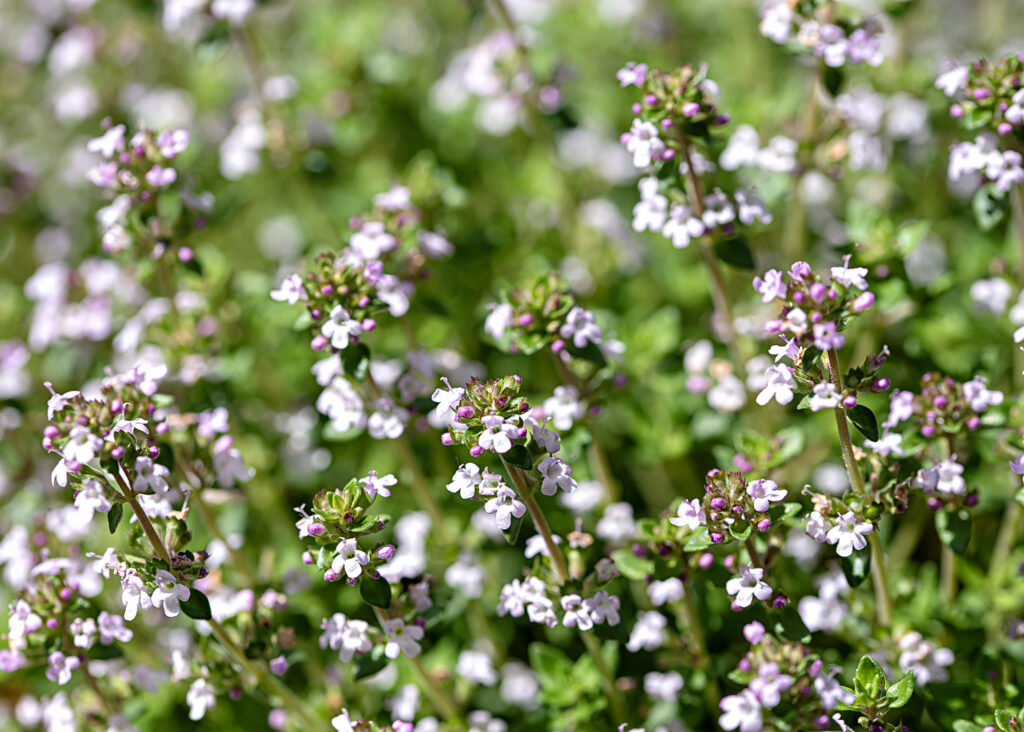
It is low-growing and full of nectar when it flowers.
Bloom time: Late spring–summer
Care: Low-growing herb for sunny, well-drained spots. Flowers attract small native bees.
Thymus vulgaris.
Oregano (Origanum vulgare)
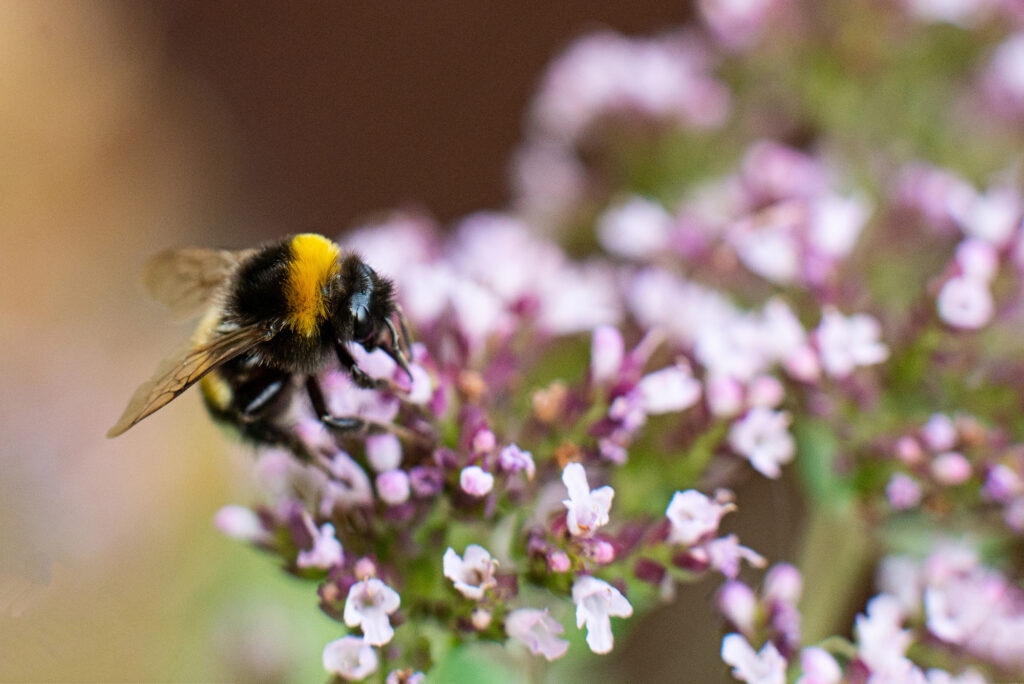
Sprawling, strong, and popular with late-season bees, too.
Bloom time: Summer into fall, but foliage develops in April.
Care: Hardy herb, thrives in poor soils. Prolific bloomer once established.
Origanum vulgare
Start These from Seed (It’s Not Too Late)
Some plants take a little time to bloom, but you want them in the ground now. Try direct seeding:
Borage (Borago officinalis)

Fast-growing with bright blue flowers that bees can’t resist.
Bloom time: Starts late spring
Care: Annual with striking blue flowers. Self-seeds. Easy to grow in full sun, loved by bumblebees.
Borago officinalis.
California Poppy (Eschscholzia californica)

Easy to grow and long-blooming.
Bloom time: May–September
Care: Annual that thrives in poor, sandy soils and sun. Although not native to the Northeast, bees use the pollen.
Eschscholzia californica.
Cosmos (Cosmos bipinnatus)

Especially the single-flower types; doubles are harder for bees to access.
Bloom time: Summer through frost
Care: Needs sun and lean soil. Continuous nectar source once blooming begins.
Cosmos bipinnatus.
Keep These Growing If They’re Already Up
If you’ve got these in the ground already and they’re sprouting, great! Let them do their thing, and don’t mow this May.
Dandelions (Taraxacum officinale)

Yes, really. Bees love them. Maybe skip the mower this month. See our article on No Mow May.
Bloom time: March–May (with repeats later)
Care: Often considered a weed, but crucial for early pollen. Thrives without help.
Taraxacum officinale.
Dead Nettle (Lamium purpureum)
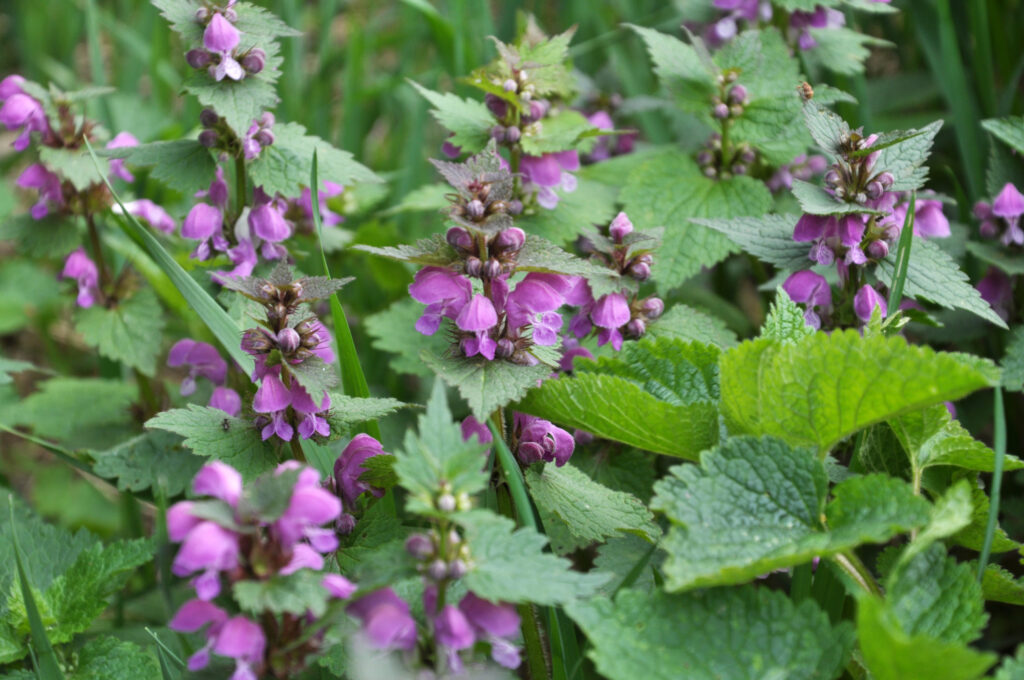
Not native, but useful early nectar.
Bloom time: March–May
Care: Early-season groundcover. Pollinators, especially bumble queens, use it heavily in spring.
Lamium purpureum
Crocus (Crocus spp)

Crocuses are an early spring flower with lots of pollen. Plant tubers in the fall.
Bloom time: March–April
Care: Bulb that naturalizes in lawns and beds. Among the very first pollen sources.
Crocus Spp
Snowdrops (Galanthus nivalis)

Their moment is fading, but they’ve already helped this year’s first wave of bees. Plant bulbs in the fall.
Bloom time: February–March
Care: Bulb for early bloom. Prefers cool, moist soil. Attracts early flies and bees.
Galanthus nivalis.
Don’t Forget Nesting Needs
April isn’t just about flowers. Now’s the time to leave bare patches of soil, avoid mulching every inch, and skip the heavy pruning. Some native bees are already looking for places to lay eggs.
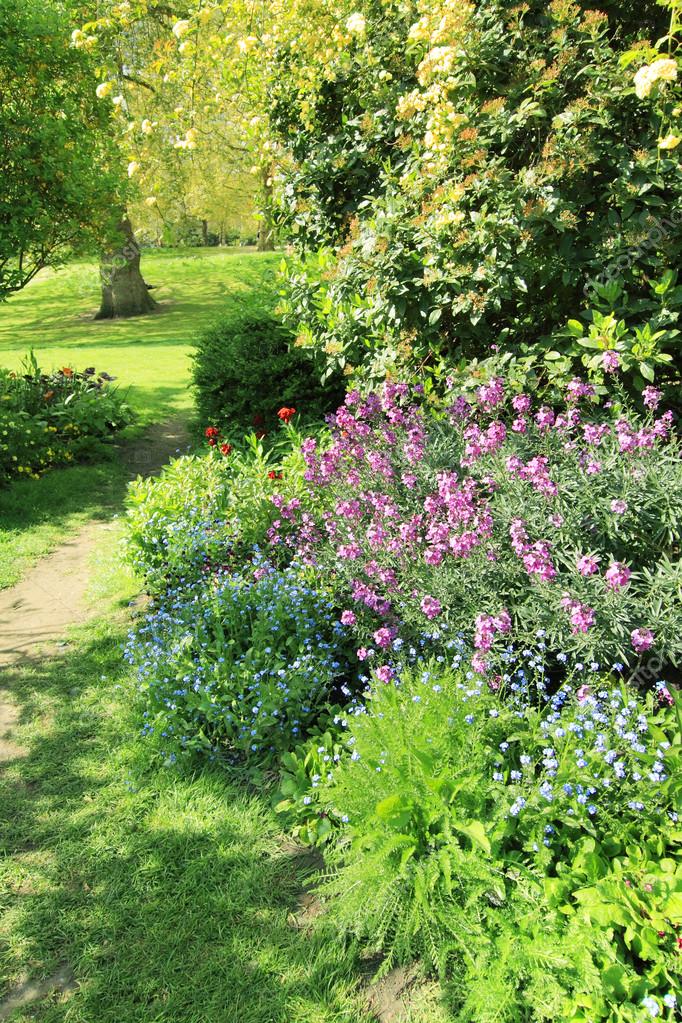
This April planting guide is just a start. See more flowers to plant in April. And don’t miss the May Planting Guide and The Bee Seeds to Plant.
🌿 Gear Up for a Bee-Friendly Garden
Contains affiliate links, for full disclosure, see FTC Disclosure, here.
Looking for tools that actually work?
We’ve pulled together our favorite picks for beekeeping, gardening, and pollinator-friendly seeds—everything you need to support bees and grow a thriving space.
Browse the full list on Amazon — all in one spot.