When I was a kid living in Lombard, Illinois, we would visit my grandmother in Westchester County during the summer. The frogs and peepers at night were almost overwhelming. They were so loud that they actually scared me as a child.
Back then, summer nights felt alive.
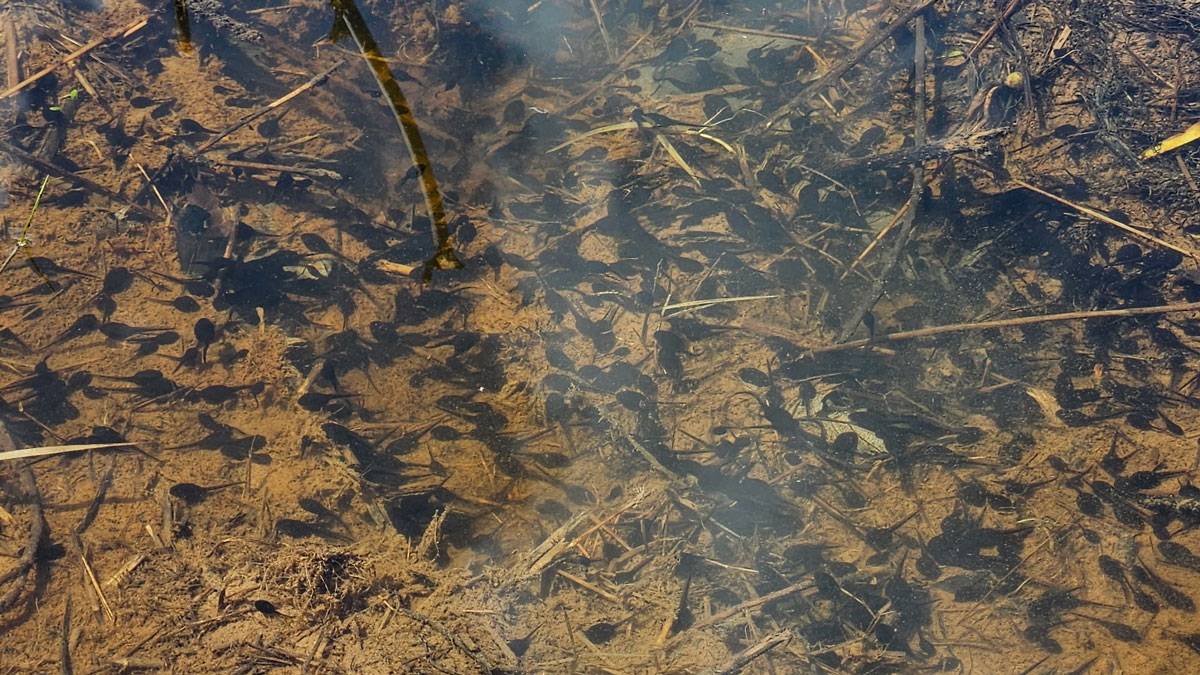
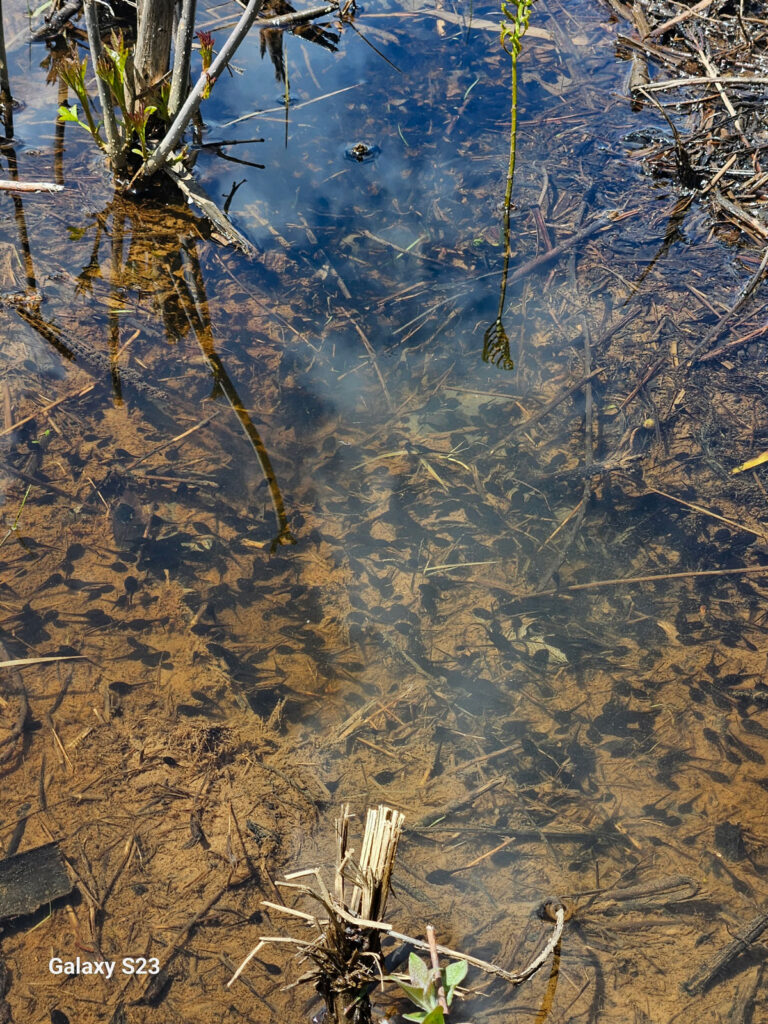
In many places today, nights feel quieter, but not at Bees Haven. When we took this photo at the pond, the water looked almost alive.
The shallows were packed with tadpoles. Thousands of them. Maybe tens of thousands.
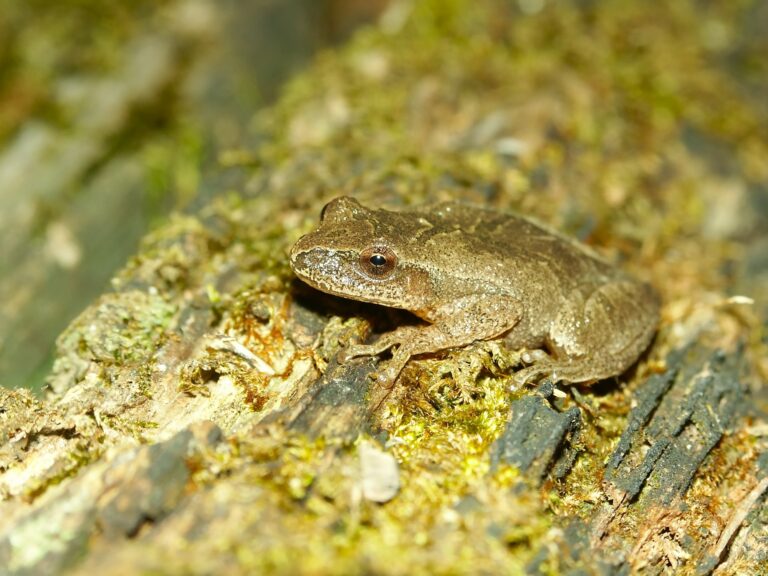
Most people see tadpoles and think about frogs. What many do not realize is that amphibians are also one of nature’s warning systems. When frogs and salamanders disappear, scientists pay attention because it often means something in the environment is no longer working properly.
That is why seeing a pond full of tadpoles is usually a very good sign.
Frogs Are Important Indicator Species
Amphibians are extremely sensitive to changes in their environment. Unlike mammals, frogs absorb water directly through their skin instead of relying on a waterproof barrier. That means pollutants and dissolved chemicals in the environment can affect them very quickly.
Pesticides, fertilizers, heavy metals, road salt, and poor water quality can interfere with amphibian development, reproduction, and survival rates during every stage of life. Even small environmental changes can have an impact.
Because of that sensitivity, frogs often decline long before people notice larger ecosystem problems. Scientists sometimes refer to amphibians as indicator species because their presence can reveal the overall health of an environment.
A pond that successfully supports frog eggs, tadpoles, and adult frogs usually supports many other forms of life as well. When amphibians thrive, it often means the water, surrounding habitat, and food web are still functioning together the way they should.
Many amphibians are also vulnerable to warming temperatures and shifting rainfall patterns because they depend on seasonal wetlands and temporary pools for breeding. In some regions, frog populations have declined long before larger environmental problems became obvious to people.
A Pond Full of Tadpoles Represents Thousands of Eggs
Most frogs lay hundreds or even thousands of eggs because survival rates are naturally low. In many species, only a tiny percentage of tadpoles ever reach adulthood. Fish, insects, turtles, snakes, and birds all feed on them.
Around the Bees Haven pond, great blue herons patrol the shallows all summer, looking for an easy meal. Even the frogs that survive the tadpole stage are still part of the food web.
That may sound harsh, but it is actually a sign of a functioning ecosystem. Healthy wetlands support layer after layer of life, with energy constantly moving between predators and prey. Tadpoles help feed everything from aquatic insects to large wading birds, while the surviving frogs later help control insect populations around the pond.
A healthy pond is rarely quiet or empty. It is constantly supporting life at multiple levels.
Why Ponds Matter More Than People Think
Small ponds may not look important at first glance, but they can support an incredible amount of biodiversity.
Shallow pond edges warm quickly in spring, creating ideal conditions for frog eggs and tadpoles. Native plants around the water provide shelter and help filter runoff. Insects gather near the water, feeding frogs and many other species.
At the same time, frogs help control insect populations once they mature. Tadpoles also play a role by feeding on algae and organic material in the pond.
One small pond can become a nursery for an entire chain of wildlife. Birds hunt near ponds. Dragonflies emerge there. Turtles patrol the edges. Even mammals rely on healthy wet areas during dry periods.
Everything becomes connected.
Amphibians Have Been Declining Worldwide
Unfortunately, frogs are struggling in many areas around the world.
Habitat loss, pollution, road traffic, invasive species, disease, and climate change have all contributed to amphibian declines. Some species have disappeared completely in areas where they were once common.
That is one reason moments like this matter.
A pond full of tadpoles may seem simple, but it represents something larger. It shows that at least for now, this little ecosystem is still supporting life the way nature intended.
Spring Sounds Different Around Healthy Water
In spring, healthy habitats announce themselves. Spring peepers call after sunset. Frogs splash along pond edges. Dragonflies patrol the shoreline later in the season. Tadpoles gather in warm, shallow water as the next generation begins.
These small signs are easy to overlook, but they tell an important story.
Sometimes the healthiest ecosystems are not the loudest or most dramatic ones. Sometimes they are quiet ponds filled with tiny black tadpoles slowly turning into frogs.
🌿 Gear Up for a Bee-Friendly Garden
Contains affiliate links, for full disclosure, see FTC Disclosure, here.
Looking for tools that actually work?
We’ve pulled together our favorite picks for beekeeping, gardening, and pollinator-friendly seeds—everything you need to support bees and grow a thriving space.
Browse the full list on Amazon — all in one spot.