At first glance, oil beetles look slow and harmless. These large black beetles often crawl across paths, garden beds, or grassy areas in spring.
But their young survive using one of the strangest tricks in the insect world.
Oil beetle larvae must hitch a ride on a bee.
Without that ride, they cannot survive.
What Is an Oil Beetle
Oil beetles belong to a group called blister beetles. They are known for their swollen abdomens and slow, crawling movement.
Adults feed on plants and are often seen walking on the ground or climbing stems.
The real drama happens in the larval stage.
What Makes an Oil Beetle Easy to Recognize
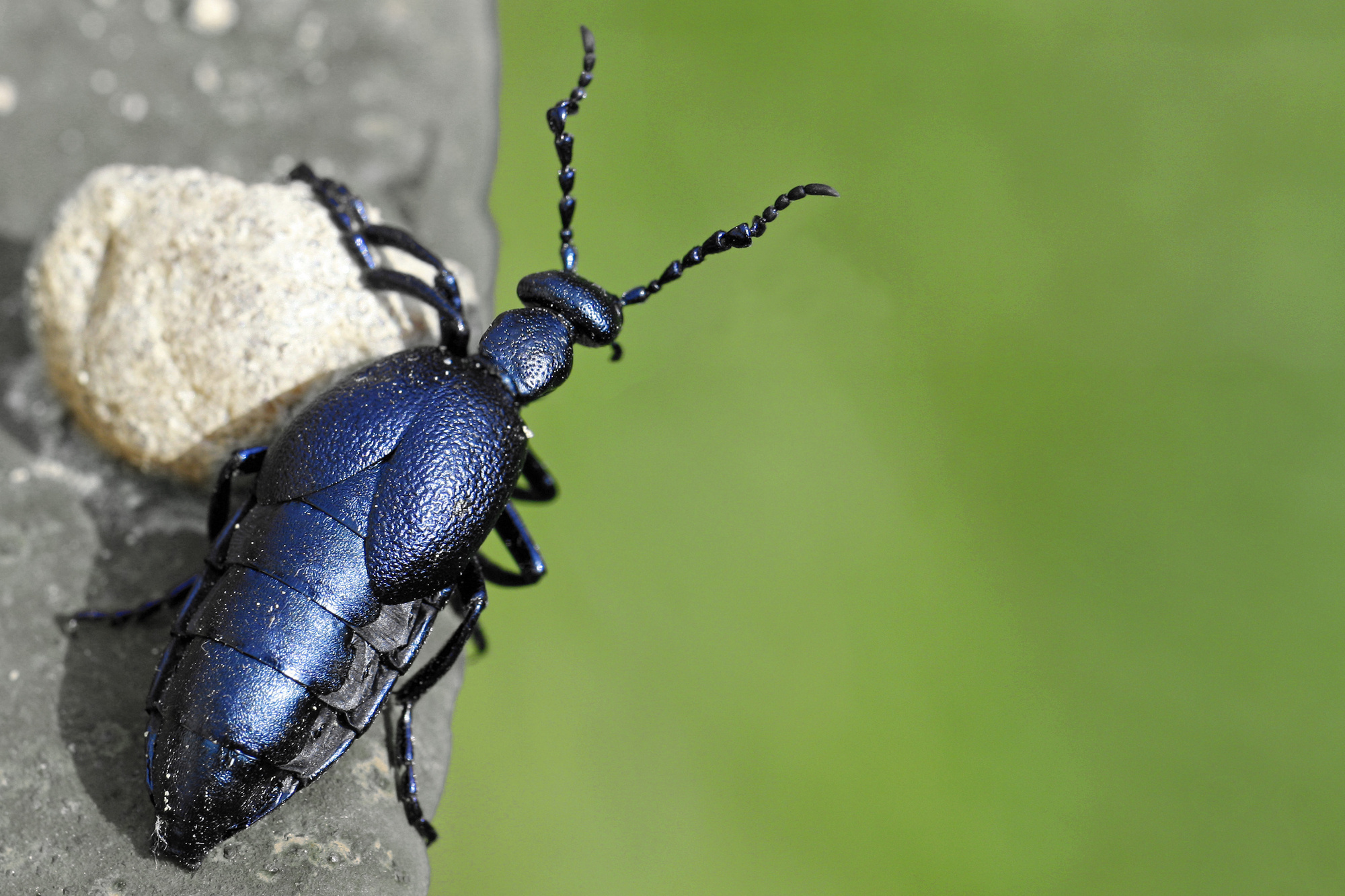
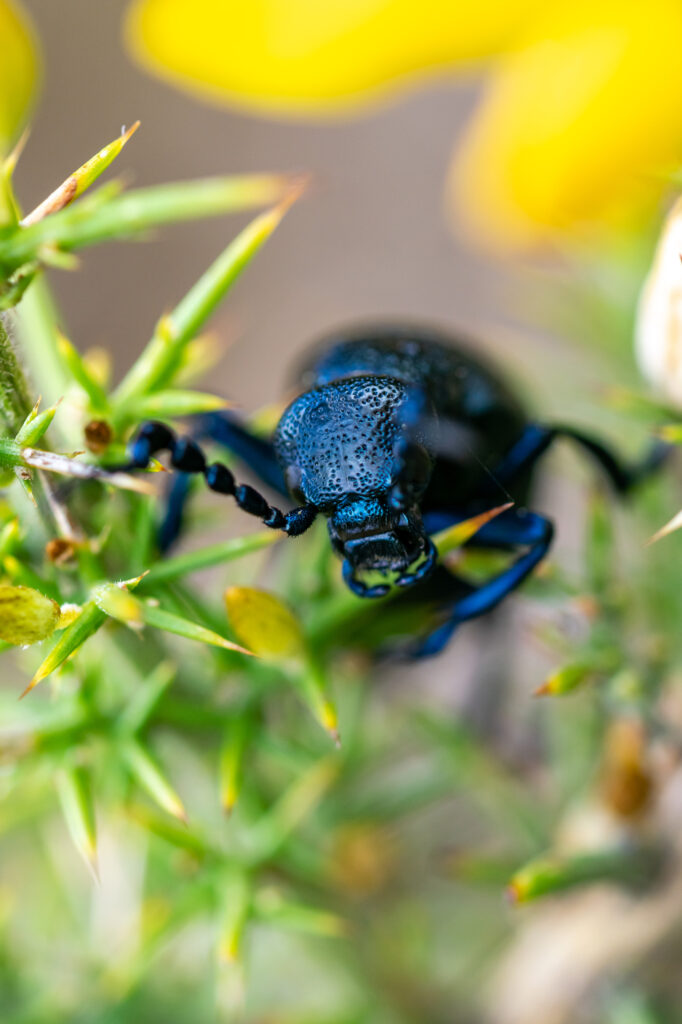
Oil beetles are large blister beetles in the genus Meloe. They have several features that make them easy to identify.
Their abdomen is unusually swollen and soft-looking. In many individuals, it appears much larger than the rest of the body.
The wing covers are very short and do not cover the abdomen. Because of this, oil beetles cannot fly.
Most species are dark blue or black with a metallic sheen. The antennae are long and bead-like, and the legs are strong for walking across soil and vegetation.
These beetles are usually seen crawling slowly on the ground or climbing stems in areas where solitary bees nest.
Mating and Egg Laying
Adult oil beetles emerge in spring. Males search for females on the ground and in low vegetation.
After mating, the female lays a large cluster of eggs in the soil. When the eggs hatch, the tiny larvae climb onto nearby plants or flowers.
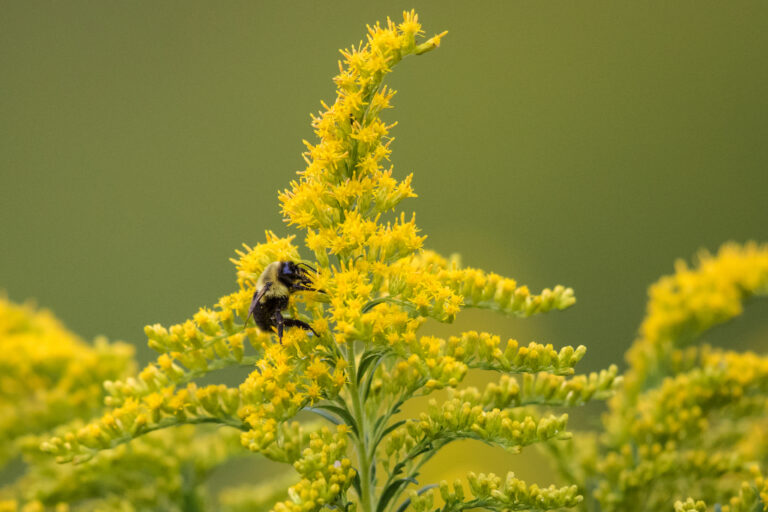
There they wait for a bee to visit. Once a bee arrives, the larvae grab onto the bee’s body and begin the next stage of their life cycle.
The bee unknowingly carries them back to its nest.
Once inside the nest, the larvae drop off and begin feeding on the pollen and nectar stored for the bee’s young. In many cases, the bee egg or larva does not survive.
A Clever Impersonation
Some oil beetle larvae take the trick even further.
They gather in clusters that resemble the shape and scent of a female bee. Male bees attempt to mate with the cluster, allowing the larvae to attach to the bee’s body.
Some oil beetle larvae gather in clusters that resemble the shape and scent of a female bee. Male bees sometimes attempt to mate with the cluster, and the larvae attach to the bee’s body. The bee then carries the larvae away.
When that bee later contacts another bee or enters a nest, the larvae can transfer and eventually reach the nest where they continue their development.
A Strange but Natural Part of the Ecosystem
Oil beetles may sound like villains, but they are part of the complex relationships that exist among insects.
Their survival depends entirely on bees, and their presence shows how many different species rely on pollinators in unexpected ways.
Nature often works through these unusual connections.
Did You Know
Oil beetles can release a defensive chemical called cantharidin when disturbed. This substance can cause skin irritation and blisters, which is why these insects belong to the blister beetle family.
🌿 Gear Up for a Bee-Friendly Garden
Contains affiliate links, for full disclosure, see FTC Disclosure, here.
Looking for tools that actually work?
We’ve pulled together our favorite picks for beekeeping, gardening, and pollinator-friendly seeds—everything you need to support bees and grow a thriving space.
Browse the full list on Amazon — all in one spot.