Oak wilt is a new threat to our oak trees locally. There is a quarantine area less than 40 miles from here. At the Bees Haven property, we don’t have any oaks, but there are many oak/maple forests in the area.
Reading the NY DEC bulletin reminded me of the song “The Trees” by the Canadian band Rush. It goes like this.
There is unrest in the Forest
There is trouble with the trees
For the Maples want more sunlight
And the Oaks ignore their pleas.
The songs lyricist, Neil Peart, was a brilliant songwriter and poet. But it got me thinking about what would happen if we lost all of the oaks?
The song paints a picture of a conflict between maples and oaks, with one side demanding more light and the other simply content with how it is. It is clever, but it also feels a little ironic when you look at what is happening in real forests.
If oak wilt spreads through an area, the result is unbalanced. It is a loss. Oaks do not fade out slowly. They can die within a single season. When that happens, the canopy opens up fast. What used to be filtered light turns into full, direct sun.
At first glance, that sounds like exactly what the maples were asking for. But maples that grow under oaks are not built for that kind of exposure. They are adapted to shade. Their leaves can scorch. Their bark can suffer. Branches that were protected for years suddenly take the full hit of the sun and heat.
The forest floor changes, too. Soil dries faster. Temperatures swing more. Seedlings that depended on shade struggle to survive. Instead of stepping into a better situation, the maples face stress they were never prepared for.
And beyond that, something even bigger starts to unravel.
Not only will oak wilt affect the trees in the forest, but its loss could also devastate hundreds of insect and mammal species. Oaks, like bees, are considered a keystone species, meaning they have a “disproportionately large effect on their natural environment relative to their abundance.”
They are one of the most important trees for wildlife in North America. They support hundreds of species. Insects rely on them. Birds rely on those insects. Mammals like deer, turkeys, squirrels, and more rely on acorns. Remove oaks, and that entire chain breaks.
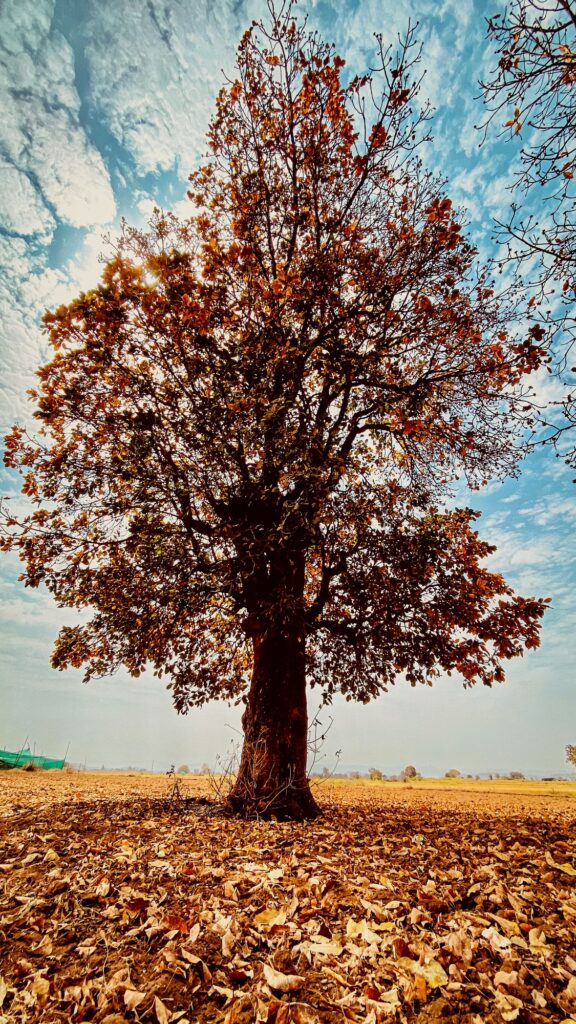
Oaks and Pollinators
Oaks are not known for feeding pollinators the way maples do in early spring. You will not see bees crowding oak flowers the same way. But that does not mean they are unimportant.
Oaks support hundreds of species of caterpillars and other insects. Those insects are a key food source for birds, especially during nesting season. Many of those birds help control pests and spread seeds across the landscape. The entire system stays connected.
When oaks disappear, that web starts to thin out.
Fewer insects mean fewer birds. Fewer birds mean changes in how the ecosystem balances itself. Over time, that can ripple outward, even affecting pollinators.
At the same time, the loss of the oak canopy changes the light and temperature on the forest floor. Areas that once stayed cooler and more stable can become hotter and drier. Early-blooming plants that pollinators rely on may struggle with those shifts.
Maples do provide an important early pollen source. But if they are suddenly exposed to too much sun after oaks are lost, they can even become stressed.
So while oaks do not directly feed pollinators, they hold together the conditions that allow pollinators and everything around them to function. The forest does not disappear, but it becomes thinner in ways that are easy to miss at first. Fewer insects. Fewer birds. Less life moving through it.
There’s a line in The Trees that speaks to the creatures fleeing, and it starts to feel less like satire and more like a warning. In the song, the problem was the trees themselves.
In reality, the threat is something we introduced and can still slow down if people pay attention. If the oaks go, the forest keeps standing, but it supports far less life.
What Can You Do?
Oak wilt spreads fast, but people play a big role in how far it goes. Do not move firewood. Even a short trip can carry the fungus into a new area. Buy it where you burn it.
Avoid pruning or cutting oaks during the growing season. Fresh cuts attract beetles that can carry the disease. If a tree must be cut, seal the wound right away. Learn to recognize the early signs. Leaves may wilt, turn brown at the edges, or drop early. A sudden decline in summer is a red flag.
Report suspected cases. Your local DEC office or extension service can help confirm what you are seeing and guide next steps. Support a mix of native trees and plants on your property. Diversity helps buffer the impact of the loss of one species.
And even if you do not have oaks on your land, stay aware. What happens in nearby forests will still shape the wildlife, soil, and pollinators around you. Because once oak wilt takes hold, stopping it becomes much harder than slowing it down early.
🌿 Gear Up for a Bee-Friendly Garden
Contains affiliate links, for full disclosure, see FTC Disclosure, here.
Looking for tools that actually work?
We’ve pulled together our favorite picks for beekeeping, gardening, and pollinator-friendly seeds—everything you need to support bees and grow a thriving space.
Browse the full list on Amazon — all in one spot.