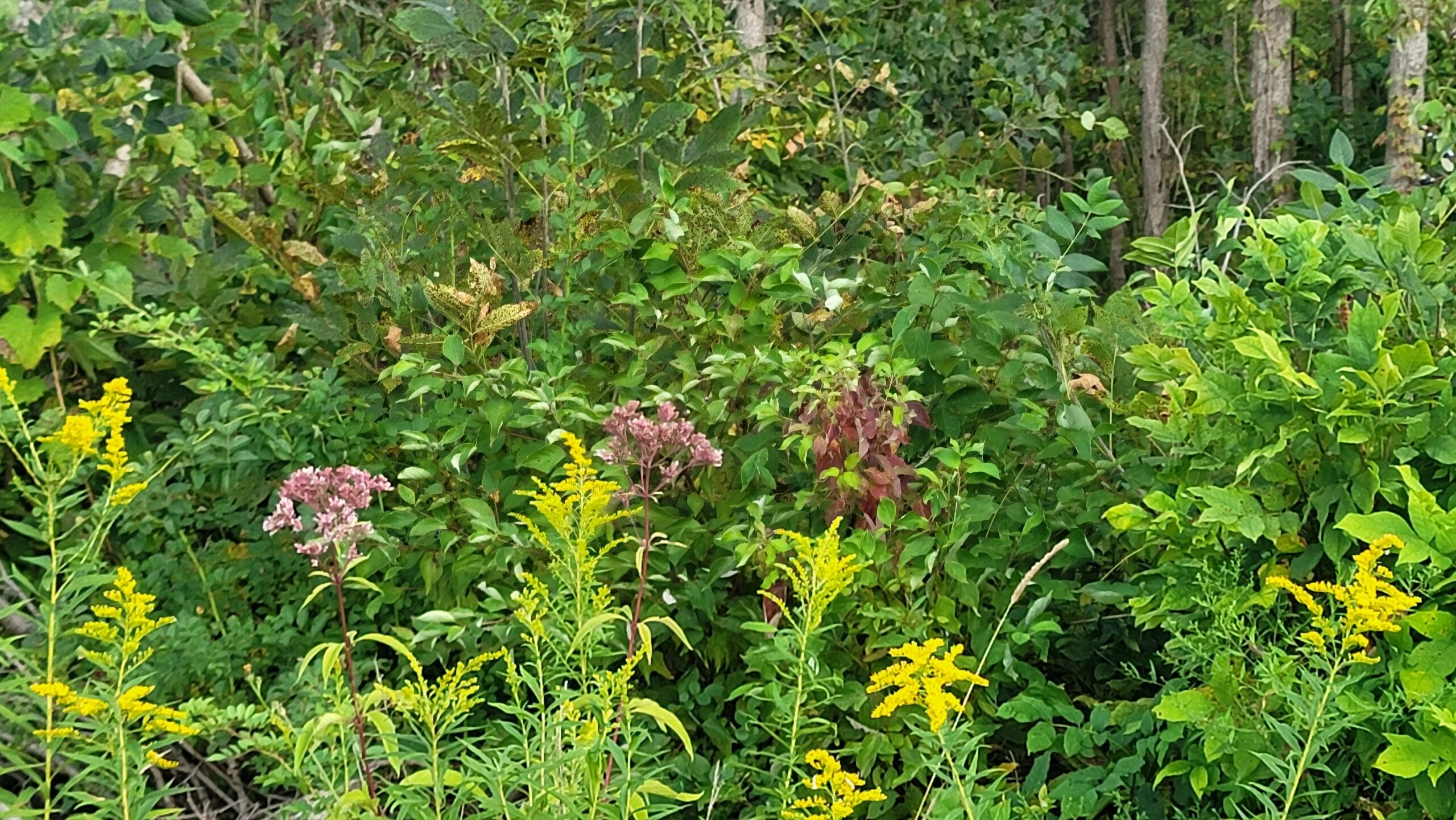
Milkweed is best known as the host plant for monarch butterflies, but it supports a surprising variety of insects. Some feed on the leaves, others collect nectar from the flowers, and a few hunt other insects hiding among the stems. The next time you stop to admire your milkweed patch, take a closer look. You may discover an entire ecosystem living on a single plant.
Photo Credit: Bees Haven.
Why Milkweed Attracts So Many Insects
Milkweed provides much more than food for monarch caterpillars. Its fragrant flowers produce abundant nectar that attracts bees, butterflies, beetles, flies, and wasps. The leaves, stems, and seed pods also provide food and shelter for insects that have evolved to live on milkweed despite its toxic sap.
A healthy milkweed patch is one of the busiest places in the garden during summer.
Monarch Butterflies and Caterpillars
The monarch butterfly is the insect most people associate with milkweed. Female monarchs lay their eggs on milkweed because it is the only plant monarch caterpillars can eat. As the caterpillars feed, they absorb chemicals called cardiac glycosides that help protect them from many predators.
See our article, “Why Aren’t There Monarch Caterpillars on My Milkweed?”
Red Milkweed Longhorn Beetle
One of the most colorful insects on milkweed is the Red Milkweed Longhorn Beetle (Tetraopes tetrophthalmus). Adults feed on leaves, flowers, and seed pods, while the larvae spend their lives feeding on roots underground.
Like monarch caterpillars, these beetles absorb toxins from milkweed, making them less appealing to predators.
Large Milkweed Bug
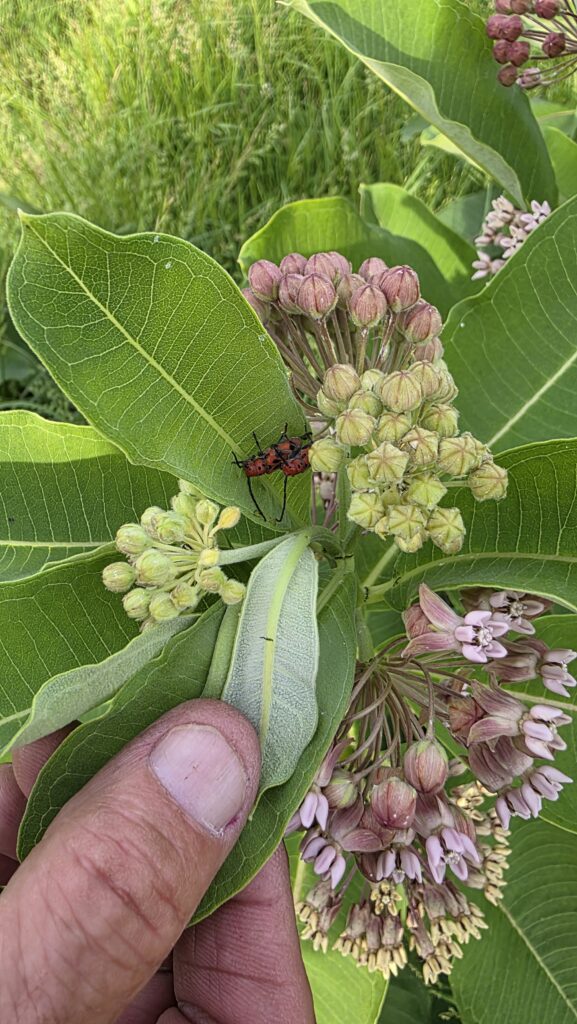
The Large Milkweed Bug (Oncopeltus fasciatus) is bright orange with bold black markings. Unlike monarch caterpillars, it feeds primarily on developing seeds rather than leaves. These bugs are harmless to people and are common visitors to milkweed patches in late summer.
Small Milkweed Bug
Smaller than its cousin, the Small Milkweed Bug (Lygaeus kalmii) also feeds on milkweed seeds. It is frequently mistaken for the Large Milkweed Bug but has a different pattern of black and orange markings.
Bees
Milkweed flowers are among the best nectar sources for many native bees.
You may see:
- Bumble bees
- Honey bees
- Sweat bees
- Leafcutter bees
- Long-horned bees
The flowers bloom for several weeks, providing valuable food during the middle of summer.
Hoverflies
Hoverflies often resemble small bees or wasps, but they cannot sting. Adults feed on nectar and pollen, while the larvae of many species consume aphids and other garden pests. They are beneficial insects to have around the garden.
Wasps
Paper wasps, thread-waisted wasps, and other solitary wasps regularly visit milkweed flowers for nectar. Although many people fear wasps, most are important predators that help control caterpillars, flies, and other insects.
Spiders
Not every visitor comes for nectar. Orb-weavers, crab spiders, and jumping spiders often hide among the flowers, waiting to ambush pollinating insects. Their camouflage can make them difficult to spot.
Aphids
Bright yellow Oleander Aphids frequently cover milkweed stems. Large colonies may look alarming, but established milkweed plants usually tolerate them well. Lady beetles, lacewings, hoverfly larvae, and tiny parasitic wasps often keep aphid numbers under control.
Flies
Many small flies visit milkweed flowers to feed on nectar. Although often overlooked, they are important pollinators that help increase insect diversity in your garden.
Should You Remove These Insects?
In most cases, no. A thriving milkweed patch naturally supports dozens of insect species. Many are pollinators, predators, or part of the food web that helps maintain a healthy ecosystem. Unless an invasive pest is causing significant damage, allowing these insects to coexist benefits wildlife throughout your landscape.
Why Are So Many Milkweed Insects Red and Orange?
As you look closely at a milkweed patch, you’ll notice a pattern. Many of the insects living on milkweed are brightly colored in shades of red, orange, yellow, and black. These bold colors are not a coincidence. They serve as a warning to predators.
Milkweed contains naturally occurring toxins called cardiac glycosides, also known as cardenolides. Some insects have evolved the ability to eat milkweed without being harmed. Instead of avoiding the toxins, they store them in their own bodies.
The bright colors advertise that they are unpleasant or even toxic to eat. This type of warning coloration is known as aposematic coloration. Birds and other predators often learn to associate these bold colors with a bad meal and leave similarly colored insects alone.
Monarch caterpillars and adult monarch butterflies are perhaps the best-known examples, but they are far from the only ones. Several other milkweed specialists use the same strategy, including:
- Monarch butterflies and caterpillars
- Red Milkweed Longhorn Beetles
- Large Milkweed Bugs
- Small Milkweed Bugs
Not every red or orange insect is toxic, and not every milkweed visitor feeds on the plant itself. However, the repeated appearance of these warning colors is one of the most fascinating examples of evolution at work in a milkweed patch.
To a hungry bird, red and orange on a milkweed plant often mean, “Find something else to eat.”
Frequently Asked Questions
No. Most insects visiting milkweed are pollinators, predators, or harmless plant feeders that play important roles in the ecosystem.
Red Milkweed Longhorn Beetles and milkweed bugs feed on the plant, but they generally do not directly harm monarch caterpillars.
Milkweed produces abundant nectar and serves as a host plant for specialized insects, making it one of the most insect-rich native plants in North America.
Avoid using insecticides whenever possible. Sprays can kill monarch caterpillars and many beneficial insects that depend on milkweed.
A Small Wildlife Habitat
A single patch of milkweed can support dozens of insect species throughout the growing season. From monarch butterflies and native bees to colorful beetles and beneficial flies, each visitor plays a role in the ecosystem. Spending just a few minutes observing a milkweed patch often reveals a surprising amount of activity that most people never notice.
🌿 Gear Up for a Bee-Friendly Garden
Contains affiliate links, for full disclosure, see FTC Disclosure, here.
Looking for tools that actually work?
We’ve pulled together our favorite picks for beekeeping, gardening, and pollinator-friendly seeds—everything you need to support bees and grow a thriving space.
Browse the full list on Amazon — all in one spot.