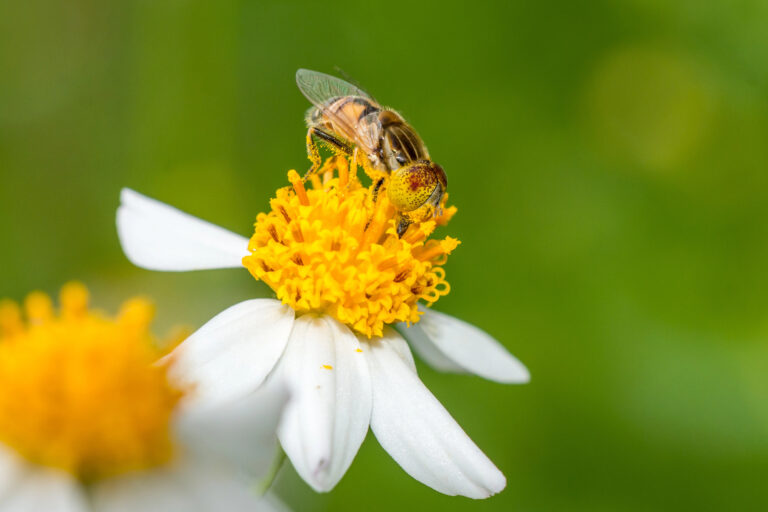

Honey bees face many threats today. Habitat loss and pesticides often get the most attention. But one of the most damaging enemies is much smaller. A parasite called Varroa destructor has become one of the most serious problems for honey bees worldwide.
This mite is barely visible to the naked eye. Yet it can devastate entire colonies.
What Is Varroa Destructor
Varroa destructor is a parasitic mite that feeds on honey bees. It originally evolved with the Asian honey bee (Apis cerana), which developed defenses against it. When the mite jumped to the European honey bee (Apis mellifera), the results were very different.
European honey bees had no natural defenses against the parasite. Colonies began collapsing in large numbers.
The mites spread quickly across continents through the movement of managed honey bee colonies. Today, they are found almost everywhere honey bees live.
How the Mites Attack Bees
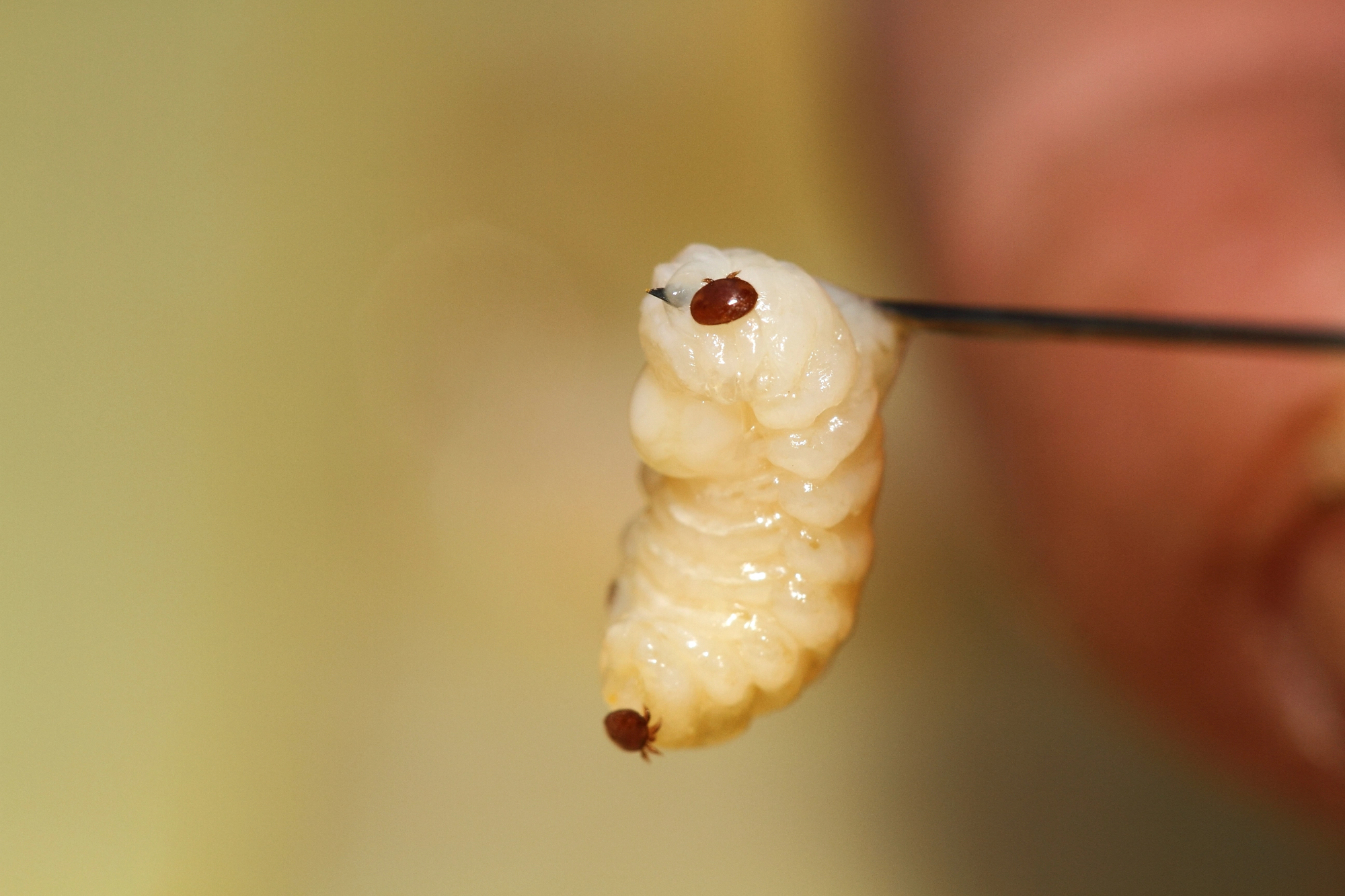
Varroa mites attach themselves to both adult bees and developing bee larvae.
For many years, researchers believed that mites mainly fed on bee hemolymph, which is similar to insect blood. More recent research suggests the mites feed heavily on fat body tissue, which plays a major role in bee immune function and metabolism.
When mites feed, they weaken the bees. But the damage does not stop there.
Varroa mites also spread several dangerous viruses.
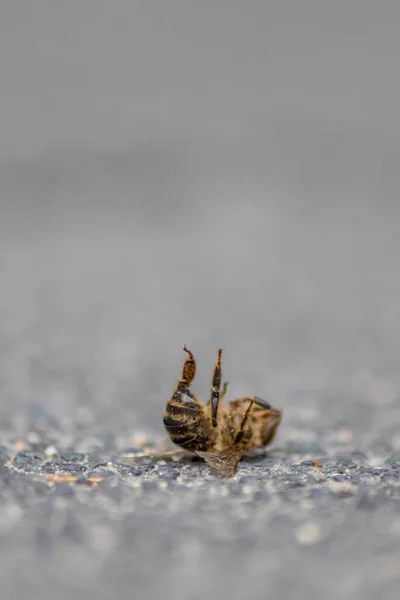
One of the most well-known is Deformed Wing Virus. Bees infected with this virus often emerge with shriveled wings and cannot fly. These bees usually die quickly and cannot contribute to the colony.
As mite numbers grow, virus transmission increases. Colonies can collapse within months if infestations are severe.
Why Varroa Is So Dangerous
The real danger of Varroa comes from how quickly it multiplies.
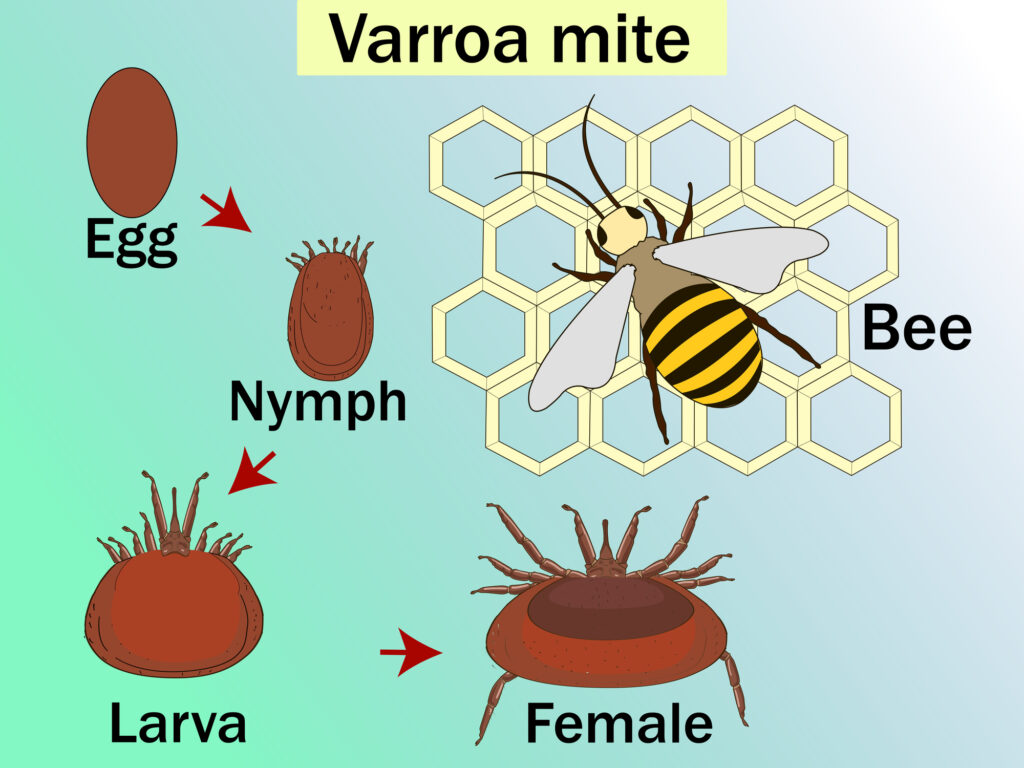
Female mites enter brood cells just before the cell is capped. Once sealed inside, they lay eggs on the developing bee pupa. When the new bee emerges, several new mites may emerge with it.
This reproductive cycle allows mite populations to grow rapidly during the season when bees are raising brood.
By late summer and fall, mite numbers can become extremely high if they are not controlled. At that point, winter bees may already be infected with viruses. As a result, colonies often fail during winter.
What Researchers Have Learned
Scientists continue to study Varroa mites to better understand their behavior and their impact on bees.
Research published in the journal Proceedings of the National Academy of Sciences confirmed that mites feed heavily on bee fat body tissue. This discovery helped explain why infected bees show weakened immune systems and reduced lifespan.
Other studies have focused on the mites’ role as virus vectors. Varroa mites are now considered one of the main drivers behind the global spread of Deformed Wing Virus.
Researchers are also studying honey bee populations that show natural resistance. Some colonies have developed behaviors that help limit mite reproduction, such as removing infested brood.
These traits could become important tools for breeding more resilient bees.
A Continuing Challenge
Varroa mites remain one of the biggest challenges in modern beekeeping.
Beekeepers monitor mite levels and use several methods to keep populations under control. These include organic acids, essential oils, and other treatments designed to reduce mite numbers without harming bees.
Even with management, the parasite continues to pressure honey bee populations.
The story of Varroa destructor shows how a tiny parasite can reshape an entire ecosystem. It also highlights the delicate balance between pollinators, parasites, and the environments they share.
Understanding these relationships helps researchers and beekeepers work toward healthier bee populations in the future.
For more interesting bee ecology facts see our article Zombie Bees Are Real, And A Parasitic Fly Is Behind It.
🌿 Gear Up for a Bee-Friendly Garden
Contains affiliate links, for full disclosure, see FTC Disclosure, here.
Looking for tools that actually work?
We’ve pulled together our favorite picks for beekeeping, gardening, and pollinator-friendly seeds—everything you need to support bees and grow a thriving space.
Browse the full list on Amazon — all in one spot.