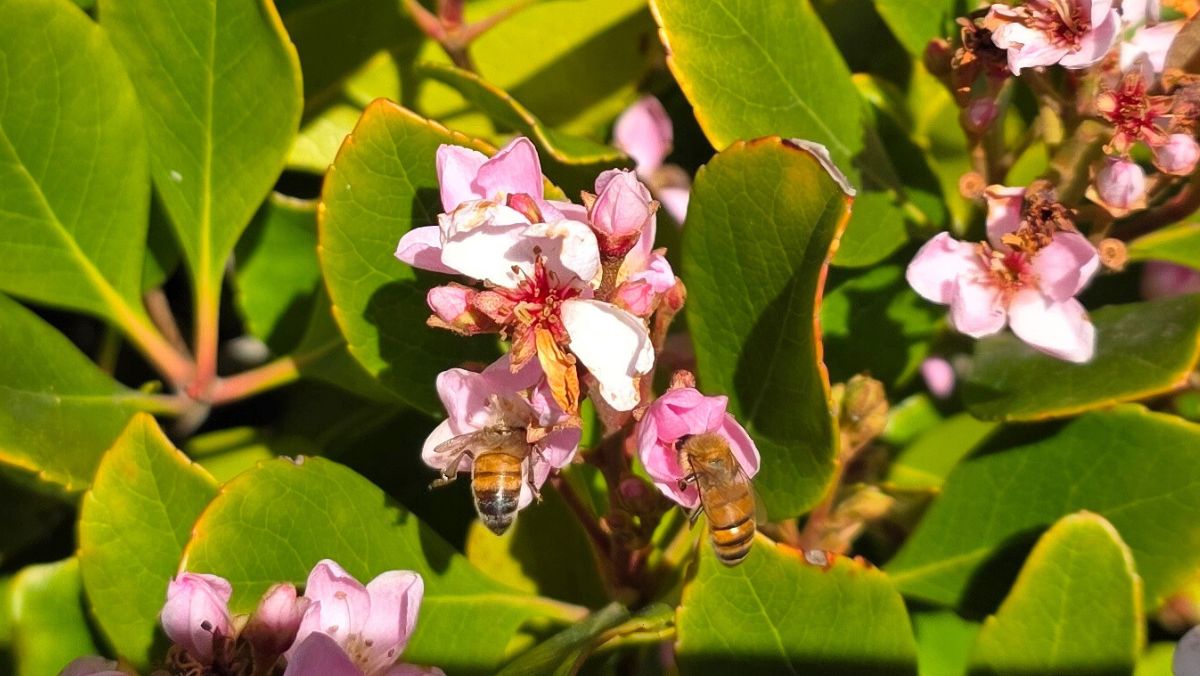

Most people picture bees as organized insects that move in and out of a hive with purpose. Workers collect nectar. Others guard the entrance. Some care for the young. The colony runs like a complex living machine.
A strange parasite can break that pattern.
Scientists discovered a tiny fly that infects honey bees and changes their behavior. The infected bees leave the hive at night and wander around lights. Many crawl on the ground in circles or move slowly, as if confused.
Because of this behavior, researchers began calling them zombie bees.
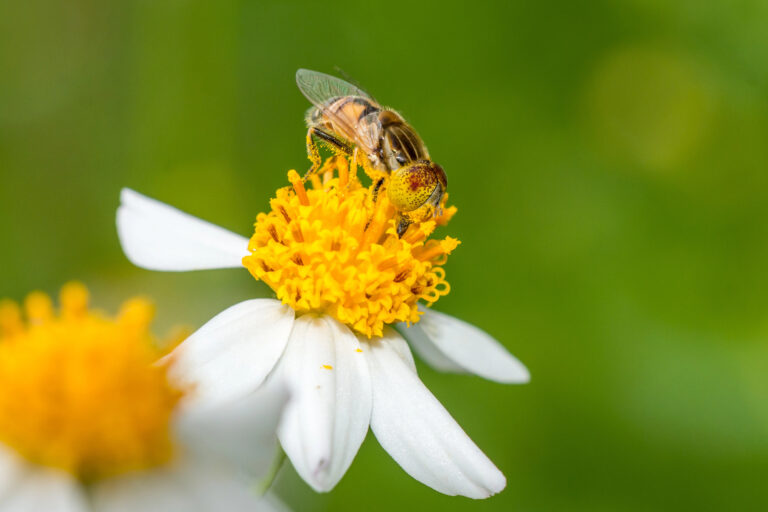
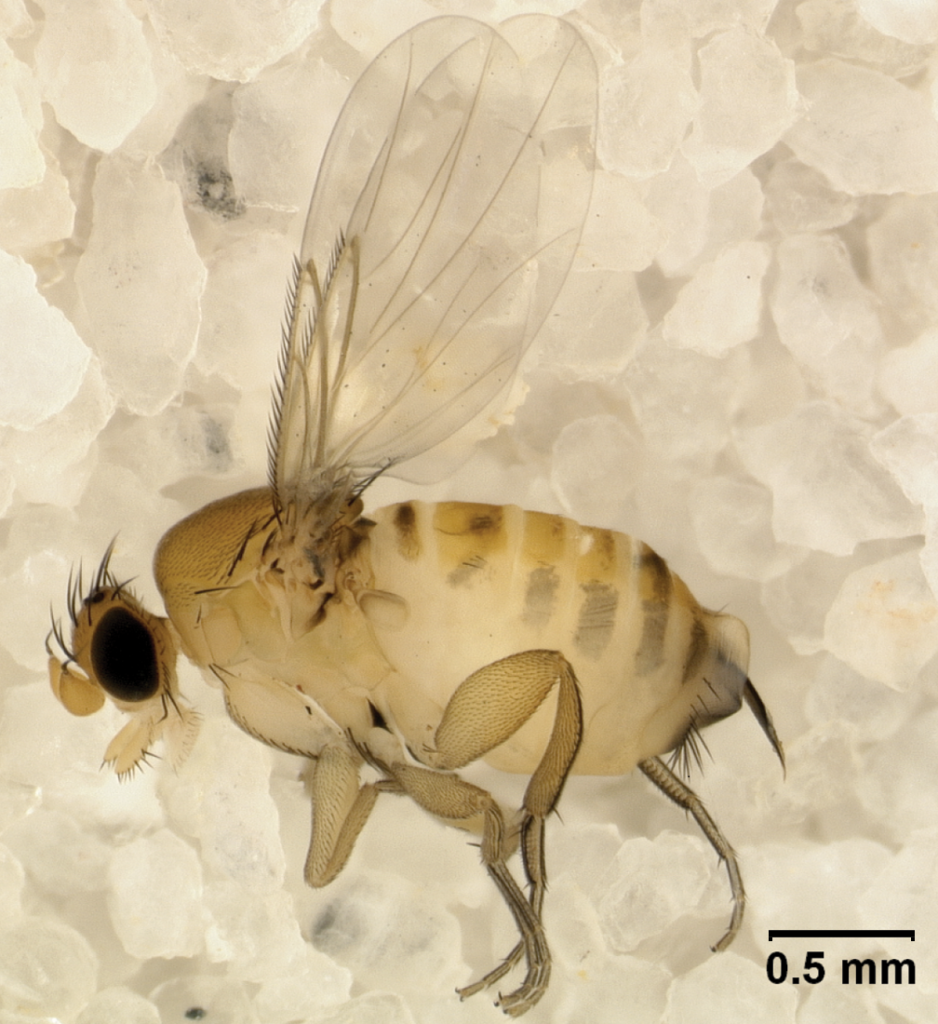
The responsible parasite is a small insect called Apocephalus borealis, or the Zombie Bee Fly. It belongs to a group known as phorid flies. These flies are sometimes called scuttle flies because of the quick way they move when walking.
Phorid flies attack many kinds of insects. Some species parasitize ants. Others attack beetles or wasps. The discovery that one of these flies also targets honey bees surprised many researchers.
The attack itself happens very quickly.
A female fly approaches a bee while it is flying or visiting flowers. She injects eggs into the bee’s abdomen using a sharp egg-laying structure. The bee usually flies away and continues its normal activities.
Inside the bee, the eggs begin to develop.
Tiny larvae hatch and start feeding on tissues inside the bee’s body. At first, the bee may look normal. It still gathers nectar and pollen. It may even return to the hive for a short time.
As the larvae grow, the bee begins to act differently.
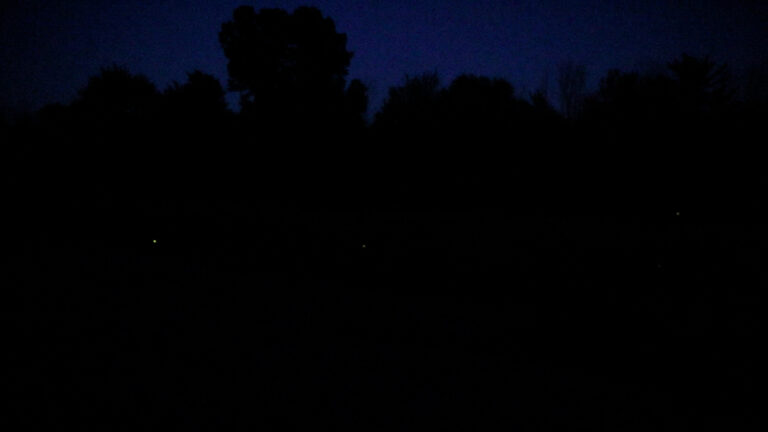
Instead of staying inside the hive at night, infected bees often leave the colony after dark. They fly toward light sources. Porch lights, streetlights, and illuminated windows attract them.
Beekeepers and researchers have reported seeing dozens of bees crawling under lights late at night. Healthy bees almost never leave the hive in darkness, so this behavior immediately stood out.
The infected bees often move in strange ways.
Some crawl in circles. Others appear disoriented and move slowly across the ground. Within a short time, the bee dies.
The most disturbing part of the cycle happens next.
Several days after the bee dies, the fly larvae crawl out of the body. They usually emerge near the head or between segments of the abdomen. The larvae drop to the ground and form pupae.
After completing their development, new adult flies emerge and search for more bees.
Scientists first documented this parasite in honey bees in a 2012 study published in the journal PLoS ONE. Researchers Andrew Core and colleagues examined honey bees that had been behaving strangely near lights in California.
When they dissected the bees, they found developing phorid fly larvae inside the bodies. The study confirmed that the parasite Apocephalus borealis had successfully switched hosts and was infecting honey bees.
The researchers also recorded the unusual nighttime behavior of infected bees. Many abandoned their hive after sunset and gathered around lights before dying.
Another surprising finding came later.
Researchers discovered that the parasitic fly may also carry pathogens that affect bees. A study in Proceedings of the Royal Society B found that phorid flies collected from infected bees carried Deformed Wing Virus and the fungus Nosema ceranae, both known honey bee diseases.
This raised the possibility that the parasite could spread infections between colonies.
Scientists are still trying to understand how common zombie bee infections are and how much damage they cause to bee populations.
The parasite has been recorded in several parts of North America, including the western United States and parts of the East Coast. However, infections appear to be sporadic rather than widespread.
Even so, the discovery highlights how complex bee ecology can be.
Honey bees face many pressures at once. Parasites, diseases, pesticides, and habitat loss all affect colony health. A small parasitic fly may seem insignificant, yet it shows how many different organisms interact with bees in the natural world.
For researchers, zombie bees are more than a strange curiosity.
They provide a rare example of a parasite altering its host’s behavior. By altering how the bee behaves, the parasite increases its chances of survival and reproduction.
For anyone watching bees in their yard or garden, the phenomenon is also a reminder that insect life is far more complicated than it first appears.
If you’re interested in helping scientists determine the range and severity of this parasite, consider joining Zombee Watch, a project created by San Francisco State University to track where this parasite is infecting honey bees in North America.
For more interesting bee ecology articles, see Why August Is Hard for Pollinators and Early Spring Emerging Pollinators.
🌿 Gear Up for a Bee-Friendly Garden
Contains affiliate links, for full disclosure, see FTC Disclosure, here.
Looking for tools that actually work?
We’ve pulled together our favorite picks for beekeeping, gardening, and pollinator-friendly seeds—everything you need to support bees and grow a thriving space.
Browse the full list on Amazon — all in one spot.