

A flower covered in bees and butterflies often looks like a peaceful scene. Look a little closer, though, and you may notice something unexpected waiting among the petals. Some of the most effective predators in nature rely on camouflage so good that they disappear right into the flower itself.
These predators are not a sign that something has gone wrong. In most cases, they are a sign that an ecosystem is doing exactly what it should.
The Art of Hiding in Plain Sight
Camouflage allows predators to blend into their surroundings so completely that prey never sees them coming. On flowers, this often means matching color, shape, and even texture.
Many flower-dwelling predators sit completely still for long periods. Pollinators land nearby, focused on nectar and pollen, unaware that danger is inches away. This strategy requires patience, precision, and a deep connection to the plants these predators rely on.
Crab Spiders and Floral Ambushes
Crab spiders are one of the most well-known camouflaged predators found on flowers. They often sit on petals with their legs spread wide, waiting for pollinators to land.
Some species can change color over time to better match their surroundings. White, yellow, and pale green are common shades, allowing them to disappear on daisies, goldenrod, and other blooms. Their stillness makes them nearly invisible until they strike.
Crab spiders do not chase prey. They rely entirely on surprise. Their presence shows that flowers are attracting enough pollinators to support predators as well.
Ambush Bugs and Other Flower Hunters
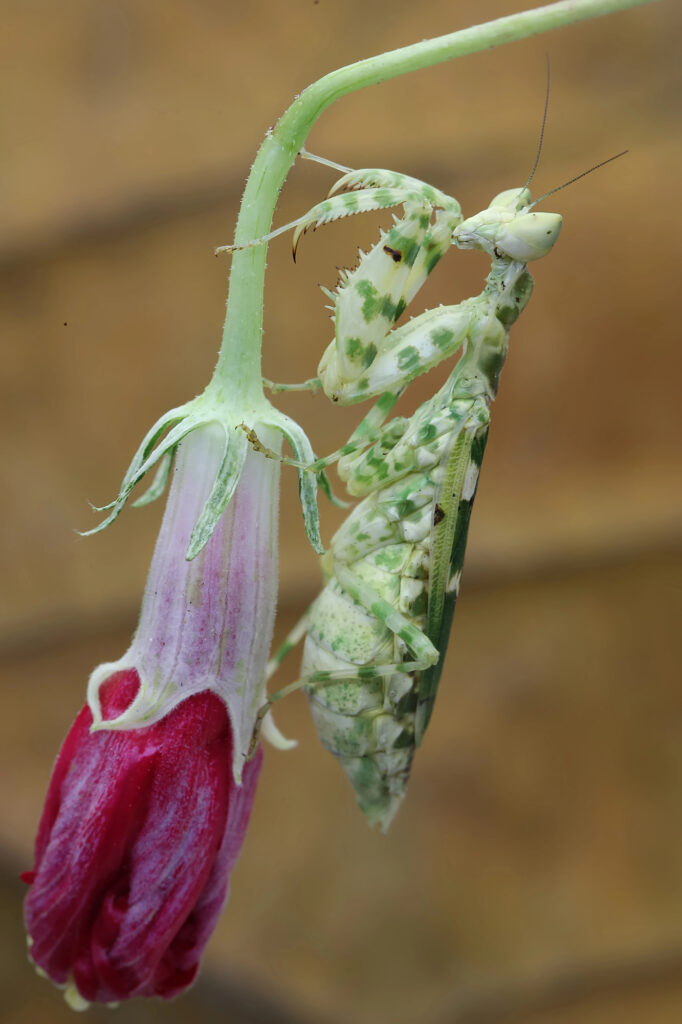
Ambush bugs are another master of disguise. Their jagged bodies and mottled colors blend easily into flower heads and seed clusters. They often perch near the center of blooms where pollinators gather.
Praying mantises sometimes use a similar approach. Smaller mantis species or juveniles may hide among flowers, matching leaf shapes or petal colors. Assassin bugs and certain beetles also use floral camouflage.
Each of these predators depends on both the plant and the pollinators visiting it. Remove one part of that system, and the rest quickly follows.
Predators and Pollinators Evolved Together
Pollinators are not helpless victims. Many have evolved behaviors to reduce risk, such as quick visits, constant movement, and keen vision. Predators and pollinators have shaped each other over millions of years.
This balance keeps populations stable. Predators help prevent any one species from becoming too dominant. Pollinators that survive learn to avoid danger more effectively. The result is a system that adapts and endures.
Seeing predators on flowers does not mean pollinators are failing. It means the system is complex and alive.
What Their Presence Says About Habitat Quality
Camouflaged predators only thrive where conditions are right. They need diverse plants, steady prey, and minimal chemical exposure. A landscape that supports predators usually supports a wide range of insects and plants.
In simplified environments with few plant species, predators struggle. Without variety, there are fewer places to hide and fewer pollinators to hunt. Healthy habitats support many layers of life, even the ones we do not always notice.
Why Removing Predators Causes Bigger Problems
It can be tempting to remove predators to protect pollinators, but this often backfires. When predators disappear, insect populations can become unbalanced. This can lead to pest outbreaks that damage plants or spread disease.
Predators play an important role in stabilizing systems. Their absence creates gaps that are hard to fill.
Learning to See the Whole Picture
Not every flower visit ends peacefully, and that is part of nature’s design. A yard or meadow that supports both pollinators and predators is healthy.
Healthy habitats are diverse and dynamic.
Want to learn about pollinators? See our article Hummingbird-Friendly Container Gardens.
🌿 Gear Up for a Bee-Friendly Garden
Contains affiliate links, for full disclosure, see FTC Disclosure, here.
Looking for tools that actually work?
We’ve pulled together our favorite picks for beekeeping, gardening, and pollinator-friendly seeds—everything you need to support bees and grow a thriving space.
Browse the full list on Amazon — all in one spot.