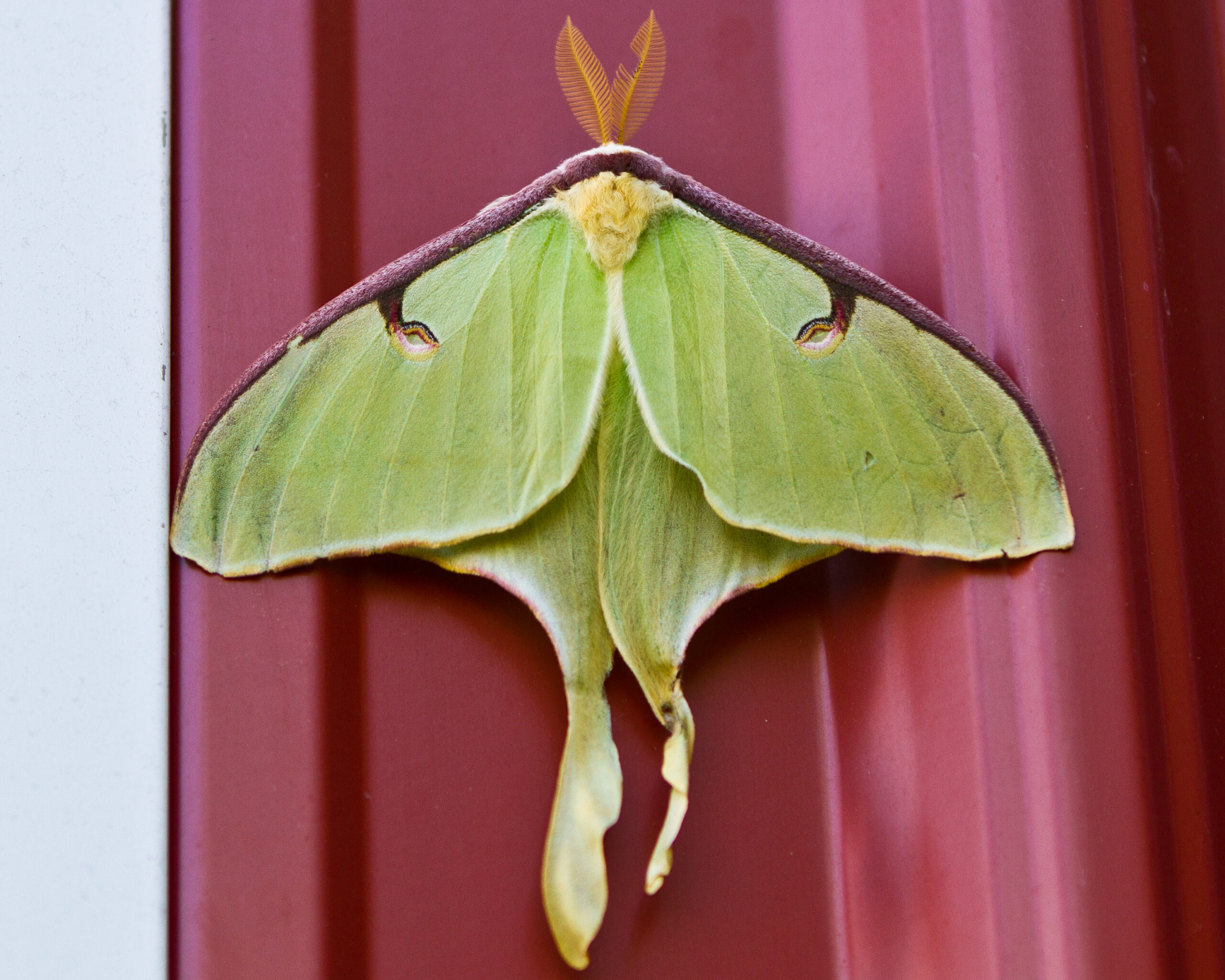
Most people don’t think much about moths. If they do, they picture a small gray insect fluttering around a porch light on a summer night. While many moths do visit lights after dark, that’s only a tiny glimpse into one of the largest and most important groups of pollinators in North America.
Scientists have identified roughly 11,000 species of moths in the United States and Canada, with more than 160,000 species found worldwide. They come in nearly every color imaginable, range from tiny moths no larger than a grain of rice to giant silk moths with wingspans approaching six inches, and play an important role in healthy ecosystems.
Each year during the third week of July, National Moth Week celebrates these often-overlooked insects. The event encourages people around the world to photograph moths, upload their observations to iNaturalist, and help scientists better understand their distribution and populations. Every observation contributes to community science and helps researchers monitor biodiversity.
Why Moths Matter
Butterflies usually receive the attention when people think about pollinators, but moths do much of their work quietly, often while we sleep.
Many flowers open in the evening or release their strongest fragrance after sunset. White, pale yellow, and lightly colored flowers are especially easy for moths to find in low light. As moths feed on nectar, they carry pollen from flower to flower, helping many native plants reproduce.
Moths also support wildlife in ways many people never see. Adult moths provide food for bats, birds, spiders, frogs, toads, and other predators. Their caterpillars are even more important. During nesting season, many songbirds rely heavily on soft-bodied caterpillars to feed their young because they are packed with protein and easy for nestlings to digest.
Without moths, many birds and other wildlife would struggle to find enough food.
Not Every Moth Flies at Night
Although most moths are nocturnal, not all of them are. Some species are active during the day, while others fly at dawn and dusk. Day-flying moths often visit many of the same flowers as bees and butterflies, and several are commonly mistaken for butterflies because of their bright colors or clear wings.
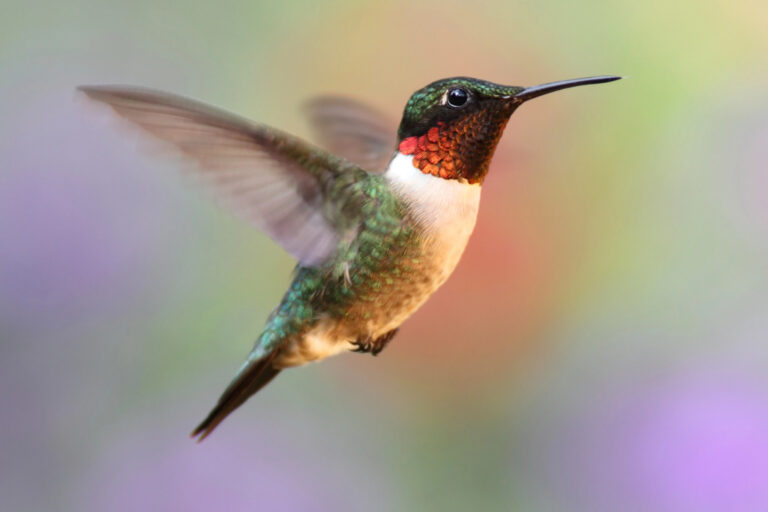
The Hummingbird Clearwing, for example, hovers in front of flowers much like a hummingbird. The Eight-spotted Forester, Virginia Ctenucha, and several tiger moths are also active during daylight hours. Whether they fly in sunlight or under the stars, all of these moths help pollinate flowering plants.
Moths Come in Every Size and Color
One of the biggest surprises for people learning about moths is how diverse they really are. The smallest species may measure only a few millimeters across. Others, such as the Luna Moth, Polyphemus Moth, Imperial Moth, and Cecropia Moth, are among the largest insects found in North America.
Their colors can be just as impressive. Bright greens, pinks, oranges, yellows, reds, blues, and bold black-and-white patterns are common. Some species have fuzzy bodies that resemble bumble bees. Others have transparent wings that make them almost invisible while flying. Many moths are every bit as beautiful as butterflies.
Why Do Moths Fly Around Lights?
Anyone who has left a porch light on during a warm summer evening has probably noticed moths circling around it. Scientists are still studying exactly why this happens. One leading theory is that moths normally use natural sources of light, such as the moon or stars, to help maintain a straight flight path. Bright artificial lights can interfere with that navigation system, causing moths to circle the light instead of continuing on their way.
Unfortunately, excessive outdoor lighting may also reduce the amount of time moths spend feeding and pollinating flowers. Reducing unnecessary lighting and using warmer-colored outdoor bulbs can help lessen this impact.
How You Can Help
One of the easiest ways to learn about moths is simply to spend a few minutes outside after dark. Hang a white sheet and shine a flashlight or UV light on it, or simply check the moths that gather around an outdoor light. Photograph what you find and upload the images to iNaturalist. Even if you don’t know the species, the community can often help identify it, and your observation becomes part of a worldwide database used by scientists. National Moth Week is a perfect excuse to discover the incredible diversity that may already be visiting your backyard.
Moths Found Around Bees Haven
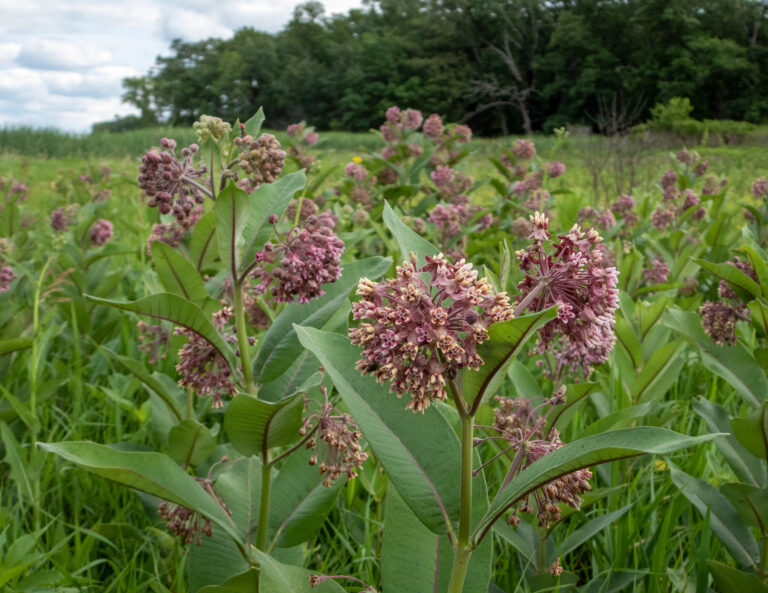
Our property has become an excellent place to observe moths thanks to the diversity of native plants, milkweed patches, shrubs, trees, and wildflower habitat. Every season brings new visitors, many with fascinating life histories and surprising colors.
The following species are just a few of the moths popular around Bees Haven. Click through each profile to learn how to identify them, what plants they depend on, and the important role they play in supporting pollinators and wildlife.
Luna Moth
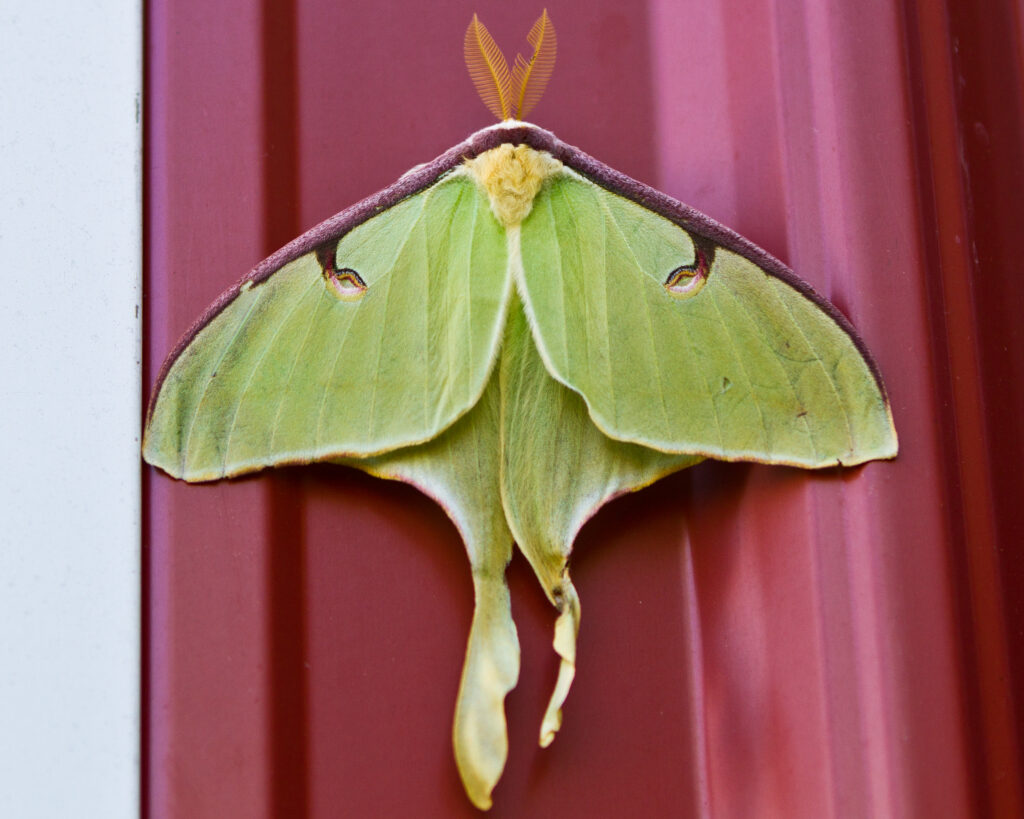
- Luna Moth or Giant Silk Moth
- Actias luna
- Large moth with lime green wings. It has feathered antennae.
- 3.5-4.5-inch Wingspan
- Larvae feed on birch, sweetgum, hickory, walnut, sumac, and several other hardwood trees.
- Commonly found in Eastern North America, from southern Canada south to Florida and west to eastern Texas and the Great Plains.
- They have an elongated tail on the hindwings that is thought to confuse echolocation detection by bats. This specimen was a lucky one, the damage on it’s right hindwing was almost certainly from a bat.
- Adult Luna moths do not feed, so they contribute little to pollination. Their caterpillars provide an important food source for birds and other wildlife, while the adults are prey for bats, owls, and other nocturnal predators.
White-lined Sphinx
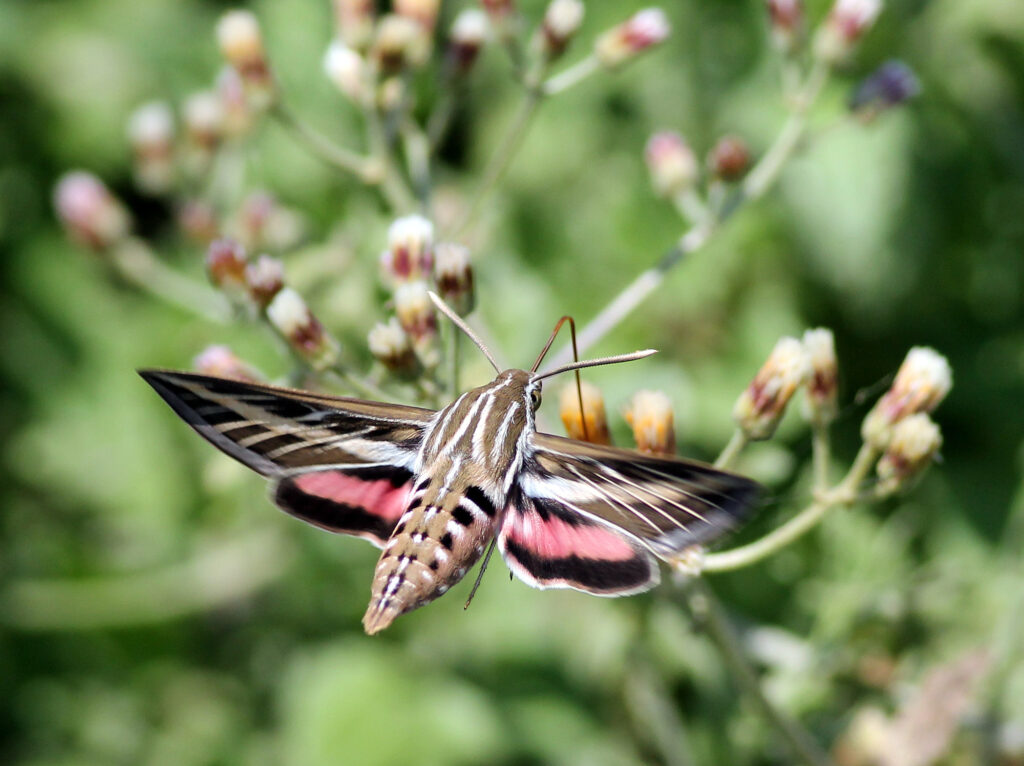
- White-lined Sphinx Moth
- Hyles lineata
- A large, fast-flying hawk moth with olive-brown forewings marked by a bold white stripe and pink hindwings. It hovers while feeding, much like a hummingbird, and is one of North America’s most important moth pollinators.
- Wingspan: 2½–3½ inches
- Host plants include evening primrose, willowherb, purslane, four o’clocks, grape, elm, apple, and many other wildflowers and cultivated plants.
- It’s found throughout most of North America, from southern Canada to Mexico.
- One of the continent’s most effective moth pollinators. Although most active at dawn, dusk, and night, it also feeds during daylight hours, especially on cool or overcast days. Its exceptionally long proboscis allows it to reach nectar deep inside tubular flowers while transferring pollen between blooms.
- During some years, White-lined Sphinx moths emerge in enormous numbers and migrate long distances, creating spectacular flights that can include thousands of moths.
Clearwing Hummingbird Moth
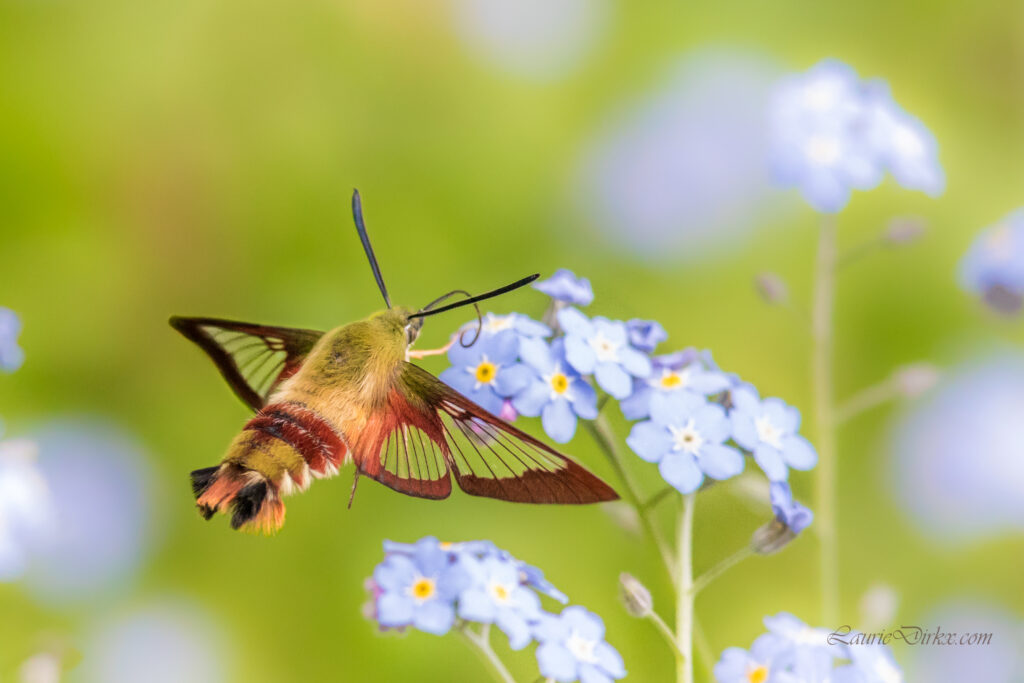
- Clearwing hummingbird Moth
- Hemaris thysbe
- The hummingbird clearwing doesn’t resemble moths. It looks more like a hummingbird. It has a very hairy body, clear wings and a very long proboscis.
- It’s wingspan is 1¼-2½ inches.
- It’s range includes most of the eastern United States and southern Canada, extending west into the Great Plains.
- Host plants: Honeysuckle, snowberry, viburnum, hawthorn, cherries, and related shrubs.
- Unlike most moths, the Hummingbird Clearwing is active during the day. It hovers in front of flowers much like a hummingbird while using its long proboscis to sip nectar. Its fuzzy olive-green body and transparent wings often fool observers into thinking it is a tiny hummingbird.
- An important daytime pollinator, the Hummingbird Clearwing transfers pollen as it hovers from flower to flower feeding on nectar. It is especially valuable for deep, tubular flowers that many other pollinators cannot easily reach.
Melanolophia spp.
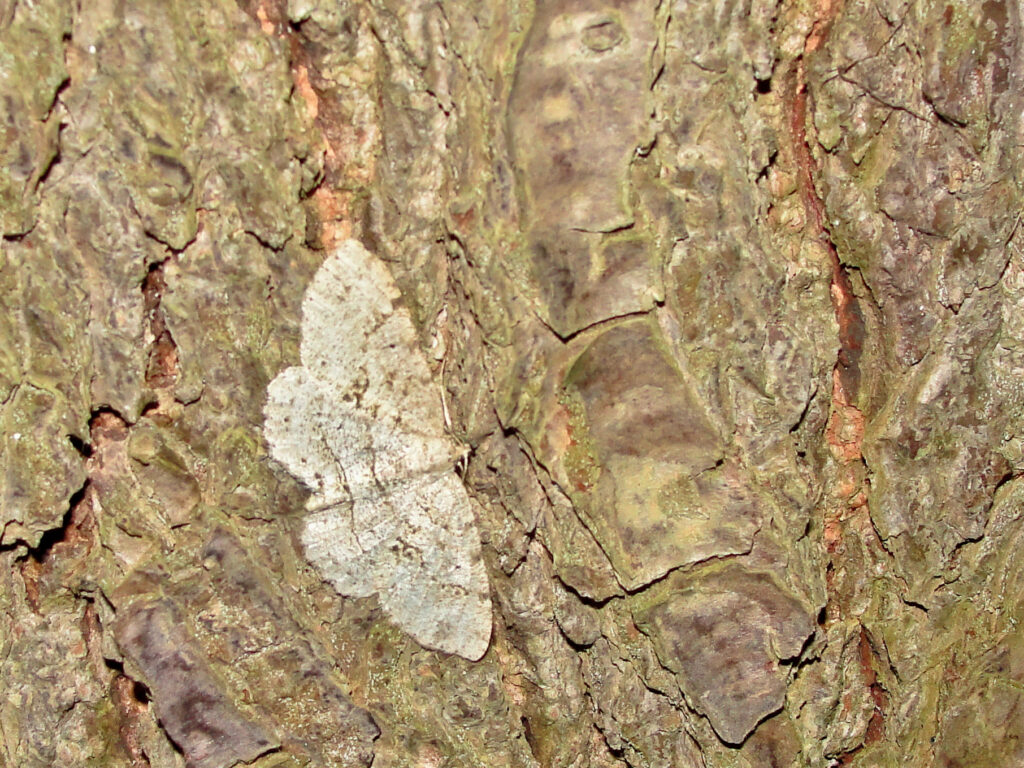
- Geometer Moth
- Melanolophia spp.
- Small moths that are masters of camouflage
- 30-40mm
- Larvae feed on hemlock, fir, and Douglas Fir
- East coast of North America, west coast of North America.
- Their cream, tan, and brown wing patterns blend almost perfectly with tree bark, making them difficult for predators to spot.
- Adult geometer moths visit flowers for nectar and help pollinate many night-blooming plants. Their caterpillars also play an important role in the food web, providing a high-protein food source for nesting songbirds and other wildlife.
Painted Lichen Moth
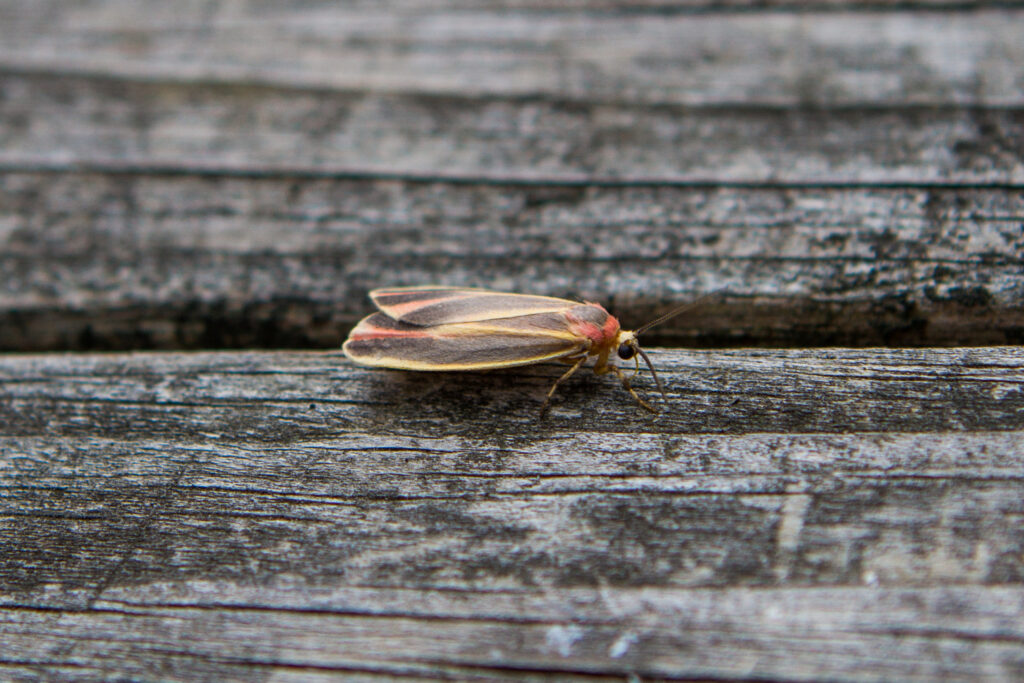
- Painted Lichen Moth
- Hypoprepia fucosa
- Small moths who rest with closed wings
- 25-35mm
- Larvae feed on lichen, algae, and moss
- US and southern Canada east of the Rockies
- The caterpillars feed on lichens, algae, and moss growing on tree bark. Adults visit flowers for nectar and become food for birds and other wildlife.
- Adults occasionally visit flowers for nectar and may contribute to pollination.
Cecropia Moth
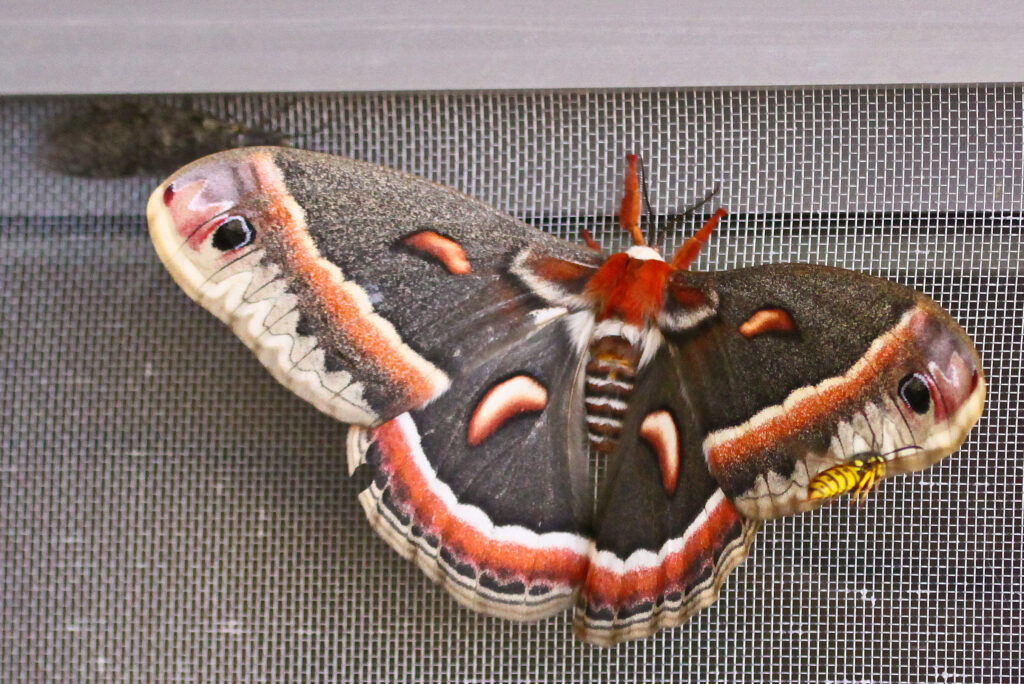
- Cecropia Moth
- Hyalophora cecropia
- North America’s largest native moth, recognized by its reddish body, bold white crescent-shaped wing markings, and feathery antennae.
- 5-7 inch wingspan
- Larvae feed on maple, birch, cherry, willow, apple, ash, and many other deciduous trees.
- Eastern North America, from southern Canada south to Florida and west to the Great Plains.
- Adult Cecropia moths do not feed. They live for only one to two weeks, using that brief time to find a mate and reproduce.
- Although adults do not pollinate flowers, Cecropia moths play an important role in forest ecosystems. Their caterpillars are a valuable food source for birds and other wildlife, while the adults are prey for bats, owls, and small mammals.
Final Thoughts
Moths may not receive the same attention as butterflies, but they are among the hardest-working pollinators in nature. They pollinate flowers around the clock, provide food for countless animals, and add remarkable diversity to our landscapes.
The next time a moth lands on your porch or visits your garden after sunset, take a closer look. You may discover an insect that is every bit as beautiful as a butterfly and just as important to a healthy ecosystem.
🌿 Gear Up for a Bee-Friendly Garden
Contains affiliate links, for full disclosure, see FTC Disclosure, here.
Looking for tools that actually work?
We’ve pulled together our favorite picks for beekeeping, gardening, and pollinator-friendly seeds—everything you need to support bees and grow a thriving space.
Browse the full list on Amazon — all in one spot.