
Some parts of a property seem to resist every attempt to improve them. They may be difficult to mow, produce poor crops, or simply sit unused year after year. Rather than leaving these areas neglected, they can become thriving habitats for pollinators, birds, and other wildlife. That’s exactly what we set out to do at Bees Haven.
Starting With What Nature Already Provided
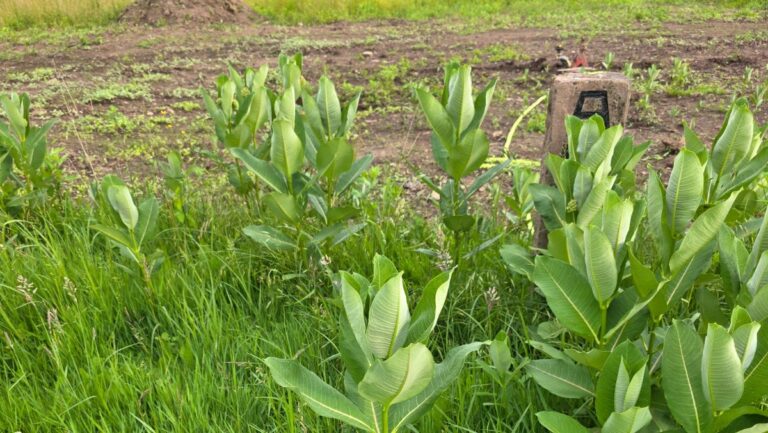
When we began planning our pollinator planting, one thing was already growing well: common milkweed. Instead of removing it, we decided to leave the established patch in place. Milkweed is the only host plant for monarch caterpillars, but it also supports native bees, hoverflies, milkweed beetles, and many other beneficial insects.
Rather than starting from scratch, we built our project around an existing piece of the ecosystem.
Planting a Sunflower Patch
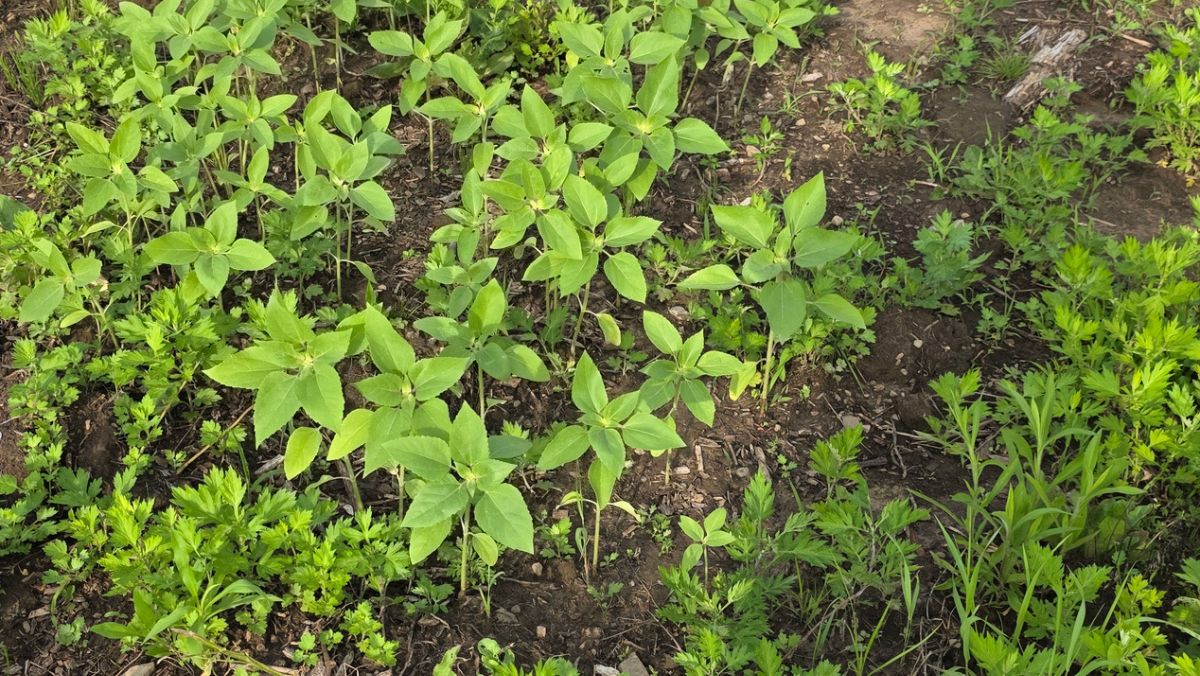
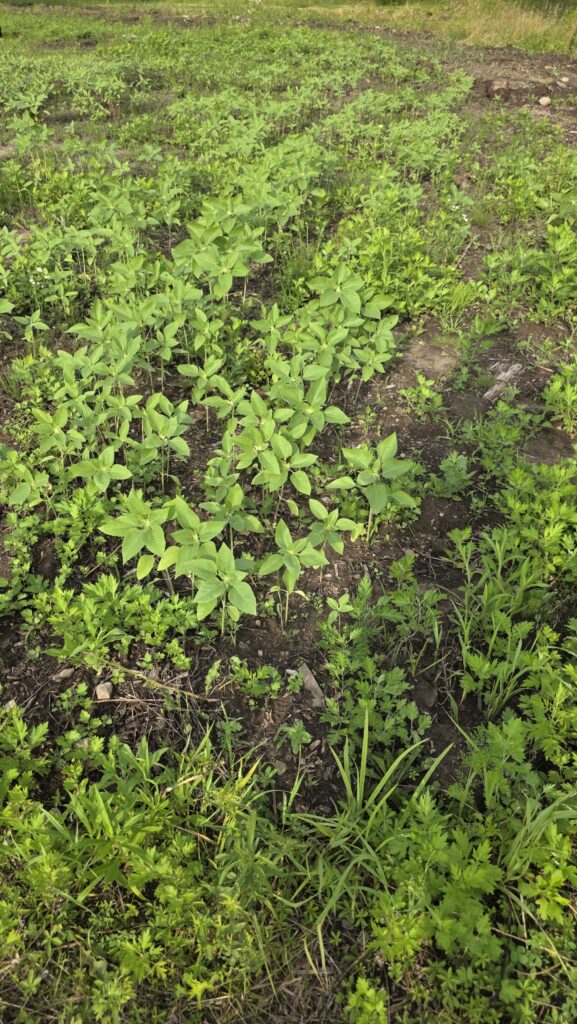
Behind the milkweed, we broadcast sunflower seed across the field. Broadcast planting isn’t as uniform as planting in rows, but it creates a more natural-looking stand. Some areas develop dense clusters while others remain more open, giving wildlife a variety of places to forage and move through.
Within a few weeks, the field began filling in with healthy young sunflowers.
Why Sunflowers?
Sunflowers offer benefits long after their bright flowers appear. During the growing season, they provide nectar and pollen for bees and other pollinators. As the seeds mature, they become an important food source for birds such as goldfinches, chickadees, nuthatches, and other seed-eating species.
The sturdy stalks also provide structure and shelter for insects throughout the season.
More Than a Monarch Garden
Many people associate milkweed only with monarch butterflies, but our patch quickly attracted a surprising variety of insects.
Among the visitors were:
- Native bees
- Bumble bees
- Hoverflies
- White butterflies
- Red Milkweed Longhorn Beetles
- Eyed Click Beetles nearby in the berry patch
Each species plays a different role in the habitat, whether pollinating flowers, feeding on milkweed, or preying on other insects.
Watching the Habitat Develop
One of the most rewarding parts of the project has been seeing how quickly wildlife responds.
As the season progresses, we’ll continue watching for:
- Monarch eggs and caterpillars
- Additional butterfly species
- More native bee diversity
- Birds feeding on sunflower seeds
- Beneficial insects using the planting
Every visit reveals something new.
Habitat Doesn’t Have to Be Perfect
Creating wildlife habitat isn’t about making everything look perfectly manicured.
Some of the most valuable features include:
- Existing milkweed patches
- Native wildflowers
- Brush piles
- Field edges
- Areas that aren’t mowed every week
Allowing some parts of the landscape to remain a little wild often creates the greatest benefits for wildlife.
Building Habitat One Project at a Time
Pollinator habitat doesn’t appear overnight. It develops gradually as plants mature and wildlife discovers new food and shelter. Every season brings new observations, and every year the habitat becomes a little more diverse.
We’re looking forward to watching this field change through the seasons and sharing what we learn along the way.
Frequently Asked Questions
Milkweed is the only plant monarch caterpillars can eat. It also provides nectar and habitat for many other beneficial insects.
Broadcast planting creates a more natural stand with dense and open areas that provide a variety of habitat while requiring less precision than row planting.
Yes. Sunflowers provide pollen and nectar for many insects, while the mature seeds feed birds later in the season.
Most require watering and some weed control while becoming established. Once mature, many native plantings need far less maintenance than lawns or traditional landscape beds.
What’s Next for This Habitat?
We’ll continue documenting how the planting changes throughout the year, from summer blooms and pollinator activity to birds feeding on sunflower seeds in late summer and fall. We’ve planted 7 or 8 varieties of sunflowers. Many of them will self-seed, so there will be sunflowers next year, without us buying more seed.
We’ll also harvest mature flower heads, dry the seeds, and store them for planting in other areas of the property next spring. Sunflowers are great because they generally grow taller than the native weed plants and require very little maintenance and weeding.
See our article on Brush Piles are Wildlife Gold for other ways to build habitat.
🌿 Gear Up for a Bee-Friendly Garden
Contains affiliate links, for full disclosure, see FTC Disclosure, here.
Looking for tools that actually work?
We’ve pulled together our favorite picks for beekeeping, gardening, and pollinator-friendly seeds—everything you need to support bees and grow a thriving space.
Browse the full list on Amazon — all in one spot.