A wetland can change dramatically once an aggressive plant takes hold. What starts as a small patch of grass along the edge of a swamp can eventually spread across acres, crowding out the native plants that once grew there. Invasive phragmites is particularly good at this, and removing it once it has taken over is no small job.
Phragmites is a tall perennial grass that grows in wetlands, ditches, and other damp places. It can reach 15 feet tall, with large, feathery seed heads that turn tan as the season progresses. Although it may look attractive from a distance, the invasive form can change an entire wetland ecosystem.
What Is Invasive Phragmites?
Phragmites (Phragmites australis), also called common reed, is found throughout North America. The plant has both native and introduced forms, but the European form is responsible for many of the aggressive invasions seen in eastern North America. That distinction matters because native phragmites belongs in our wetlands and shouldn’t automatically be treated as invasive.
The introduced form grows in thick colonies, often with hundreds of stems crowded together. Its leaves are long and narrow, and the stems are topped with large, feathery flower heads in late summer. By winter, the dead stalks can form a dense wall of vegetation that makes it difficult to see into the wetland.
The New York State Department of Environmental Conservation identifies invasive phragmites as a serious problem in wetland habitats. Its aggressive growth can crowd out other plants and alter the structure of the plant community. That’s why the DEC has ongoing projects to manage it in parts of New York.
How Does Phragmites Spread So Quickly?
The biggest problem with phragmites is what happens underground. Its rhizomes, which are underground stems, can spread outward and produce new shoots well beyond the original clump. They also store energy, allowing the plant to regrow after the leaves and stems are cut.
Phragmites can also spread through aboveground runners that root where they touch suitable soil. Its seeds can travel on the wind or move with water, helping new colonies become established elsewhere. Once a patch gains a foothold, it can expand in several ways.
Disturbed ground gives invasive phragmites an advantage. Road construction, ditch maintenance, changes in water levels, and soil disturbance can create openings where new plants establish themselves. Once the grass grows densely, other plants struggle to compete for sunlight and space.
What Happens When Phragmites Takes Over a Swamp?
A healthy wetland isn’t supposed to be one enormous patch of the same grass. Depending on the habitat, it may contain cattails, sedges, rushes, shrubs, wildflowers, and open water. Those different areas provide food, shelter, and breeding habitat for a wide variety of wildlife.
When invasive phragmites spreads, much of that variety can disappear. Its tall stems shade smaller plants, while thick layers of dead leaves and stalks accumulate on the ground. Over time, the wetland can become dominated by a single species instead of supporting a diverse plant community.
The changes affect wildlife, too. Some birds use phragmites for nesting or cover, but others depend on open water, native vegetation, and less crowded marsh habitat. Losing that mixture can make a wetland less suitable for the animals that once lived there.
Phragmites can also affect how water moves through a marsh. Dense stems and accumulated plant material can trap sediment and change local water movement. That can gradually change the conditions that made the original wetland valuable in the first place.
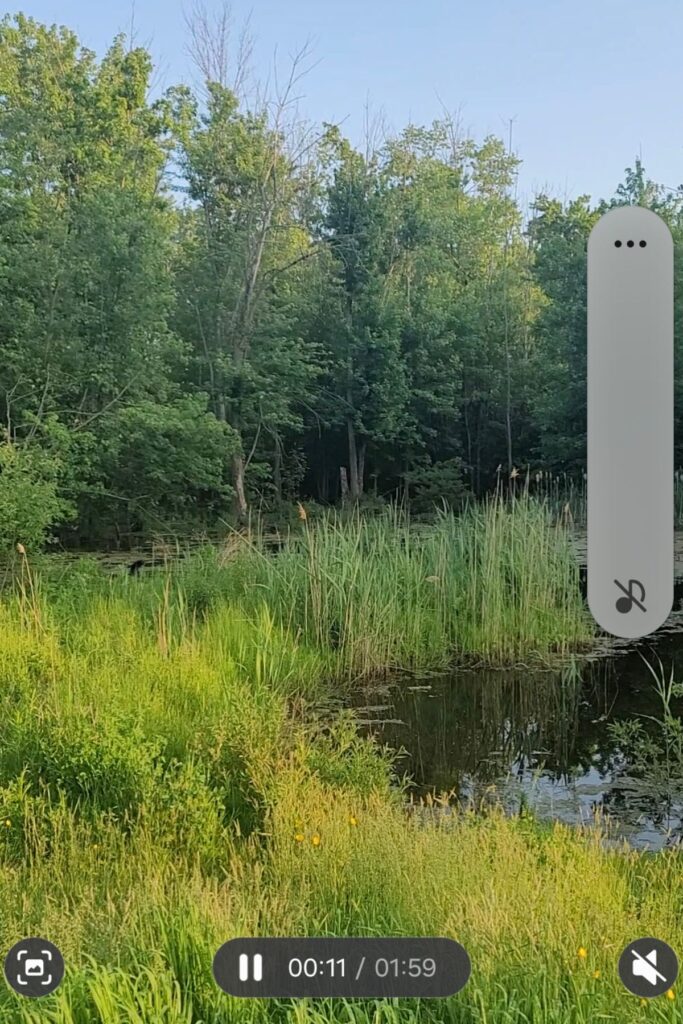
This video was taken in May 2023. Notice the open water.
What’s Happening at Bees Haven?
Across the road from Bees Haven is a roughly 25-acre swamp that has become heavily overgrown with what appears to be invasive phragmites. Years ago, Eric hunted there when our neighbor owned the property, and we could walk through much of the wetland. Today, the reeds are so thick that some areas are practically impassable.
We believe phragmites spread from that swamp into our wetland, which covers about six acres. Our swamp once had extensive cattail stands and large areas of open water where the dogs regularly went swimming. Over the past several years, we’ve watched the reeds spread and crowd into areas that were once much more open.
Fortunately, we have photographs documenting some of those changes. A video from May 31, 2023, shows a large area of open water bordered by cattails, while photographs taken on August 22, 2025, show considerably denser vegetation and less visible water. Although the camera angles aren’t identical, the difference is striking.
The smaller section of our swamp still has open water and established cattails, but the larger section has changed dramatically. We’re continuing to document the spread and researching eradication methods. It’s frustrating to watch wildlife habitat change so quickly, especially after spending years restoring and protecting the rest of the property.
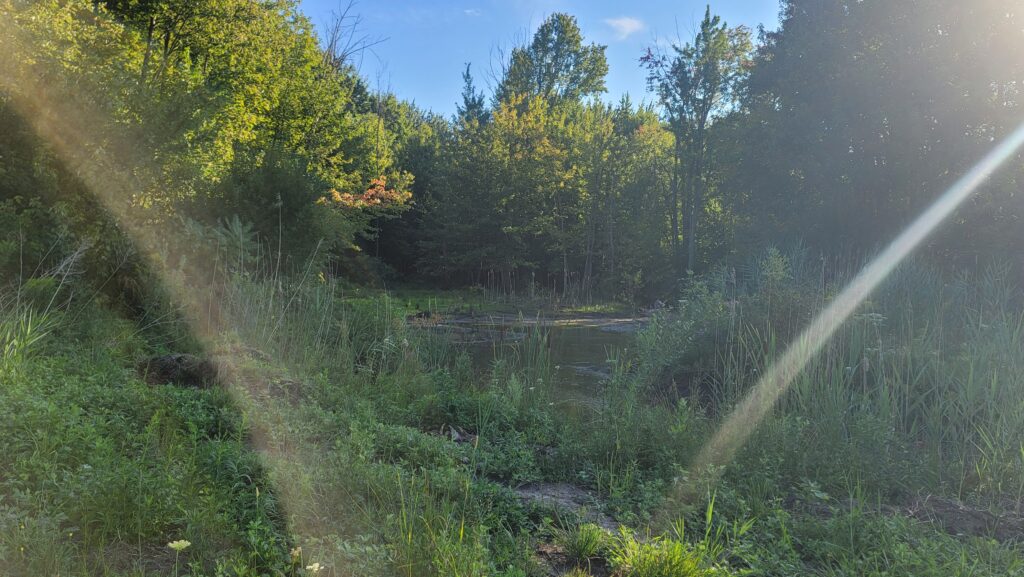
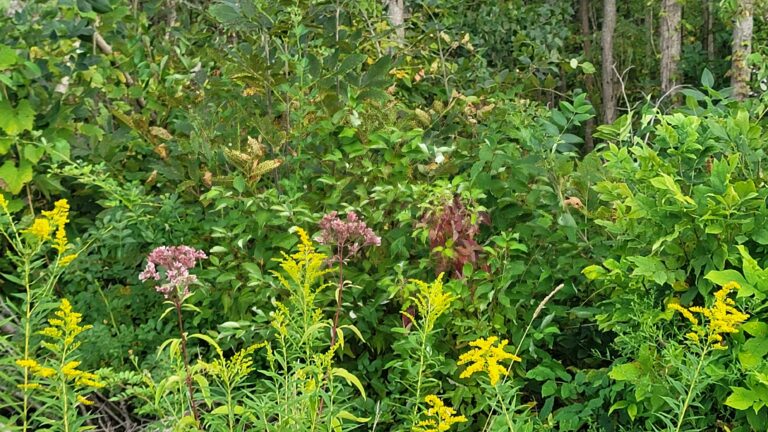
This image was taken in August of 2025. Notice the tall grass on the left mixed in with cattails and other natives.
We’ve spent years improving wildlife habitat at Bees Haven, including restoring fields and planting flowers that support pollinators. As described in our article about 25 Years of Habitat Restoration at Bees Haven, maintaining a healthy landscape takes ongoing work. An aggressive wetland plant reminds us that habitat management doesn’t end when the planting is finished.
How Can You Identify Invasive Phragmites?
Invasive phragmites often grows in dense stands with tall, closely spaced stems. Its leaves are long, flat, and somewhat gray-green, while the large flower heads develop a feathery appearance as they mature. The dead stems often remain standing through winter, making established colonies particularly noticeable.
Identifying the invasive form isn’t always as simple as judging by height, though. Native phragmites can look similar, and several other wetland grasses may be mistaken for common reed. Stem color, leaf sheaths, growth habits, and other characteristics can help distinguish them.
For that reason, it’s worth getting a positive identification before starting a large control project. Mistakenly treating native phragmites would defeat the purpose of protecting the wetland. A local invasive species specialist or experienced botanist can help confirm which plant is present.
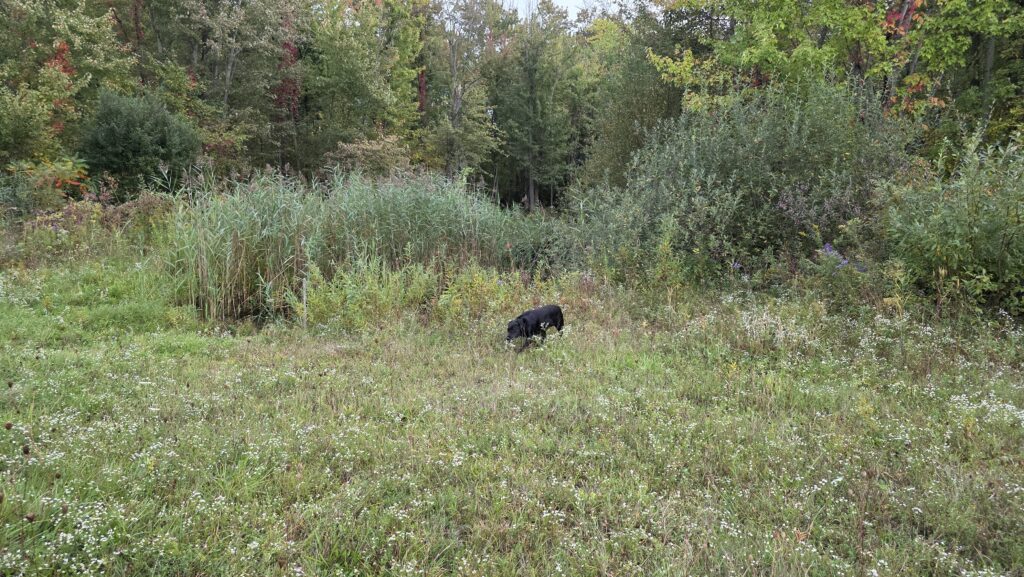
This image is from October of 2026; notice how the open water has been diminished.
Can You Get Rid of Phragmites?
Yes, but removing an established colony is rarely quick. The rhizomes can survive ordinary mowing or cutting and send up new shoots using their stored energy. Effective control usually requires repeated treatment and monitoring over several growing seasons.
Does Cutting or Mowing Work?
Cutting phragmites can reduce standing vegetation, but one mowing won’t kill the underground rhizomes. Even repeated cutting may struggle to eliminate a large, established stand without additional management. It can also be difficult to move equipment into wet areas without damaging the surrounding habitat.
Cutting can still play a role in a larger restoration plan. Reducing dense growth may make other treatments easier and help managers reach previously inaccessible areas. However, the timing and method matter, and moving contaminated soil or viable plant fragments can spread the problem.
Can Herbicides Control Phragmites?
Herbicides are commonly used in professional phragmites management programs, particularly where infestations cover large areas. The New York DEC uses several methods, including carefully targeted treatment of individual stems and foliar applications. Its 2026 phragmites management work plan describes these approaches for selected sites in the Adirondacks.
Spraying in or near wetlands isn’t the same as treating weeds in a lawn. Consider only products labeled for the specific use and site, and New York may require permits or other approvals. A qualified professional should evaluate the site before any large-scale treatment begins.
Even a successful initial treatment may not eliminate the entire colony. Surviving rhizomes and new seedlings can produce fresh growth the following season. Follow-up inspections and additional treatments are often needed before native vegetation can recover.
What About Digging It Out?
Digging or excavating phragmites may be practical for certain small infestations, but it’s much harder when the plant covers several acres. Its underground stems can form extensive networks, and leaving viable fragments behind may allow the plants to return. Heavy equipment can also damage wetland soils and disturb areas that haven’t been invaded.
Excavation may be appropriate in some carefully planned restoration projects. However, it isn’t something to attempt casually in a swamp, especially where wetland regulations apply. The disturbance could create new problems without eliminating the original infestation.
Will Native Plants Come Back After Phragmites Is Removed?
Sometimes native plants return on their own once you control the dense stand. Seeds may still be present in the soil, and some native plants may have survived beneath or around the invasive vegetation. Whether they recover depends on the wetland’s condition and how much the habitat has changed.
Other areas need active restoration. That might involve planting native sedges, rushes, wetland flowers, or shrubs suited to the site’s water levels and soil conditions. Restoring a diverse wetland is more involved than simply replacing one tall grass with another.
Encouraging evidence shows restoration can work. The New York DEC’s Tivoli Bays restoration project reported substantial reductions in invasive phragmites and recovery of native plant communities following treatment. Continued monitoring was still necessary, but it demonstrated that even established invasions can sometimes be reversed.
Why Catching Phragmites Early Matters
A small colony along a ditch or pond edge is considerably easier to manage than a dense stand covering an entire swamp. Regularly checking wetland edges and disturbed areas can help landowners spot new infestations before they spread. Identifying the plant correctly and acting early may prevent years of expensive control work.
It’s also important to remember that wetlands don’t recognize property lines. Seeds, rhizome fragments, and water can carry invasive plants between neighboring properties and public land. In some cases, a coordinated management project offers a better chance of success than individual landowners working alone.
The Bottom Line
Invasive phragmites is a good example of how one aggressive plant can change an entire habitat. It spreads through underground stems, aboveground runners, and seeds, gradually replacing the native vegetation that supports a diverse wetland. Once it becomes established over several acres, controlling it becomes a long-term commitment.
Watching a wetland change is frustrating, especially when it supports so much wildlife. The good news is that restoration is possible, although it takes planning, persistence, and the right management methods. The sooner you identify and manage an invasive plant, the better your chances of protecting the surrounding habitat.
Frequently Asked Questions
Is all phragmites invasive?
No, North America has native phragmites as well as introduced invasive forms. The native form is an important part of some wetland ecosystems and shouldn’t be removed simply because it resembles the invasive plant. Proper identification is essential before treatment.
Will mowing phragmites kill it?
Mowing once generally won’t kill established phragmites because it can regrow from underground rhizomes. Repeated cutting may weaken a stand, but additional management is often necessary. Large infestations usually require a longer-term approach.
How tall does invasive phragmites grow?
Invasive phragmites can grow approximately 15 feet tall under favorable conditions. Its height depends on growing conditions, including moisture, nutrients, and competition. The tall stems and large, feathery flower heads make established stands easy to notice.
Is phragmites bad for wildlife?
Dense invasive phragmites can displace native wetland vegetation and change the habitat available to wildlife. Some animals still use the stands, but others lose the diverse plant communities and open-water areas they need. The effects depend on the wetland and the species living there.
Can you spray phragmites in a wetland?
Herbicides may be used to manage phragmites, but wetland treatments require special care. Products must be labeled for the intended application, and permits or professional licensing may be required. Landowners in New York should check the DEC’s invasive species management permit guidance before planning treatment.
🌿 Gear Up for a Bee-Friendly Garden
Contains affiliate links, for full disclosure, see FTC Disclosure, here.
Looking for tools that actually work?
We’ve pulled together our favorite picks for beekeeping, gardening, and pollinator-friendly seeds—everything you need to support bees and grow a thriving space.
Browse the full list on Amazon — all in one spot.