Growing sunflowers is easy enough, but getting to their seeds before the birds do is another matter. Goldfinches and other hungry visitors aren’t particularly concerned about saving anything for next year’s garden. Once those flower heads start maturing, the birds seem to know exactly when dinner is ready.
At Bees Haven, we grow sunflowers in our pollinator fields, and this year we harvested around 70 flower heads. Unfortunately, the birds had already started stripping seeds from the plants before we finished collecting them. That got us thinking about the best way to harvest, dry, and store sunflower seeds for next spring.
When Are Sunflower Seeds Ready to Harvest?
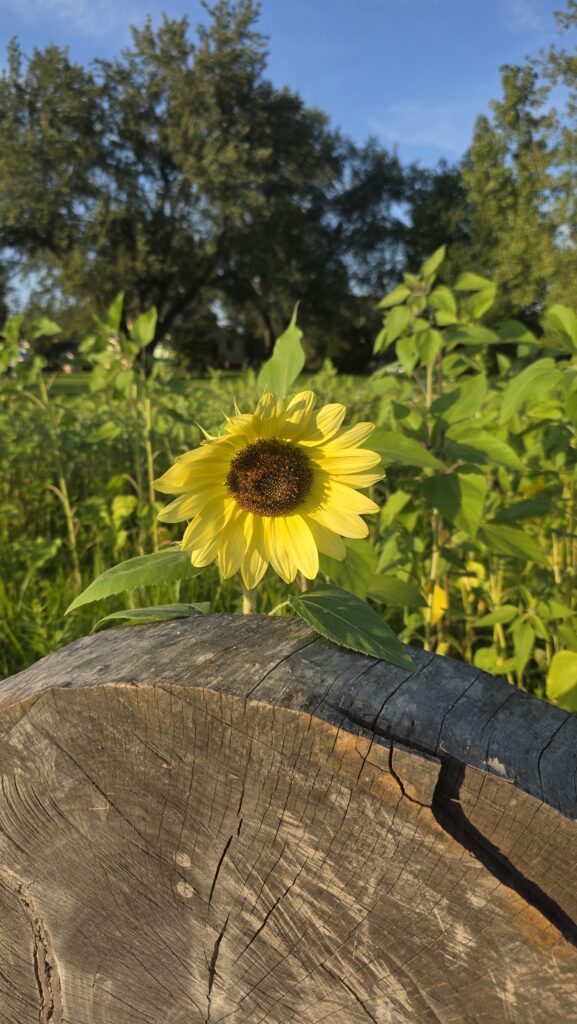
Sunflower seeds begin maturing as the flowers fade and the backs of the heads change from green to yellow or brown. The petals usually dry up or fall off, and the heavy heads begin drooping toward the ground. If you look closely, the seeds should be plump, firm, and developing their mature color.
Don’t worry if the seeds aren’t black and white like the ones sold for snacks. Different sunflower varieties produce different seed colors, including solid black and gray. What matters is that the seeds have filled out and finished developing.
The tricky part is deciding how long to leave them on the plants. Waiting until the entire flower head dries in the field works well when birds aren’t helping themselves. Otherwise, you can cut mature heads and finish drying them in a protected location.
How to Harvest Sunflower Seeds
Saving sunflower seeds doesn’t require special equipment, but pruning shears and a dry place to hang the heads make the job easier. Choose healthy flower heads without visible mold or rot, preferably from plants you’d like to grow again. Larger heads can be surprisingly heavy, so support them as you cut.
1. Cut the Mature Flower Heads
Wait until the seeds are well developed and the backs of the flower heads are starting to yellow or brown. Cut each head with several inches of stem attached so it has something to hang from. If the seeds are still soft or the head is completely green, give it more time to mature.
2. Let the Heads Finish Drying
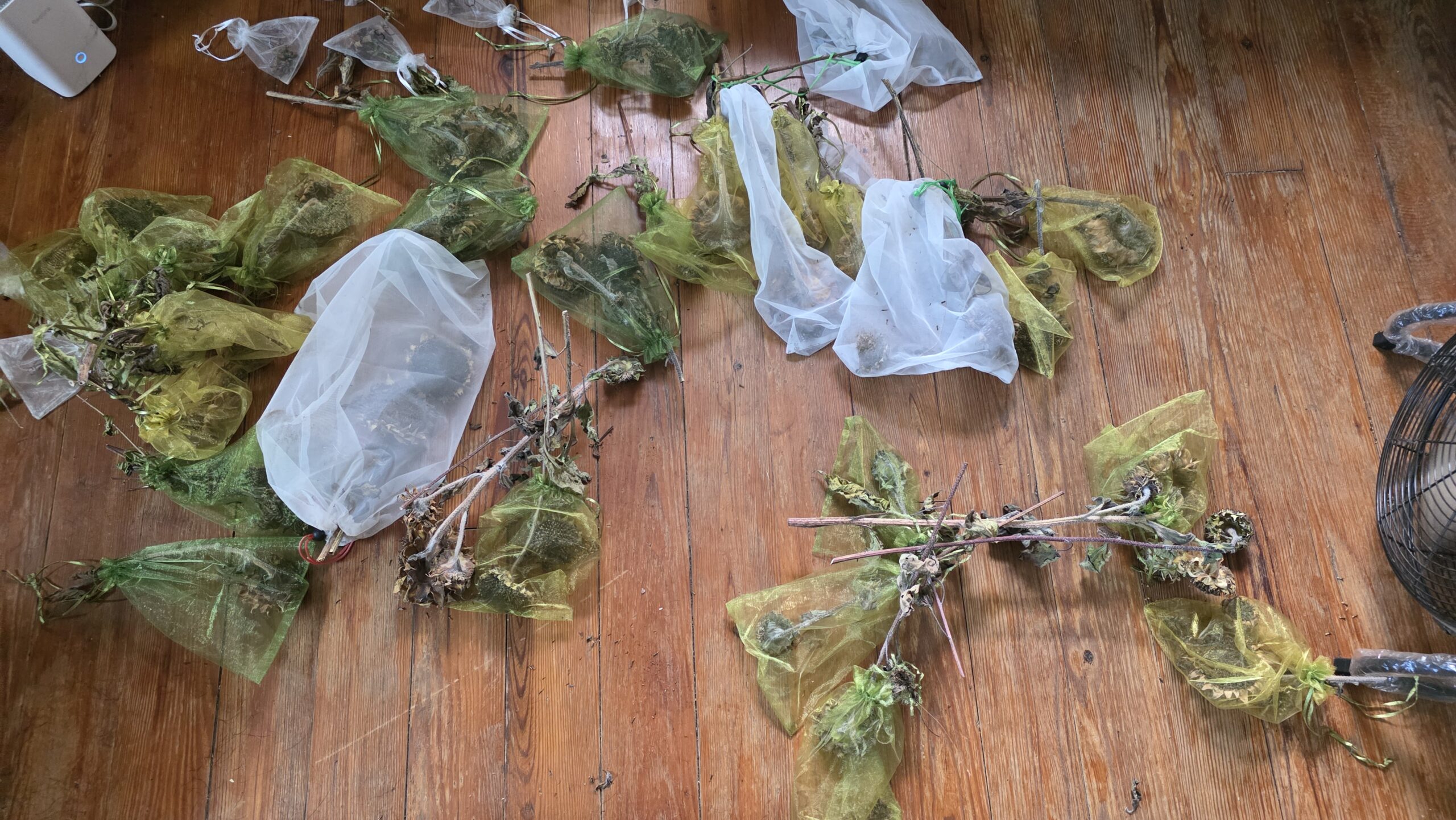
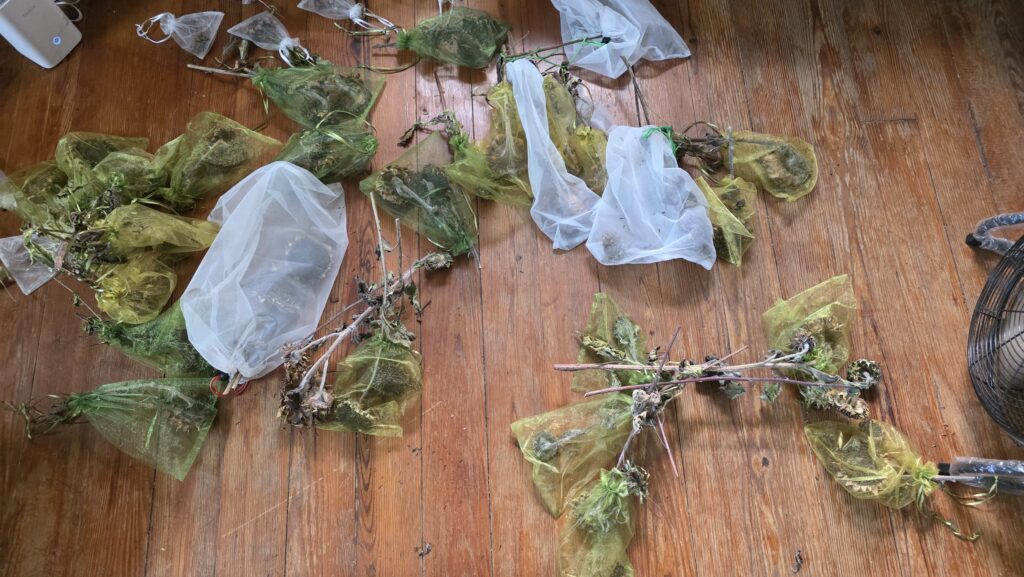
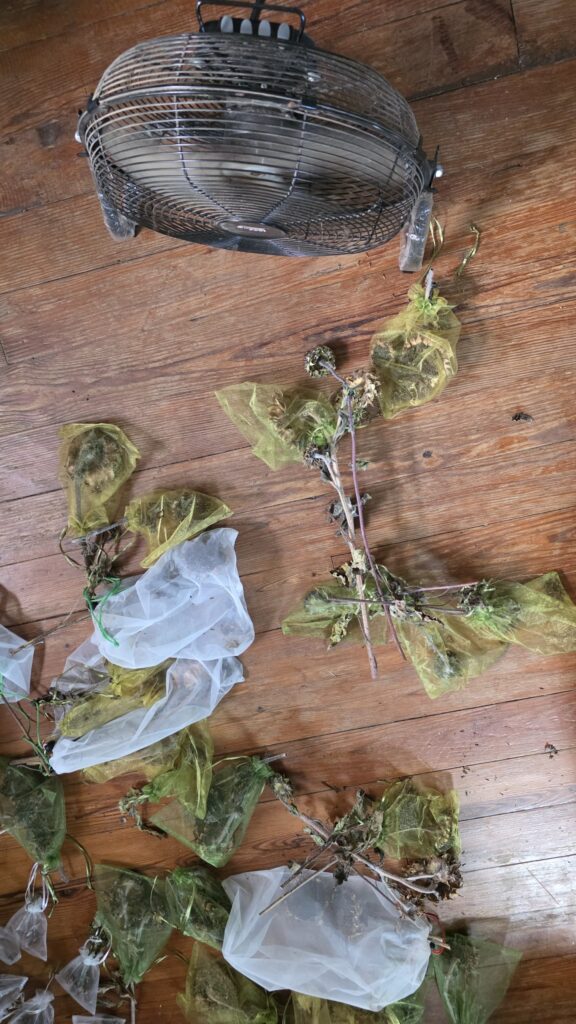
Hang the flower heads in a dry shed, garage, or other sheltered location with good airflow. You can also place them on racks, as long as air can circulate around the heads. Avoid piling damp heads together because trapped moisture can encourage mold. Or, turn the heads every few days, so they can dry all around.
Drying may take a couple of weeks or longer, depending on head size and humidity. Large sunflower heads hold more moisture than they appear to, so don’t rush this part. The backs should feel dry, and the seeds should come loose without much effort.
3. Remove the Seeds
Once the heads have dried, rub the seeds loose with your fingers on a large tray or in a bucket. Most will come out fairly easily, although some may need a little encouragement. Remove the dried flower bits, and discard any seeds that look moldy or damaged.
Spread the seeds out to air-dry further before storing them. Even when the flower head feels dry, the seeds may still contain enough moisture to cause problems in storage. Making sure they’re thoroughly dry now saves disappointment next spring.
How to Keep Birds From Eating All the Seeds
This is where things got interesting at Bees Haven. By early October, the birds were already working their way through the sunflower heads, leaving us competing for our own harvest. Since we planted the field partly to feed wildlife, we couldn’t complain too much.
If saving seed is the goal, covering selected flower heads with breathable mesh bags can help. The covers should allow plenty of airflow and fit securely without trapping birds or insects. It’s better to protect a few good heads than try to cover an entire field.
Another option is to harvest as soon as the seeds have matured enough to finish drying indoors. That way, the birds can have the remaining heads while the saved ones are safely out of reach, but don’t rely on the fact that half of the head gets eaten first. It’s a reasonable compromise when growing sunflowers for both wildlife and next year’s planting.
How to Store Sunflower Seeds Until Spring
Once the seeds are completely dry, storage is simple. Put them in labeled paper envelopes, then place the envelopes in a sealed container to protect them from humidity and pests. Keep the container somewhere cool, dark, and dry until planting season.
Be sure to write down the variety, if known, and the year the seeds were harvested. It’s surprisingly easy to forget which seeds came from which plants once winter rolls around. A few notes about flower color, height, or branching habits can also be useful.
Refrigeration isn’t necessary if you’re only saving seeds until the following spring, although it can work well when the seeds are properly dried and sealed. The important thing is preventing moisture and condensation. Iowa State University’s guide to harvesting and storing seeds explains the general principles of keeping seeds viable between growing seasons.
Will Saved Sunflower Seeds Look Like the Parent Plants?
Here’s something to remember before planting saved seeds. Sunflowers cross-pollinate, and many garden varieties are hybrids. Their offspring may not match the original plants’ height, flower color, or branching pattern.
Open-pollinated varieties are a better choice when you want predictable results, although different varieties growing close together may still cross. According to Oregon State University Extension, saving seeds from hybrids can produce plants with different characteristics or nonviable seeds. Keep that in mind when choosing varieties specifically for seed saving.
For our pollinator field, a little variation isn’t necessarily a bad thing. We already prefer branching sunflowers because they produce more flowers over a longer period than single-stem varieties. As long as the plants grow well and provide food for insects and birds, we don’t need every flower to look exactly alike.
How to Check If Saved Sunflower Seeds Will Grow
Before planting a large batch of saved seeds, check how many are still viable. Place ten seeds between damp paper towels and put them inside a loosely closed plastic bag or covered container. Keep them somewhere warm and check regularly for signs of germination.
After about a week, some seeds should begin producing roots, although others may take longer. If eight out of ten germinate, that’s an estimated germination rate of 80 percent. It’s a small sample, but it gives a reasonable idea of whether the seeds are worth planting.
If only a few sprout, you may need to plant more heavily or purchase additional seed. Poor germination can result from harvesting immature seeds, improper drying, or unsuitable storage conditions. Testing a handful ahead of time beats discovering the problem after planting an entire field.
When Should You Plant Saved Sunflower Seeds?
Sunflowers are warm-season annuals, so there’s no reason to rush them into cold spring soil. Here in Upstate New York, we generally wait until the danger of frost has passed and the soil has warmed before planting. Seeds placed in cold, wet ground may rot before they can germinate.
Most annual sunflowers can be planted about an inch deep in a sunny location with reasonably well-drained soil. Spacing depends on the variety, especially whether you’re growing giant single-stem plants or smaller branching types. The seed packet from the original variety is a good starting point when that information is available.
For more information about choosing varieties and growing sunflowers for wildlife, see our article Plant Sunflowers to Attract More Pollinators to Your Yard. We cover why sunflowers are valuable to bees and other insects during the growing season. Once the flowers finish blooming, the seeds provide another food source for birds.
Should You Leave Some Sunflowers Standing Through Winter?
Absolutely, especially when wildlife is part of the reason for growing them. Standing sunflower heads feed seed-eating birds, and the remaining stalks offer structure and cover in the garden. There’s no need to clear everything away as soon as the flowers finish blooming.
At Bees Haven, we try to balance harvesting with leaving food and habitat for wildlife. We certainly don’t need every sunflower seed, and the birds make good use of whatever remains. Saving a portion for planting while leaving the rest in the field works well for both purposes.
The Bottom Line
Saving sunflower seeds is an easy way to reduce planting costs and grow more flowers the following year. The key is to harvest mature heads, dry the seeds thoroughly, and keep them cool and dry until spring. A simple germination test can help determine whether the seeds are ready for another growing season.
The biggest challenge may be getting to the seeds before the birds do. We harvested around 70 heads this year, but plenty of seeds disappeared before we got there. Next year, we may have to be a little quicker with the pruning shears.
Frequently Asked Questions
Can you plant sunflower seeds saved from your garden?
Yes, you can dry, store, and plant mature sunflower seeds the following spring. Seeds from hybrid plants may not produce flowers identical to the parents, and some may have poor germination. Open-pollinated varieties are generally better for seed saving.
How long should sunflower heads dry?
Drying time depends on head size, humidity, and airflow. Large heads may take several weeks to dry completely, especially in damp weather. Wait until the heads are thoroughly dry and the seeds come out easily.
Can you save sunflower seeds in plastic bags?
You can, but only after the seeds are completely dry. Moisture trapped inside plastic can encourage mold and damage the seeds. Paper envelopes in a sealed container are a good option for short-term storage.
Will birds eat sunflower seeds before they’re completely dry?
Yes, birds may begin feeding as the seeds mature, well before the heads have dried completely. Goldfinches and other seed-eating birds can remove a surprising number in a short time. Covering selected heads or harvesting mature heads for indoor drying can help.
How long do sunflower seeds stay viable?
Properly dried and stored sunflower seeds can remain viable for several years, although germination generally declines with age. Cool, dry storage helps preserve them longer than warm, humid conditions. Testing a small sample before planting is the easiest way to check.
🌿 Gear Up for a Bee-Friendly Garden
Contains affiliate links, for full disclosure, see FTC Disclosure, here.
Looking for tools that actually work?
We’ve pulled together our favorite picks for beekeeping, gardening, and pollinator-friendly seeds—everything you need to support bees and grow a thriving space.
Browse the full list on Amazon — all in one spot.