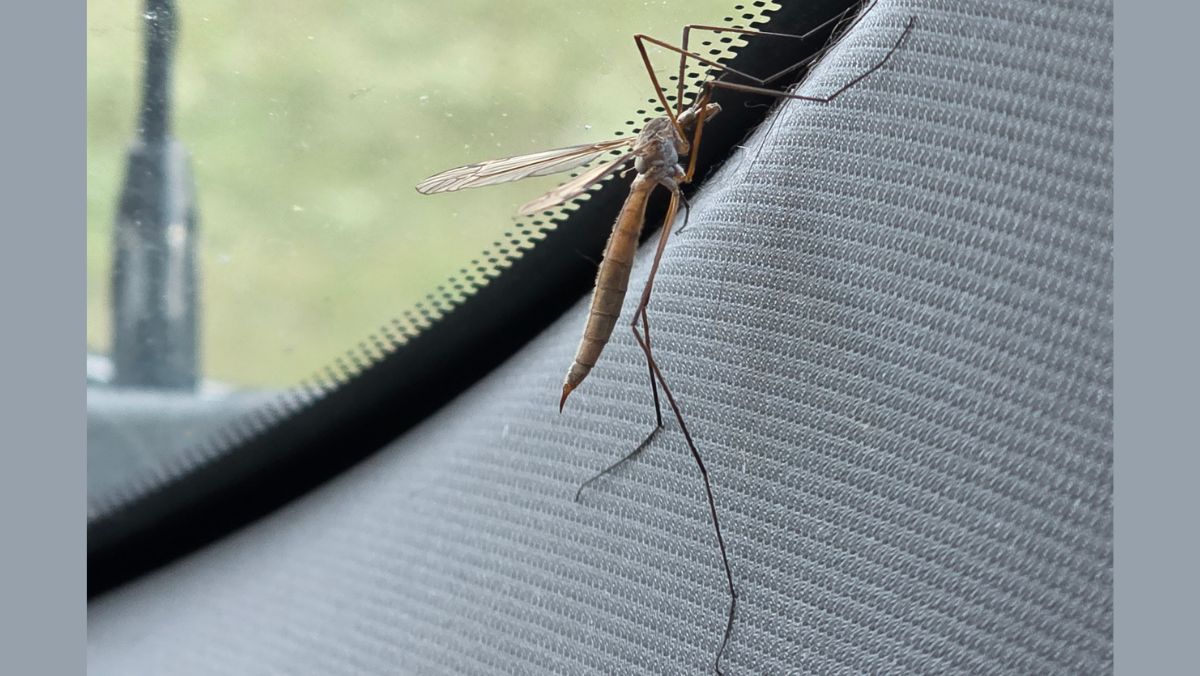
Every fall, these strange, long-legged insects start appearing in lawns, gardens, and sometimes inside the house. They look like giant mosquitoes, but their clumsy flying makes them even more noticeable. Watching one bounce around a window can be pretty entertaining, especially when it seems to have no idea where it’s going.
They’re crane flies, and despite their rather alarming appearance, they don’t bite or sting. Most are harmless, although a couple of introduced species can cause trouble in lawns.
What Exactly Is a Crane Fly?
Crane flies are true flies belonging to several related families, including Tipulidae. They’re easy to recognize by their slender bodies, unusually long legs, and narrow wings.
People sometimes call them mosquito hawks or giant mosquitoes. Neither name is particularly accurate, since they’re not oversized mosquitoes and they don’t spend their days hunting them, either.
According to Cornell University’s Integrated Pest Management Program, more than 250 species of crane flies are native to New York State. Some develop in wetlands and streams, while others spend their immature lives in damp soil, leaf litter, or decaying vegetation.
With all the different habitats at Bees Haven, from the meadows to the swamp and creek, there’s no shortage of places for them to live. And with nearly 30 acres to explore, we run across some pretty interesting insects.
Why Are Crane Flies Everywhere in the Fall?
Crane flies spend most of their lives as larvae. Depending on the species, they may live underground, among decaying leaves, or in water. When it’s time to become adults, they emerge, find mates, and lay eggs. Many adults live only a few days, so they don’t have much time to waste. That’s why they seem to appear out of nowhere. Large numbers may emerge around the same time, particularly when the weather and soil moisture are right.
Two introduced European species have become established in New York. One, Tipula paludosa, typically emerges in late summer or early fall. The other, Tipula oleracea, has two generations each year, with adults appearing in both spring and fall. Cornell’s European crane fly fact sheet explains the differences between the two species, including their life cycles and distribution across New York.
Of course, that doesn’t mean every crane fly wandering around the yard is one of those European species. We have plenty of native ones, too, and most aren’t causing any problems.
Do Crane Flies Bite?
Nope. And despite the nickname mosquito hawk, adult crane flies don’t go around eating mosquitoes, either. They don’t bite or sting people or pets. Some species feed on nectar or other liquids, while others barely feed at all during their short adult lives.
They may occasionally wander into the house, especially around lights or open doors. They’re harmless, even when they bounce around the ceiling as if they’ve completely forgotten how flying works.
What About Those Big Grubs in the Lawn?
This is where crane flies get a little more interesting. The larvae of certain species are called leatherjackets, and they’re grayish-brown, legless creatures that live in the soil. Many crane fly larvae feed on decaying organic matter and help break it down. Others feed on living plant material, including grass roots and stems.
The two invasive European crane fly species can damage lawns when their larvae become numerous enough. They feed on grass roots, crowns, and blades, sometimes leaving yellow patches or thinning turf. Birds and other animals may also dig or peck at lawns while searching for the larvae. That additional disturbance can make the damage look even worse.
Cornell’s research confirms that these invasive species can damage lawns, pastures, and hayfields. The university recommends identifying the species and monitoring larval populations before deciding whether treatment is necessary.
Seeing adult crane flies doesn’t automatically mean there’s a lawn problem. Most of the time, you don’t need to do anything about them.
Should You Get Rid of Crane Flies?
Unless there’s actual damage to the lawn and you’ve confirmed the cause, I’d leave them alone. Most crane flies are simply part of the natural insect population, and spraying every unusual bug that shows up isn’t doing the environment any favors.
Crane fly larvae provide food for birds and other wildlife. Fish and other animals also eat aquatic species, so they’re part of the food chain. Spraying adult crane flies just because they’re flying around accomplishes very little. It can also expose other insects to unnecessary pesticides.
If a lawn is developing bare patches or other signs of damage, check the soil before treating anything. Cornell recommends examining shallow soil samples for larvae, particularly in areas where European crane fly damage is suspected.
Damp conditions favor many crane fly species, especially the European lawn pests. Avoiding excessive irrigation and improving drainage where practical can help make lawns less favorable for them. That’s a different situation from a natural wetland, though. The damp soil, streams, and decaying vegetation are exactly what many native crane flies need to survive.
Are Crane Flies Good for Anything?
Absolutely. They may not be as pretty as butterflies or as popular as honey bees, but that doesn’t mean they aren’t useful. Many crane fly larvae help break down dead leaves and other organic material. Others are an important food source for birds, amphibians, fish, and predatory insects.
Not every insect needs to be a pollinator to matter. Some recycle nutrients, some help maintain healthy soil, and some are simply dinner for something else. A healthy ecosystem depends on all of these relationships. Even the insects that look a little ridiculous have their place.
Many crane fly larvae help break down dead leaves and other organic material, while others provide food for birds, amphibians, fish, and predatory insects. It’s one more reason to leave some natural areas undisturbed. As we explain in Why Brush Piles Are Wildlife Gold, fallen branches, leaves, and other garden debris can provide valuable shelter for insects and the wildlife that depend on them.
Crane Flies at Bees Haven
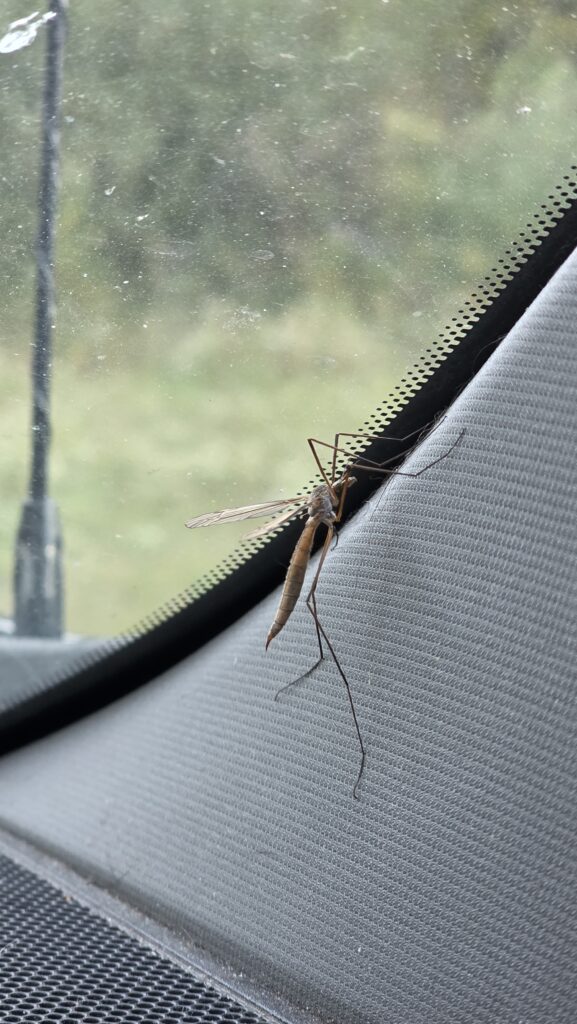
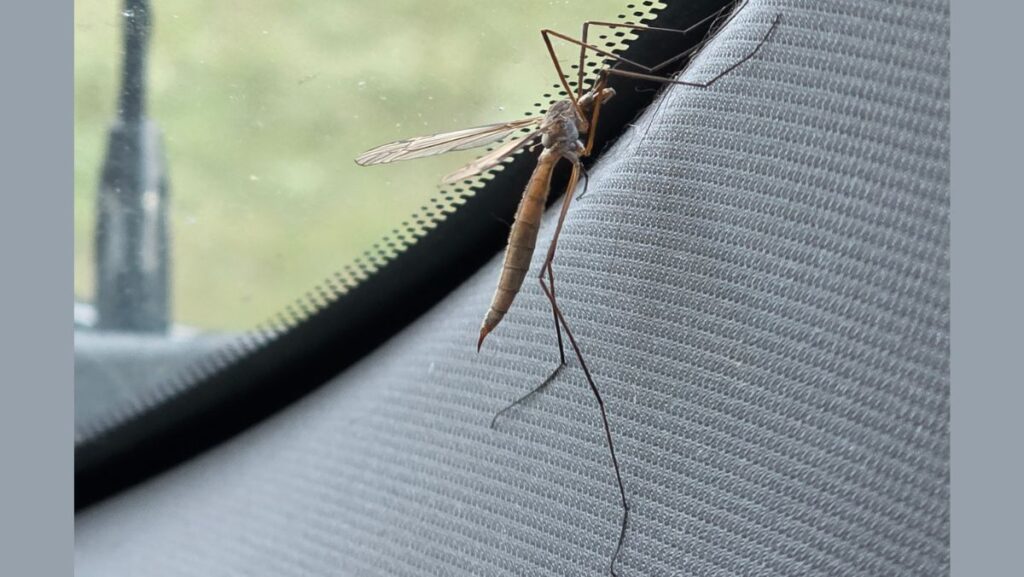
With nearly 30 acres of fields, ponds, wetlands, and woods, you run into all sorts of insects. Some are beautiful, some are fascinating, and some are just plain weird-looking. Crane flies definitely fall into that last category. We photographed several in September, when these long-legged insects were making their seasonal appearance.
Their awkward flying makes them hard to ignore, especially when they get close enough for a good look. Once you know what they are, they’re much less alarming. Although a few species deserve attention as potential lawn pests, most are just another part of the wildlife living here. And that’s exactly why we enjoy observing them instead of automatically trying to get rid of them.
The Bottom Line
The next time one of these oversized, mosquito-looking flies comes wobbling across the lawn, there’s no need to panic. Crane flies don’t bite or sting, and most aren’t harmful. Unless there’s a confirmed lawn infestation, the best thing to do is leave them alone. They’ll probably be gone in a few days anyway, and something else in the yard may be happy to have them around.
Frequently Asked Questions
Are crane flies giant mosquitoes?
No. They’re true flies, but they belong to different families from mosquitoes. Their long legs and slender bodies just make them look similar.
Do crane flies eat mosquitoes?
Despite the nickname mosquito hawk, adult crane flies don’t hunt mosquitoes. Some aquatic larvae are predators, but crane flies aren’t a practical way to control mosquitoes.
Why are crane flies attracted to my house?
Some crane flies are attracted to lights and may enter through open doors or windows. They’re especially noticeable during seasonal emergence periods when many adults are active at once.
How long do crane flies live?
Many adult crane flies live only a few days, although lifespans vary by species. They spend most of their lives in their immature stages.
Should I spray my lawn for crane flies?
Not simply because adults are present. Only certain species cause significant turf damage, and treatment decisions should be based on pest identification and confirmed larval activity.
For more information about the species found in New York, see Cornell University’s European Crane Flies IPM Fact Sheet.
🌿 Gear Up for a Bee-Friendly Garden
Contains affiliate links, for full disclosure, see FTC Disclosure, here.
Looking for tools that actually work?
We’ve pulled together our favorite picks for beekeeping, gardening, and pollinator-friendly seeds—everything you need to support bees and grow a thriving space.
Browse the full list on Amazon — all in one spot.