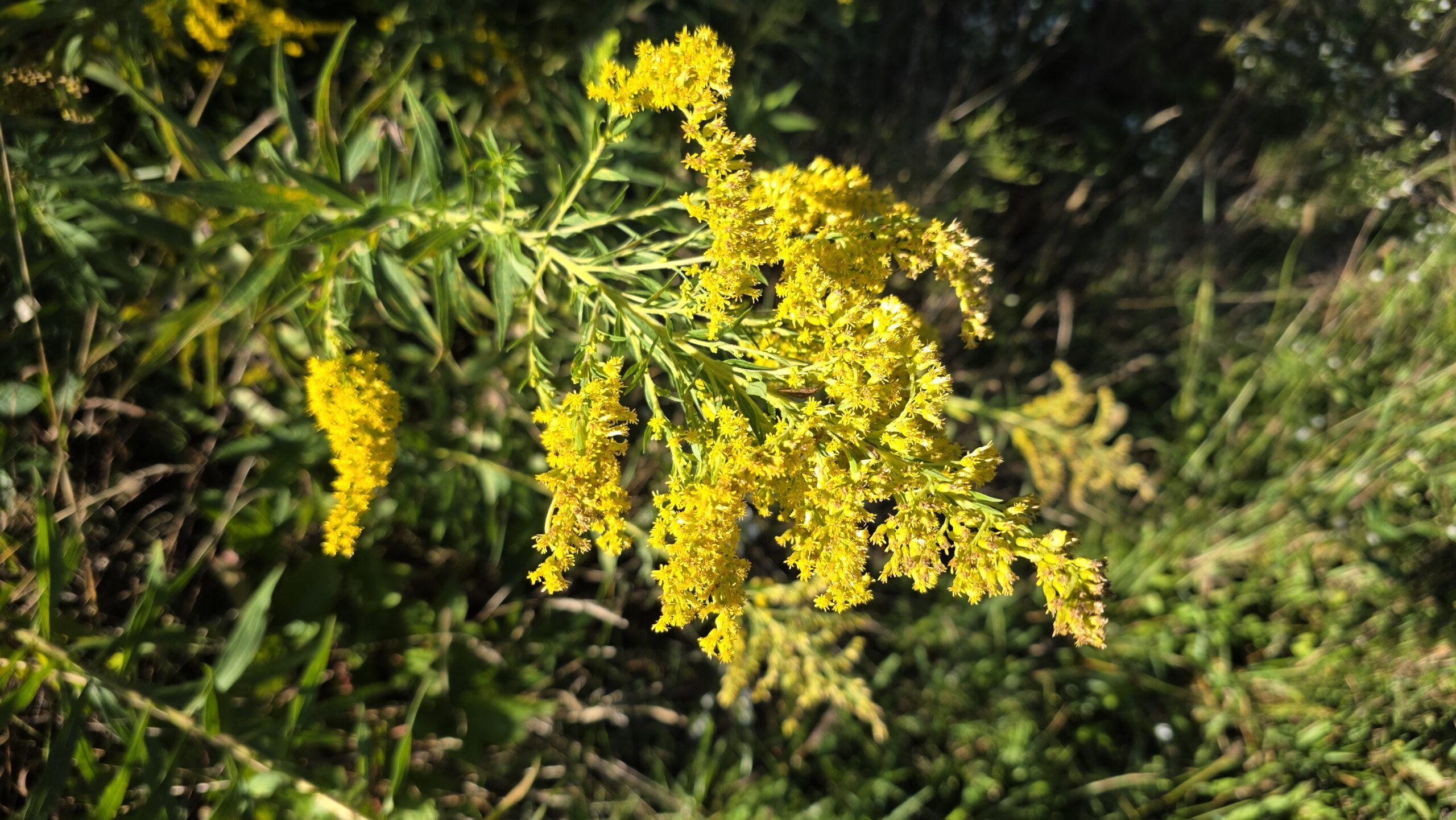
Every fall, fields and roadsides turn bright yellow as goldenrod reaches its peak bloom. Unfortunately, this beautiful native wildflower gets blamed for the sneezing, itchy eyes, and runny noses that arrive around the same time.
But goldenrod isn’t the plant responsible for most fall pollen allergies. Ragweed is usually the real culprit, and people have confused the two plants for generations. Understanding the difference can help gardeners protect an important food source for pollinators without making allergy season worse.
Is Goldenrod Really Causing Fall Allergies?
Goldenrod (Solidago species) is often blamed for hay fever because its bright yellow flowers are impossible to miss. The problem is that goldenrod and ragweed bloom at roughly the same time, usually from late summer into fall.
Goldenrod produces relatively heavy, sticky pollen that insects carry from flower to flower. It doesn’t normally float through the air in large quantities where people can breathe it in.
Ragweed (Ambrosia species) works differently. Its flowers release enormous amounts of lightweight pollen that travel through the wind. Those airborne pollen grains can cause sneezing, itchy eyes, congestion, and other seasonal allergy symptoms.
The simple difference is that goldenrod relies on insects for pollination, while ragweed relies on the wind.
Goldenrod can still cause reactions in some people who handle the plant or come into close contact with its flowers. However, it isn’t considered a major cause of airborne fall pollen allergies.
How to Tell Goldenrod and Ragweed Apart
Although both plants belong to the aster family (Asteraceae), they look quite different up close.
| Feature | Goldenrod | Ragweed |
|---|---|---|
| Flowers | Bright yellow clusters | Small, greenish flowers |
| Leaves | Usually simple, narrow leaves | Often deeply divided or lobed |
| Pollination | Primarily insects | Wind |
| Pollen | Heavy and sticky | Fine and lightweight |
| Life cycle | Perennial | Annual |
| Wildlife value | Excellent source of nectar and pollen | Provides seeds and some wildlife habitat |
What Does Goldenrod Look Like?
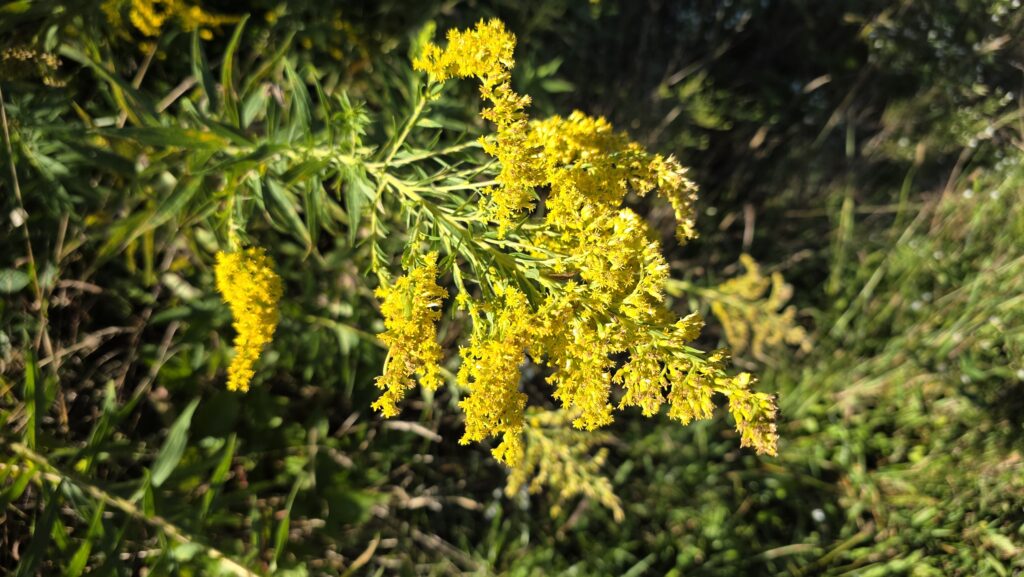
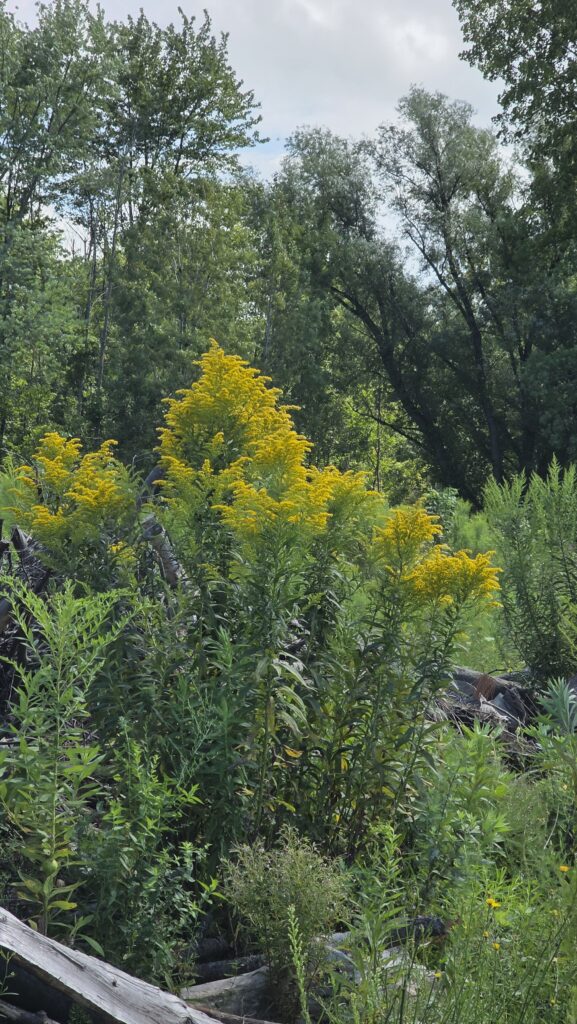
Goldenrod is easy to recognize when it flowers. Depending on the species, its tiny yellow blossoms may form arching plumes, upright spikes, or flatter clusters.
The leaves are generally narrow and grow alternately along the stems. Some species spread aggressively through underground rhizomes, while others remain in more manageable clumps.
Goldenrod grows in fields, meadows, along roadsides, and in open woodland habitats. It thrives across much of North America, including the Northeast.
What Does Ragweed Look Like?
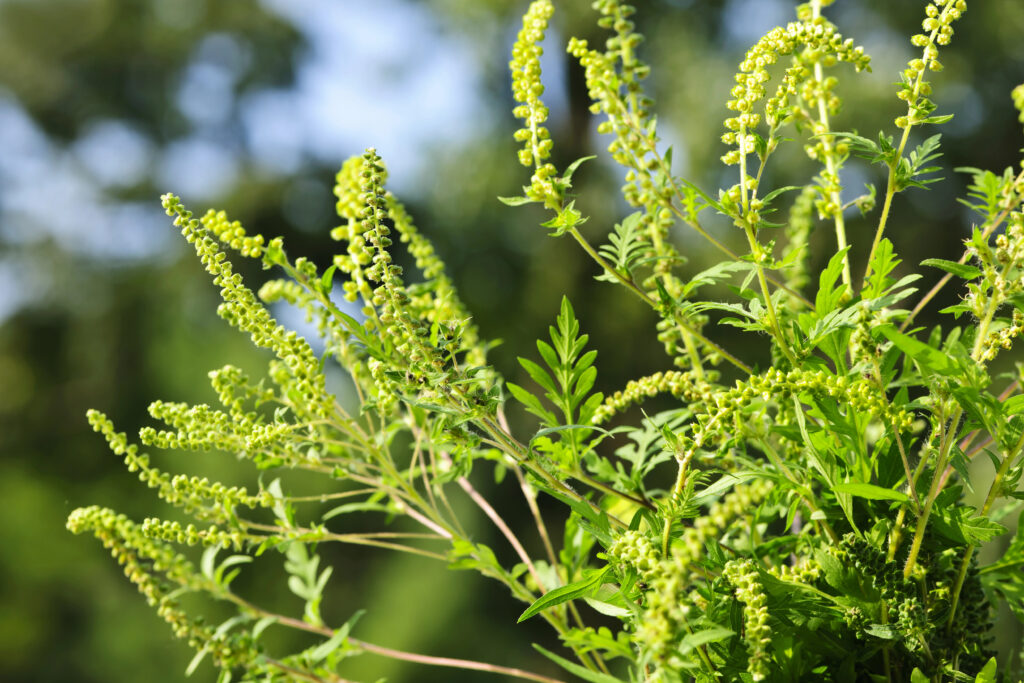
Ragweed is much less noticeable. Common ragweed (Ambrosia artemisiifolia) has deeply divided leaves that can resemble fern foliage. Its small greenish flowers grow along upright spikes near the tops of the stems. Giant ragweed (Ambrosia trifida) is considerably taller and commonly has large leaves with three distinct lobes.
Unlike goldenrod, ragweed doesn’t need bright flowers to attract pollinators. Instead, it releases pollen into the wind and depends on air movement to reach other flowers. This is also why people can experience ragweed allergies even when there isn’t a ragweed plant growing in their yard.
Why Goldenrod Is So Important to Bees and Other Pollinators
Goldenrod is one of the most valuable native plants flowering in late summer and fall. When many summer flowers have finished blooming, goldenrod continues providing nectar and pollen to insects preparing for colder weather. At Bees Haven in Upstate New York, goldenrod is part of the late-season flowering habitat that supports an incredible range of insects.
Visitors to flowering goldenrod may include:
- Honey bees collecting nectar and pollen
- Bumble bees feeding before the season ends
- Native solitary bees gathering pollen
- Butterflies and migrating monarchs
- Hoverflies and other beneficial flies
- Wasps and beetles feeding on nectar or other insects
Goldenrod is especially important because some native bees specialize in collecting its pollen. Several moth species also use goldenrod as a host plant for their caterpillars. For many insects, these flowers provide food when fewer alternatives are available.
Removing goldenrod because of a mistaken belief about allergies can eliminate valuable habitat without much reduction in airborne pollen.
When Does Ragweed Allergy Season Start?
Ragweed generally begins producing pollen in August, with levels often peaking during September. In warmer regions, the season can continue into October or even November. Here in Upstate New York, our first hard frosts generally end the growing season earlier than in southern states.
Farther south, ragweed can continue releasing pollen long after our fields have finished flowering. Weather also makes a difference. Warm, windy days can increase airborne pollen exposure, while rain temporarily clears some pollen from the air. This means fall allergy symptoms aren’t always tied to what is visibly blooming nearby.
Should You Remove Ragweed From Your Garden?
If ragweed grows in a small garden or landscape bed, removing it before flowering can help prevent it from producing pollen and seeds. Common ragweed is an annual, so preventing seed production can reduce future plants.
Hand-pulling young plants is often practical in smaller areas. Wear gloves, especially if plant contact bothers your skin, and avoid disturbing flowering plants unnecessarily if you have pollen allergies.
For larger properties and natural areas, management requires more thought. Removing every wild plant isn’t realistic, and even ragweed has some ecological value, including seeds eaten by birds. The goal should be thoughtful vegetation management, not eliminating everything that looks like a weed.
Should You Plant Goldenrod in a Pollinator Garden?
Absolutely. Goldenrod is a valuable addition to native plant gardens, especially when combined with asters and other late-flowering species. However, choosing the right goldenrod matters.
Some vigorous species, including Canada goldenrod and tall goldenrod, can spread quickly through underground rhizomes. They may suit meadows or large naturalized areas better than small flower beds.
For more controlled garden spaces, consider species such as:
- Showy goldenrod (Solidago speciosa) — Upright stems with impressive clusters of golden flowers.
- Stiff goldenrod (Solidago rigida, also classified as Oligoneuron rigidum) — Broad flower clusters and a sturdy growth habit.
- Zigzag goldenrod (Solidago flexicaulis) — A woodland species that tolerates some shade.
- Blue-stemmed goldenrod (Solidago caesia) — Yellow flowers arranged along arching, bluish stems.
Choose species native to your region and suited to your soil, moisture, and light conditions. Planting several kinds of late-season flowers can help extend the available food supply for pollinators.
Can Goldenrod and Ragweed Grow Together?
Yes, and they frequently do. Both plants thrive in sunny, disturbed areas such as roadsides, abandoned fields, and meadow edges. Their shared habitat and overlapping flowering seasons are the main reasons people have blamed goldenrod for ragweed allergies for so long.
When a field turns yellow in September, people naturally notice the goldenrod. Meanwhile, the less noticeable ragweed may be releasing pollen into the surrounding air. The most visible plant isn’t necessarily the one causing the problem.
The Bottom Line
Goldenrod has carried an undeserved reputation for causing fall allergies for far too long. Its bright yellow flowers appear just when ragweed begins releasing pollen, making it an easy target for blame. But the two plants play very different roles in nature. Ragweed is a major source of airborne allergy-triggering pollen, while goldenrod provides valuable nectar and pollen for bees, butterflies, and other insects.
Before removing goldenrod from a garden or meadow, take another look. Those yellow flowers may help pollinators get through one of the year’s most important feeding periods. At Bees Haven, that’s a very good reason to let them bloom.
Frequently Asked Questions
Can goldenrod cause allergies?
Goldenrod can cause reactions in some people through direct contact, but its heavy, sticky pollen is not a major airborne allergy trigger. Ragweed is much more likely to cause fall hay fever.
Do goldenrod and ragweed bloom at the same time?
Yes. Both generally flower from late summer into fall. This overlap is the main reason people often blame goldenrod for ragweed-related allergies.
How can you identify ragweed without flowers?
Common ragweed has deeply divided, fernlike leaves. Giant ragweed often has large, three-lobed leaves. Leaf shape can help identify these plants before they flower.
Is goldenrod good for honey bees?
Yes. Goldenrod provides nectar and pollen late in the growing season, when honey bees and other insects are still actively collecting food.
Should goldenrod be cut down in the fall?
It usually isn’t necessary. Leaving goldenrod stems standing through winter can provide shelter for insects, while the remaining seed heads offer food for some birds.
Sources and Further Reading
- Cornell University — Goldenrod: Native Plant of the Week
- Clemson Cooperative Extension — Goldenrod & Ragweed
- Penn State Extension — Goldenrod: Not Just Another Pretty Face
- American College of Allergy, Asthma & Immunology — Ragweed Allergy
🌿 Gear Up for a Bee-Friendly Garden
Contains affiliate links, for full disclosure, see FTC Disclosure, here.
Looking for tools that actually work?
We’ve pulled together our favorite picks for beekeeping, gardening, and pollinator-friendly seeds—everything you need to support bees and grow a thriving space.
Browse the full list on Amazon — all in one spot.