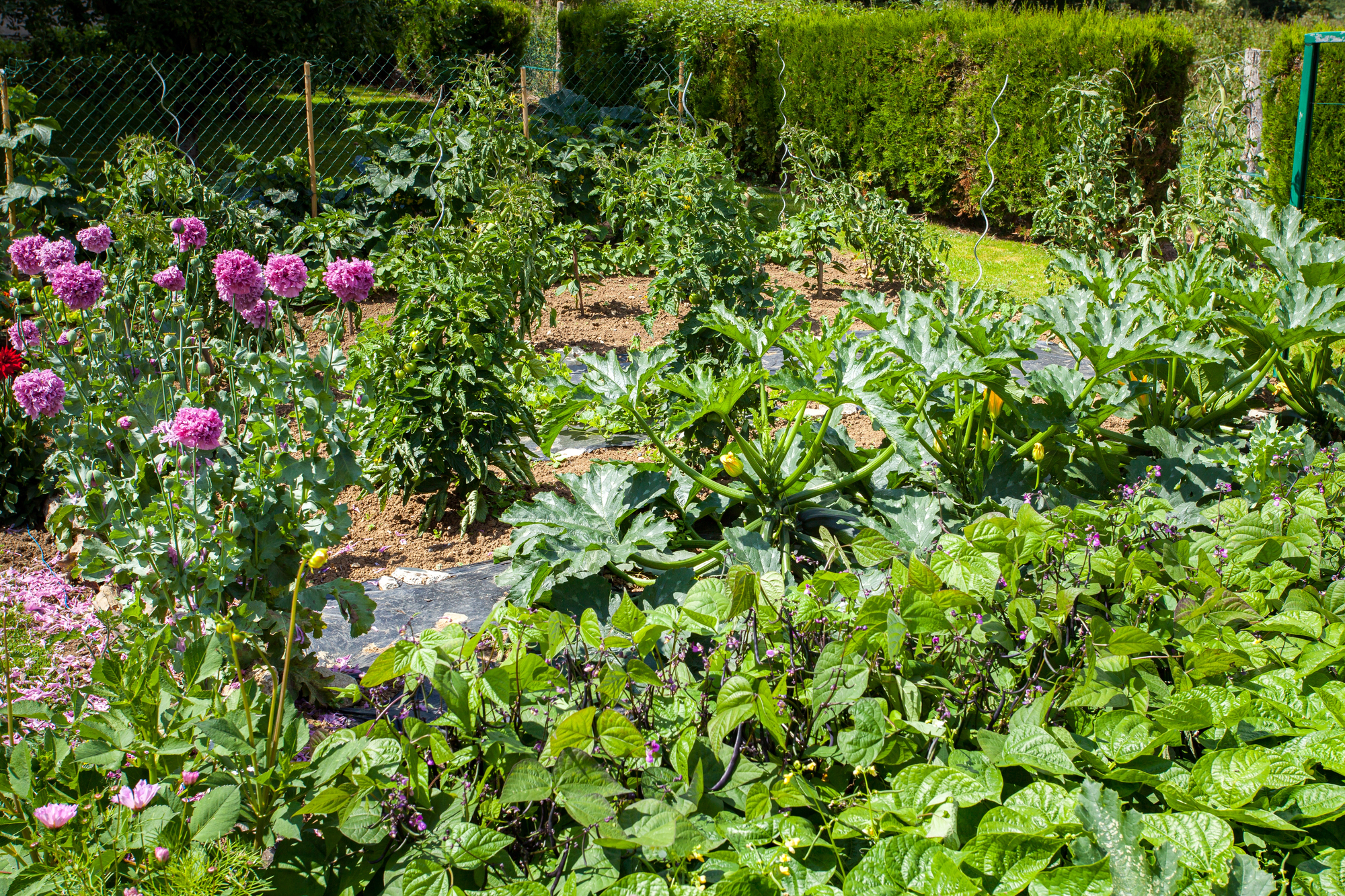
Planning vegetable garden spaces is more than deciding where to put a few rows of crops. A good plan helps you grow more food in less space, reduce pest problems, and welcome pollinators into the garden. With the right layout and plant choices, your vegetable patch can be both productive and pollinator-friendly from spring to frost.
Good garden planning balances your needs as a grower with the needs of pollinators and other beneficial insects. This guide walks you through setting goals, mapping light, designing for continuous bloom and harvest, and organizing crops by function so your garden works as a complete system.
Start with Your Goals
Before drawing a single row, decide what you want your garden to achieve.
- Food goals – Which vegetables and fruits you want to grow, how much you need, and when you want them to be ready.
- Pollinator goals – How much space can you dedicate to flowers and flowering herbs, whether for borders, interplanting, or nearby habitat strips?
- Balance – Decide early how much of the garden will be for production and how much will be for biodiversity.
Map the Sun and Shade Patterns
Light is one of the biggest factors in what you can grow and where you can grow it. Spend a few days observing how the sun moves across your garden site at different times of day.
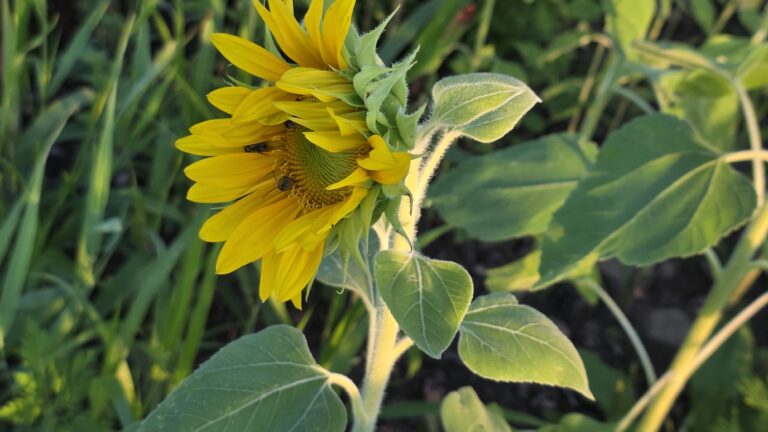
- Place tall crops like corn, sunflowers, or trellised beans where they won’t shade smaller plants.
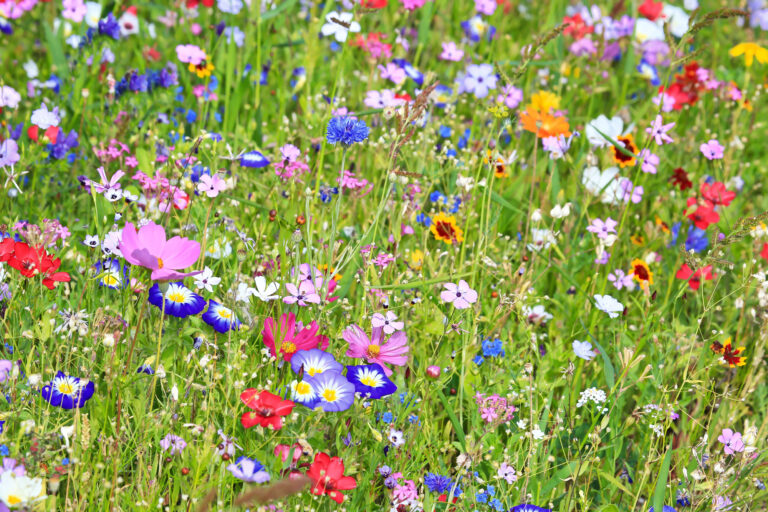
- Reserve sunny borders for nectar-rich plants such as zinnias, cosmos, or borage to attract pollinators.
- Use partial-shade spots for leafy greens or herbs like parsley and mint, which can still flower for pollinators.
Plan for Continuous Bloom and Harvest
Your vegetable harvest and your pollinator support should overlap through the entire growing season.
- Succession planting – Stagger plantings of crops like lettuce, carrots, and beans so you’re harvesting steadily instead of all at once.
- Early-season blooms – Include cool-season vegetables that flower early, like peas and fava beans, along with annuals such as calendula and pansies. These start feeding pollinators when few other blooms are open.
- Mid-season blooms – Add borage, zinnias, and annual herbs like dill or cilantro (both flower quickly and support pollinators without reseeding aggressively in most climates).
- Late-season blooms – Incorporate annuals like cosmos, cleome, and tithonia, plus late-flowering herbs such as oregano and thyme (cut back before heavy seeding) to extend nectar sources until frost.
- Combine edible crops and pollinator plants in the same bed when possible, but keep them weed-free to prevent competition.

Design Crop Groupings by Function
Organizing your garden by function keeps it productive and healthy.
- Food crops – Your main vegetable and fruit plants.
- Pest-deterring plants – Marigolds, basil, and nasturtiums that repel pests or act as trap crops.
- Nectar and pollen plants – Flowers and herbs that bring in bees, butterflies, and beneficial wasps to pollinate flowers.
- Soil-builders – Nitrogen fixers like beans improve soil and feed pollinators.
Layer Your Plant Heights
A well-layered garden uses space efficiently and creates microhabitats.
- Tall plants – Sunflowers, corn, and trellised crops can shelter tender plants and provide perches for pollinator-friendly insects.
- Mid-height crops – Tomatoes, peppers, and bush beans fill the middle.
- Low growers – Lettuce, herbs, and low flowers like alyssum help cover soil, reduce weeds, and feed small pollinators.
Watering and Access Layout
Plan your watering system before you plant.
- Group plants with similar water needs to avoid over- or underwatering.
- Place pollinator-attracting plants where they won’t be sprayed by overhead watering during peak bee activity.
- Leave clear paths so you can harvest vegetables and observe pollinators without damaging plants.
Leave Space for Experimentation
A garden that remains unchanged every year misses opportunities.
- Reserve a small section for testing new vegetable varieties or new pollinator plants.
- Track what works well together and what needs adjusting for next year.
- Rotate crops and flower mixes to keep soil healthy and blooms fresh for pollinators.
A garden that feeds you and supports pollinators starts with a plan. By mapping light, staggering blooms, and balancing crops with flowers, you’ll create a space that produces abundant harvests while helping the pollinators your garden depends on.
See our article on Companion Plants for Potatoes to learn more.
🌿 Gear Up for a Bee-Friendly Garden
Contains affiliate links, for full disclosure, see FTC Disclosure, here.
Looking for tools that actually work?
We’ve pulled together our favorite picks for beekeeping, gardening, and pollinator-friendly seeds—everything you need to support bees and grow a thriving space.
Browse the full list on Amazon — all in one spot.