Every fall, homeowners race to clear every leaf from the yard. Bags pile up on curbs, lawns are left bare, and gardens look tidy again. But beneath those fallen leaves is an entire world of life we can’t see — and when the leaves go, so does the shelter that wildlife depends on to make it through the cold months.
Leaving the leaves isn’t laziness. It’s one of the simplest, most effective ways to help pollinators and protect biodiversity right in your own yard.
What’s Hiding Beneath the Leaves
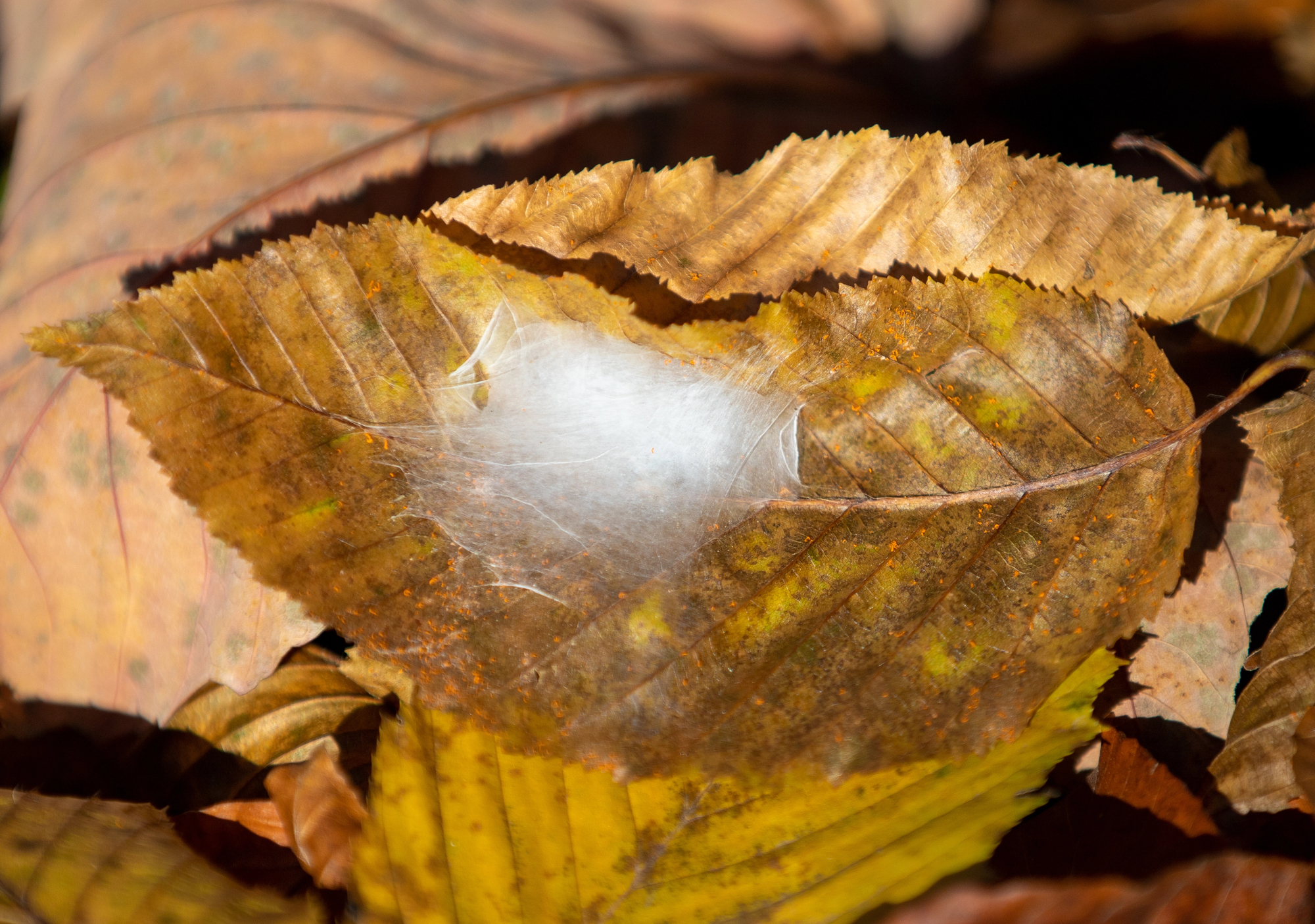
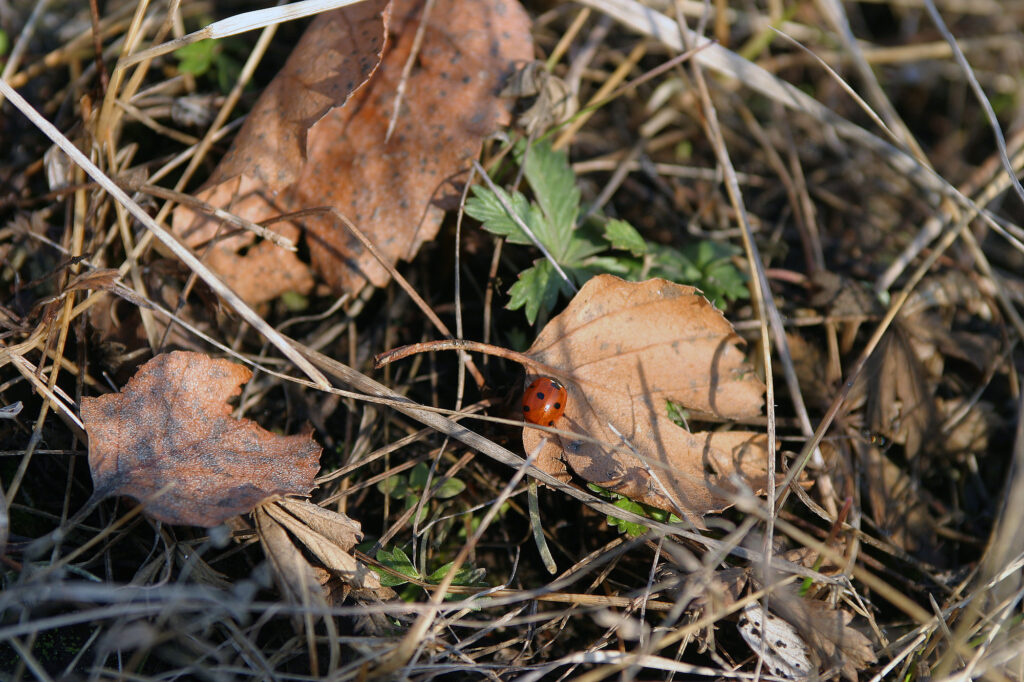
Fallen leaves are more than autumn’s leftovers. They form a natural blanket that keeps the ground from freezing too quickly and offers protection for countless creatures. Cocoons, lady beetles, spiders, and solitary bees all rely on this layer to survive the winter.
Many species spend the winter in their adult, pupal, or larval stages hidden in leaf litter. Moths, butterflies, and beetles use it as both insulation and camouflage. Disturbing or bagging leaves too early can destroy those protective homes before winter even begins.
How Leaf Litter Feeds the Life Below
When leaves fall and begin to break down, they don’t just disappear. They feed an entire community underground. Each layer of decaying leaves becomes a miniature home for bacteria, fungi, and soil-living insects. These living creatures work together to convert leaf litter into nutrients that plants depend on and pollinators benefit from.
Fungi form threads through the leaf litter that help plant roots absorb water and nutrients. Bacteria break complex compounds into simpler forms that plants can use. Earthworms, springtails, and beetle larvae chew through debris, blending it into the soil and improving its structure.
This slow transformation creates crumbly, moisture-rich soil that resists erosion and naturally stores carbon. It’s the same process that builds fertile forest floors, and every garden that keeps its leaves is participating in that cycle.
Healthy soil supports the plants that feed bees and butterflies in spring. Without the creatures that decompose leaf litter, the pollinator food chain starts to crumble long before flowers appear. It is a whole system working together beautifully.
How to Leave the Leaves Without Losing the Lawn
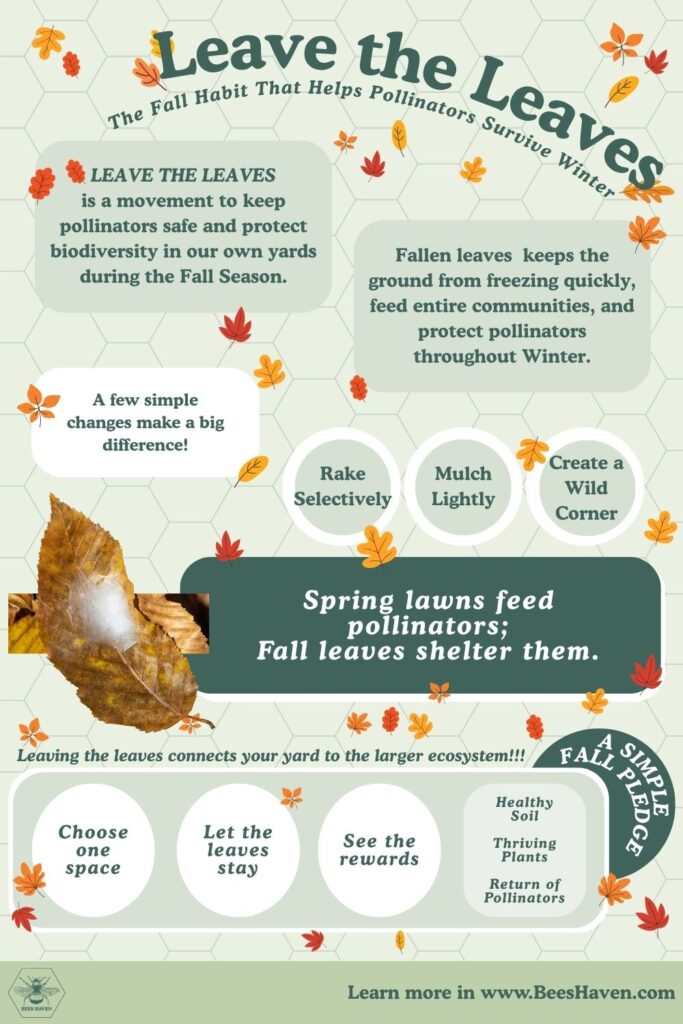
You don’t need to completely abandon your yard to wildlife. A few simple changes make a big difference:
- Rake selectively. Move heavy piles off the lawn to prevent smothering grass, but leave them in garden beds, under shrubs, or around trees.
- Mulch lightly. Shred a thin layer of leaves with a mower and let them filter down into the turf.
- Create a wild corner. Pile leaves in one part of your yard to make a natural shelter for insects, amphibians, and small mammals.
These simple practices keep your yard looking cared for while still providing critical habitat.
Who Benefits When You Leave the Leaves
A surprising number of species use fallen leaves to survive winter:
- Pollinators such as native bees, butterflies, and moths rest safely inside the leaf layer.
- Birds scratch through it to find hidden insects that fuel their cold-weather diets.
- Amphibians and reptiles like frogs, toads, and salamanders use damp leaves for cover.
- Soil organisms such as worms and beetles recycle nutrients that feed next year’s garden.
Leaving the leaves connects your yard to the larger ecosystem. What seems like a small act at home becomes a big help across neighborhoods and communities.
A Simple Fall Pledge
Choose one space, like a garden bed, tree ring, or back corner, and let the leaves stay. By doing less, you’re giving more to the wildlife that needs it most. Come spring, you’ll see the rewards in healthy soil, thriving plants, and the return of bees and butterflies that made it through the winter.
Spring lawns feed pollinators; fall leaves shelter them.
Want to learn more? See our article, Turning Your Yard Into a Fall Pollinator Garden Refuge or Who’s Still Buzzing When the Flowers Fade?
Or check out this article on Xerces Society’s website. Leave the Leaves.
🌿 Gear Up for a Bee-Friendly Garden
Contains affiliate links, for full disclosure, see FTC Disclosure, here.
Looking for tools that actually work?
We’ve pulled together our favorite picks for beekeeping, gardening, and pollinator-friendly seeds—everything you need to support bees and grow a thriving space.
Browse the full list on Amazon — all in one spot.