As most flowers start to brown and nights turn cold, a few determined fall bees are still flying. These late-season bees make the most of the final nectar before winter shuts everything down. Their work supports both the next generation of bees and the plants that rely on them, giving them one last chance to set seed.
Why Some Bees Keep Flying in Fall
Not all bees call it quits when the days shorten. Some species have dense body hair and the ability to generate heat by vibrating their flight muscles, which helps them stay active in cooler weather, even in the mid-50s. Others are still gathering pollen for their developing larvae.
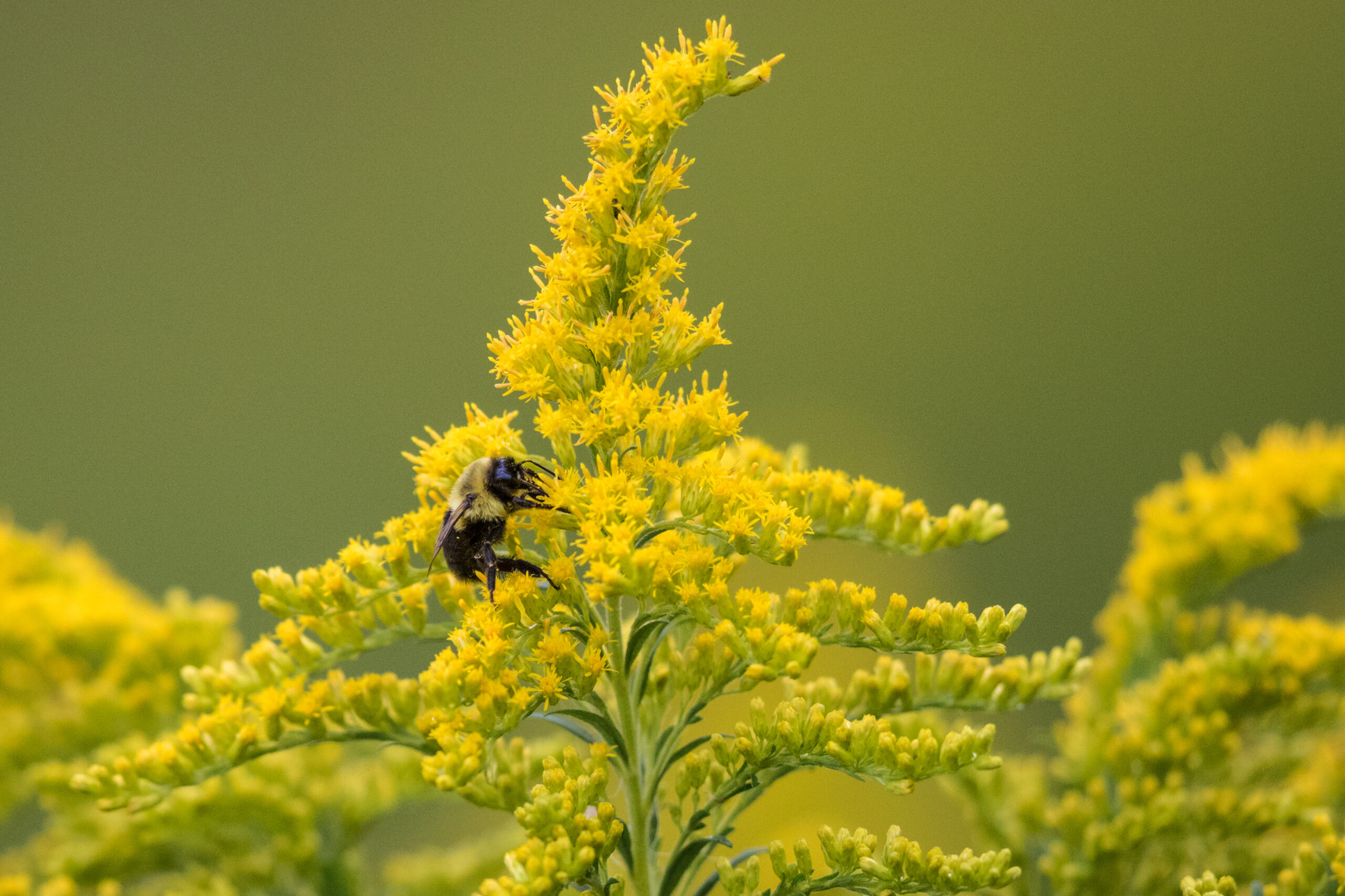
Late blooms such as asters, goldenrod, and sneezeweed are crucial food sources. Without them, many bees would not have the reserves they need to survive the coming freeze. These plants also support butterflies, flies, and beetles as they complete their life cycles, creating a final burst of activity before frost.
Fall flowers give native plants one more chance for fertilization and seed development. Bees and late wildflowers evolved together, timing their activity to match this short window before dormancy sets in.
Bumblebee Queens on Their Final Flights
By October, most bumblebee colonies are nearing their end. The old queen, workers, and drones soon die off, but newly mated queens are out feeding as much as possible. You might spot them clinging to asters, helenium, or goldenrod during warm afternoons, stocking up on nectar before finding a place to burrow.
Each queen carries the future of her colony. After mating, she searches for a patch of loose soil, a mouse hole, or leaf litter where she can spend the winter. Once settled, she lowers her metabolism and produces glycerol, a natural antifreeze that keeps ice crystals from forming inside her body.
When spring soil warms, she will emerge to start a new colony on her own, gathering pollen to feed her first brood before they grow into workers.
Solitary Bees Still on the Wing
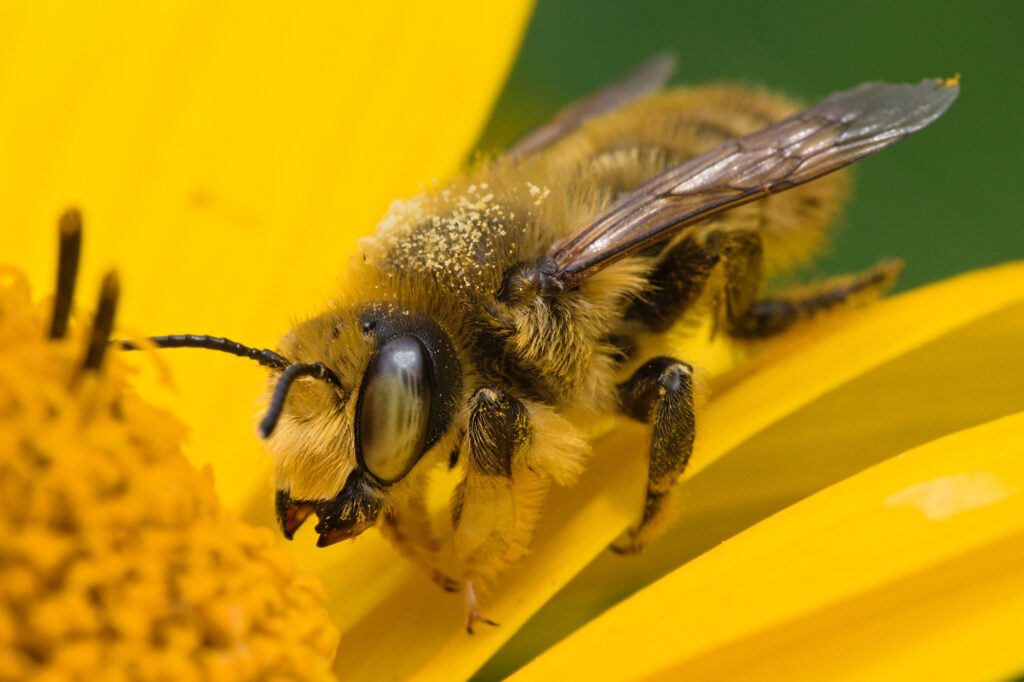
Several solitary species linger late into fall. Small sweat bees (Halictidae), leafcutter bees (Megachilidae), and resin bees (Heriades spp.) can still be seen foraging when temperatures allow. Many are completing their nests, sealing the final brood chambers with mud, leaves, or plant resin.
Inside each chamber, a larva spins a thin cocoon and transforms into an adult, remaining in suspended animation until spring. These bees depend on gardeners leaving behind uncut stems, hollow twigs, and brush piles for nesting. Even stems as narrow as a pencil can host overwintering bees.
How to Help Late-Season Bees Survive
You can make a big difference by keeping parts of your garden a little messy through fall. Leave standing stems and seed heads where bees might be nesting. Avoid heavy mulching or soil turning, which can crush overwintering queens or larvae.
If you are still adding plants, choose species that bloom into late fall. New England aster, smooth aster, helenium, sneezeweed, and goldenrod are reliable favorites. Even a small patch can provide essential nectar when options are limited.
If you have already collected seeds for next year, consider sowing a few now. Fall seeding mimics natural cycles, allowing winter’s cold to break dormancy and encourage stronger germination in spring.
When the ground warms, the seedlings will grow steadily through summer and bloom just in time for next year’s fall bees.
See this article from the National Wildlife Federation. Forget Fall Cleanup! Autumn Gardening Tips to Help Pollinators
When the Last Buzz Fades
By the time frost hits, most bees have vanished from sight. Underground queens, hidden cocoons, and larvae inside hollow stems carry the next generation through the cold months ahead. Though the garden looks quiet, life within it is far from gone. It is simply resting until the warmth returns.
Want to learn more about fall bees? See our article about Bees in the Fall: Nature’s Most Ruthless Housekeepers or How to do Pollinator Friendly Fall Garden Cleanup.
Three Late Blooms That Keep Bees Fed Until Frost
- New England Aster – A reliable nectar source through October and often the last flower visited by bumblebee queens.
- Goldenrod – Supports dozens of bee species and helps queens build fat reserves before hibernation.
- Sneezeweed (Helenium autumnale) – Thrives in wet soil and blooms late when most plants have stopped producing nectar.
How to Tell a Queen Bumblebee Apart
- Queens are larger and rounder than workers, with a slower, heavier flight pattern.
- You’ll often see them alone instead of in groups.
- In late fall, they feed low to the ground on warm days, then disappear once they find a place to burrow for winter.
🌿 Gear Up for a Bee-Friendly Garden
Contains affiliate links, for full disclosure, see FTC Disclosure, here.
Looking for tools that actually work?
We’ve pulled together our favorite picks for beekeeping, gardening, and pollinator-friendly seeds—everything you need to support bees and grow a thriving space.
Browse the full list on Amazon — all in one spot.