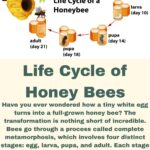
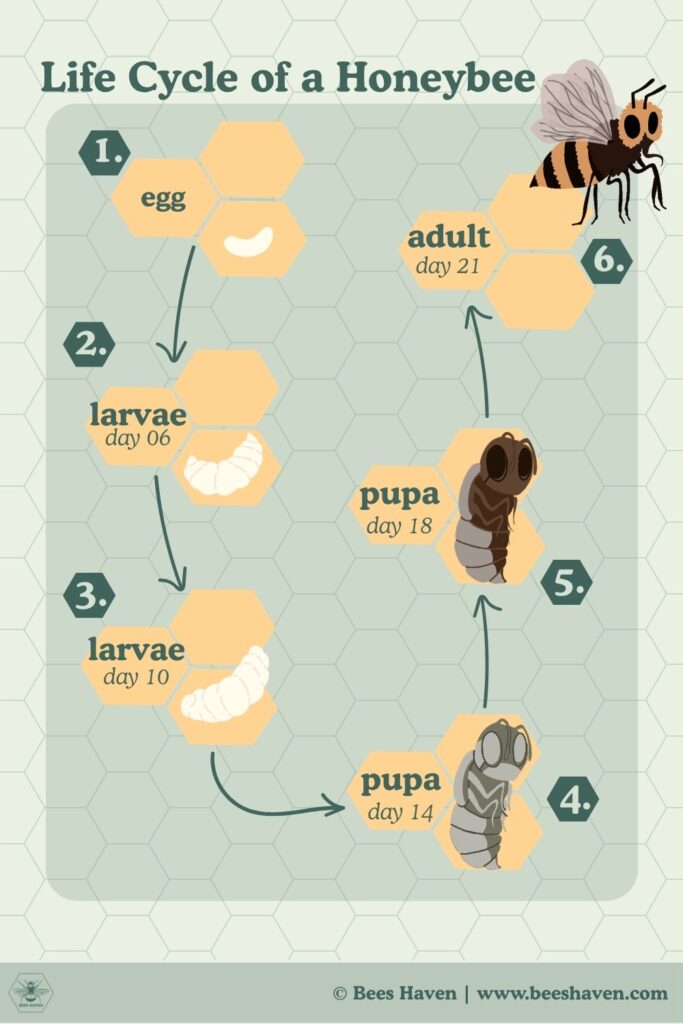
Have you ever wondered how a tiny white egg turns into a full-grown honey bee? The life cycle of honey bees is nothing short of incredible. Bees go through a process called complete metamorphosis, which involves four distinct stages: egg, larva, pupa, and adult. Each stage plays a vital role in the hive’s success, and the entire journey takes about 21 days.
Here’s what happens inside those little wax cells.
The Life Cycle of Honey Bees
🐣 1. The Egg
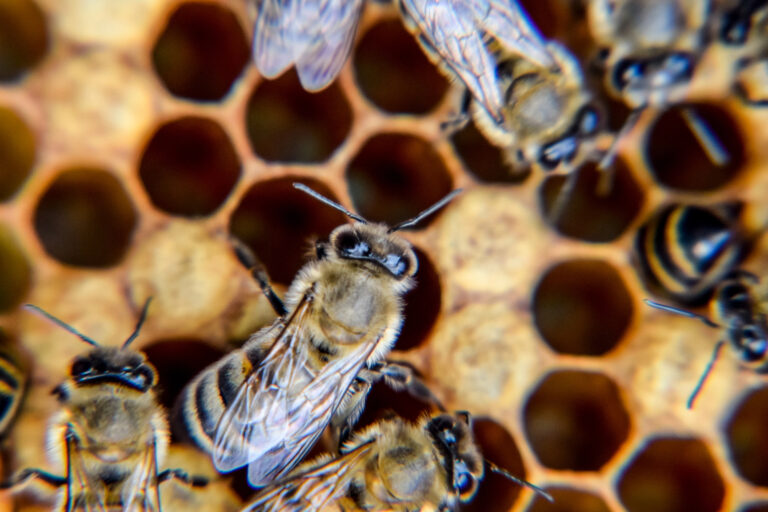
The queen bee walks across the honeycomb, inspecting cells with her antennae. She checks for cleanliness and size. Large, drone-sized cells are used for male eggs. Smaller worker-sized cells are used for female eggs.
Worker bees clean and prepare each cell ahead of time. If it’s not ready, the queen skips it.
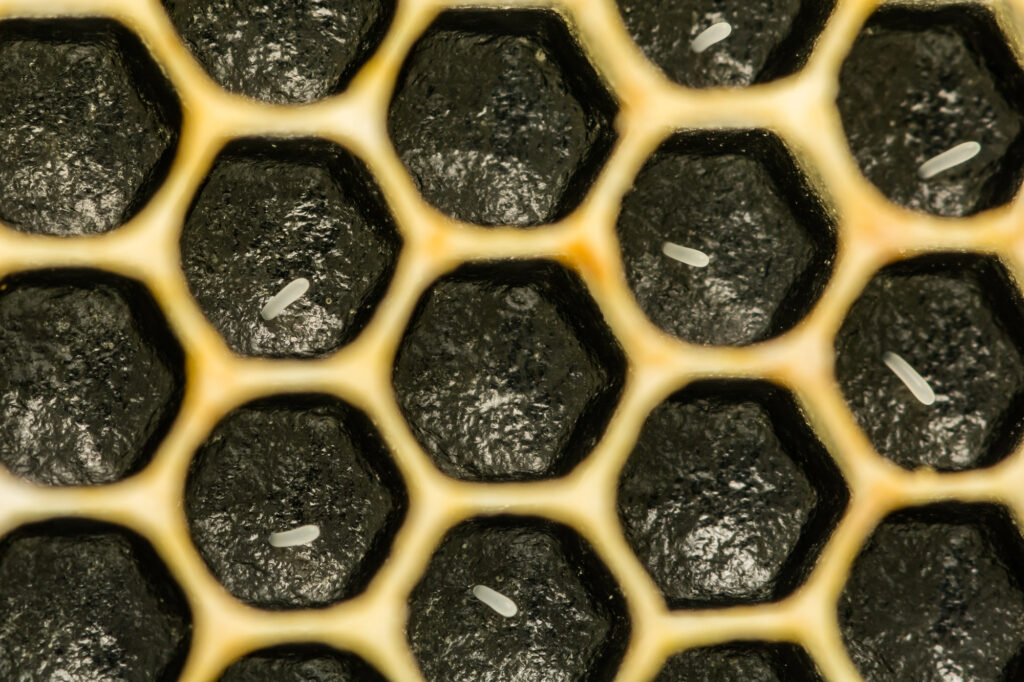
Every bee begins as a single egg laid by the queen. These eggs are so small they can be hard to spot, but each one holds the start of a new life.
The photo below is an extreme close-up of honey bee eggs.
Honey bees use a system called haplodiploidy. The queen can choose whether or not to fertilize an egg as she lays it:
- Fertilized eggs become females (workers or future queens).
- Unfertilized eggs become males (drones).
She controls this with a valve in her reproductive tract. Fertilized eggs come from stored sperm collected during her mating flights.
The queen curls her abdomen into the cell and deposits a tiny, rice-shaped egg onto the cell floor. It’s sticky enough to stand upright for about 3 days.
Each queen can lay 1,000 to 2,000 eggs per day during peak season, depending on the colony’s needs and available resources.
🐛 2. The Larva
Once the egg is laid, worker bees care for it. After three days, the egg hatches into a larva. From that point forward, workers feed and tend to it constantly. If the colony is raising a new queen, select larvae are placed in larger “queen cups” and fed royal jelly exclusively.
The newly hatched larva is a tiny white grub. It can’t move or see, so worker bees tend to it constantly. For the first few days, it’s fed royal jelly. After that, it switches to a mix of pollen and nectar. The larva grows quickly, shedding its skin several times as it fills the cell.
The queen doesn’t raise the young herself. Her role is entirely focused on laying eggs and producing the right mix of workers, drones, and future queens. The rest of the hive operates like a well-oiled machine to support her.
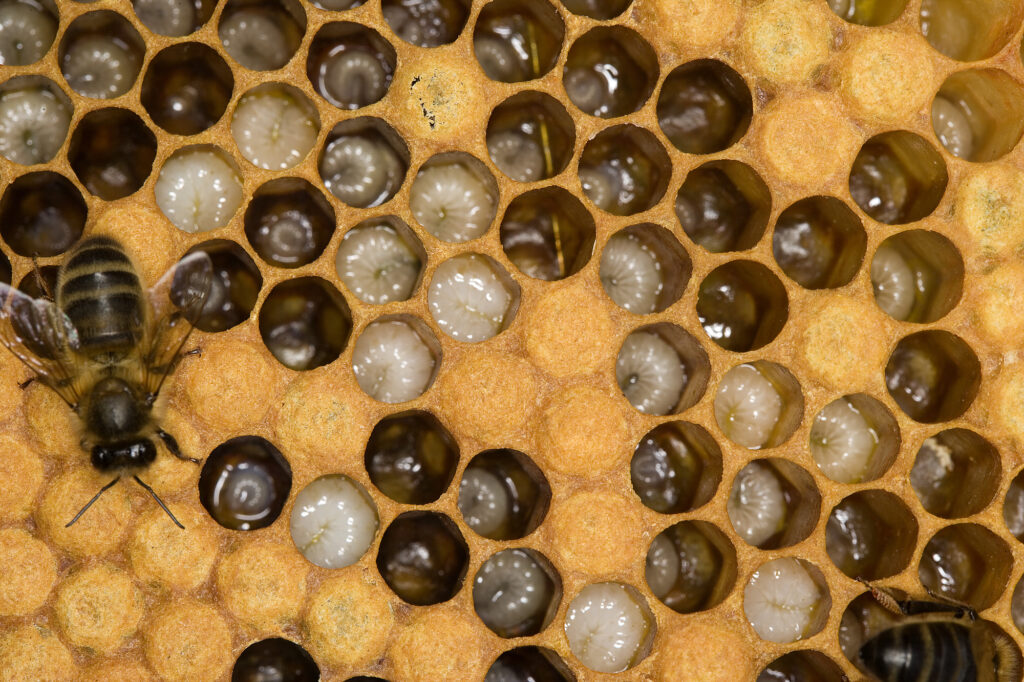
In the photo below are larvae of different ages. The closed cells likely contain the pupa. The cell in the top middle with small holes in it could be an adult bee ready to emerge.
🧬 3. The Pupa
When the larva is fully grown, worker bees seal the cell with wax. Inside, the larva transforms into a pupa. During this stage, the bee starts to take shape. Wings, legs, eyes, and a fuzzy body all form. This stage is known as complete metamorphosis, and it typically lasts approximately 12 days.
🐝 4. The Adult Bee
When development is complete, the adult bee chews through the wax cap and emerges from the cell. Initially, it remains inside the hive to clean, feed the young bees, and care for the queen. As it matures, it assumes new tasks, such as guarding the hive or foraging for nectar and pollen.
Why It Matters
Learning how bees grow helps us understand what they need. If you’re planting a pollinator garden, leaving safe spots for nesting and avoiding pesticides during sensitive stages can make a big difference. These small changes support every part of the life cycle of honey bees.
👉 Want to do more? What Bees Really Need to Survive in Your Yard has practical ways to help bees in every season. If you’re thinking of starting an apiary, don’t miss our article, Types of Honey Bees: Which Breed Is Right for Your Hive?
🌿 Gear Up for a Bee-Friendly Garden
Contains affiliate links, for full disclosure, see FTC Disclosure, here.
Looking for tools that actually work?
We’ve pulled together our favorite picks for beekeeping, gardening, and pollinator-friendly seeds—everything you need to support bees and grow a thriving space.
Browse the full list on Amazon — all in one spot.