

A Family Farm with Deep Roots
Bees Haven is more than a pollinator project. The land has a long history, and it’s been through a lot of changes. This 29-acre property in Ontario, New York, has been in my husband’s family since 1942, when his grandfather purchased it. Back then, like many parcels in the region, it was a working farm. They plowed fields, cut hay, and let livestock graze where wildflowers now bloom. These days, it’s become an example of slow, low-intervention pollinator habitat restoration.
That era lasted until the late 1970s. Over time, farming activity slowed, and the land began to change. What didn’t change was the garden. Every year, the family planted fruits and vegetables, enough to feed themselves, and more to sell at a roadside fruit stand.

We still carry on that tradition today.. When we first moved here in 1998, we grew a wide variety of fruits and vegetables. We even raised a few dozen chickens and sold both eggs and produce at the stand, just like the generations before us.
Over time, the garden has gotten smaller. Our backs and knees don’t hold up like they used to, but we still grow as much as we can, and we use a lot of that produce to create recipes over at Binky’s Culinary Carnival.
Letting the Land Reclaim Itself
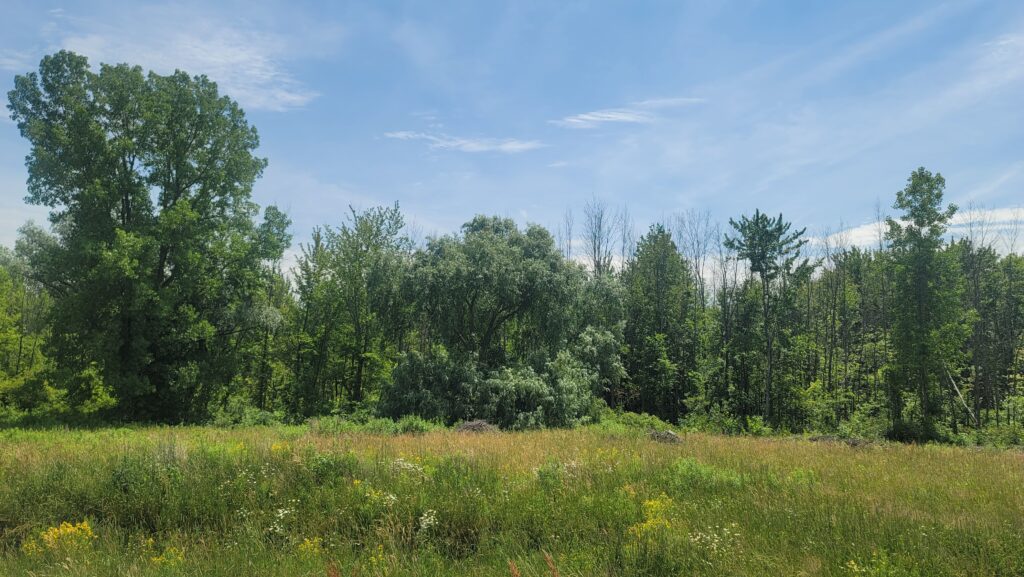
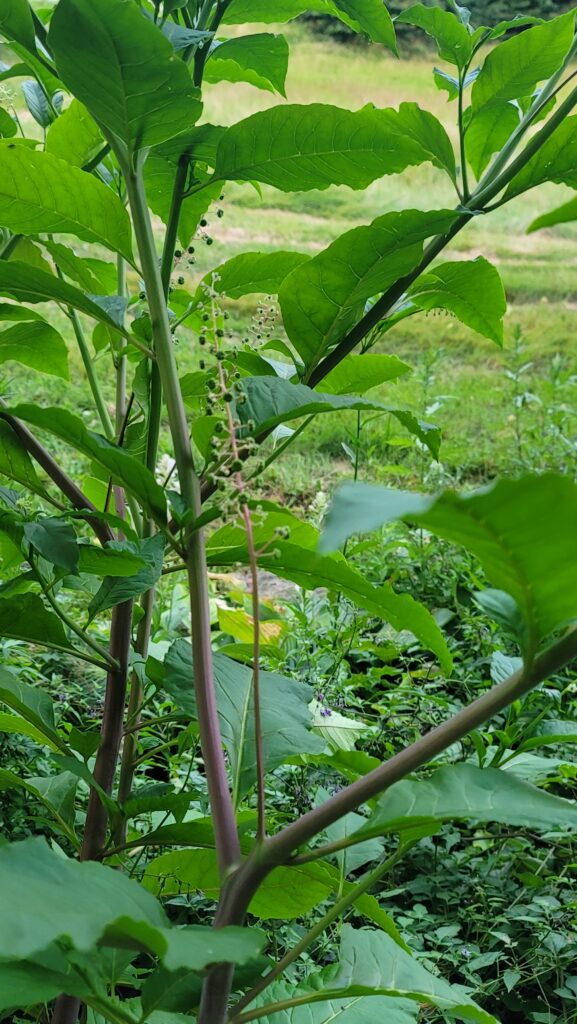
We weren’t trying to create a habitat or anything like that. We just stopped mowing and let the fields go. And once we left things alone, the land started coming back on its own. Milkweed popped up in the meadows. Goldenrod and asters filled in spots where hay used to grow. Viburnum and dogwoods started spreading in the hedgerows. Every year, something new showed up. Some of it we were glad to see. Some of it, not so much.
Boxelder (Acer negundo) is one of the hardest things to get rid of. It’s fast-growing and spreads wherever it can. We’ve got one patch that keeps coming back every few years, no matter how many times we cut it. We’ve tried to manage it, but it’s one of those things that just won’t go away.
New Habitats, New Life
Now, the property has a mix of different habitats. The wildflower fields cover most of the higher ground. The swamp sits on the south side, a creek running east from a small pond on the north side. We’ve got naturally seeded cherry, apple, and poplar trees that have been spreading for years. There are also rows of white spruce just south of the pond. Our kids planted them in 2011. Today, they stand 10-30 feet tall.
We manage the land in sections. Most areas get bush-hogged every four or five years on a rotating basis. That keeps the trees from taking over, but still gives the wildflowers and native plants time to grow. We don’t use herbicides, and we’re not worried about keeping things looking neat. We just try to let nature do its thing. Over time, more and more wildlife have moved in. We’ve seen bees, butterflies, bats, owls, frogs, foxes, wild turkeys, and insects like lightning bugs, all using different parts of the land.
Our goal is now to keep track of what’s here and keep it going. We also want to share what we’ve learned in case it helps someone else do something similar on their own land. In the next few posts, we’ll go through each part of Bees Haven, one area at a time. We’ll show what grows there, what lives there, and how stepping back has let the place fill in on its own. Stay tuned for more tips on pollinator habitat restoration. You don’t need 29 acres. Even a small parcel or even a balcony can help pollinators.
Want to learn more? See our article for What Bees Really Need
🌿 Gear Up for a Bee-Friendly Garden
Contains affiliate links, for full disclosure, see FTC Disclosure, here.
Looking for tools that actually work?
We’ve pulled together our favorite picks for beekeeping, gardening, and pollinator-friendly seeds—everything you need to support bees and grow a thriving space.
Browse the full list on Amazon — all in one spot.


