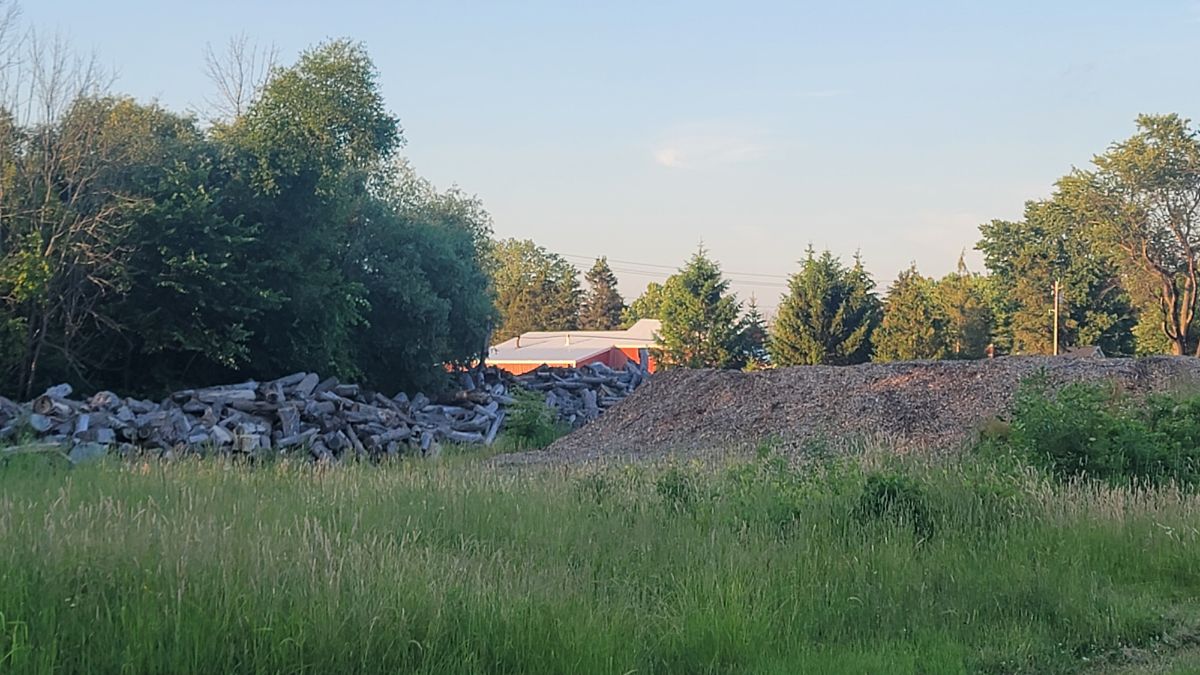

The restoration area was once part of the wildflower meadow, next to the creek. For a while, a friend who ran a tree business dumped wood and logs there every day. It got out of hand, so we told him to find another place to dispose of it. He left, but the mess stayed behind. 🙄
Now, there is a huge pile of mulch and wood chips. Another spot has stacked logs, and a third has a large brush pile.
Don’t get me wrong, it’s not entirely a bad thing.
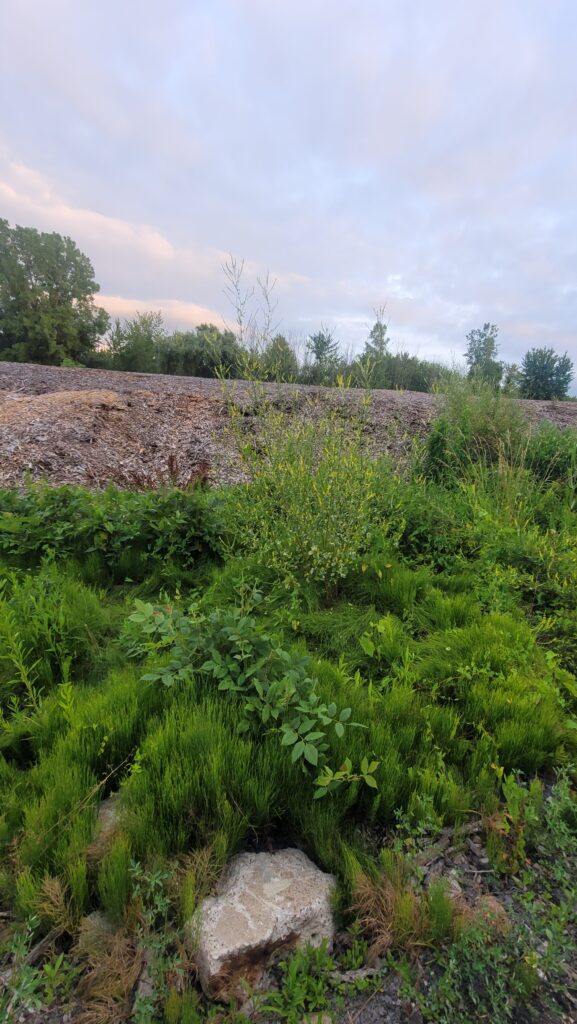
How the Restoration Area Became a Wildlife Haven
Numerous species now call these log piles home. Foxes are raising their kits in the spring and feasting on the rats, mice and chipmunks that have set up shop here. We’ve even seen hen turkeys going in and out, indicating they, too, use this area for nesting and cover.
The older wood in the log piles is decaying and alive with beetles, ants, fungi, and lichens. The insects attract numerous woodpeckers, including the pileated woodpecker, the largest woodpecker in the US (Woody the Woodpecker, for those who remember). Flickers, nuthatches and insect-eating birds also frequent the piles. The scent of damp wood paired with the steady tapping of woodpeckers brings a sense of calm to the area.
The insects and fungi that feed the birds and small mammals are breaking down the logs into organic topsoil, which will enhance the health of the existing soil. This is another benefit of having the trees.
The brush that he left has been arranged in small piles to support another group of animals. Rabbits, grouse and rodents also live in these piles. Woodcocks often feed on the insects that live in the piles. They provide cover and structure from predators and sit near water sources.
In turn, the large populations of smaller rodents and animals feed generations of apex predators, such as red-tailed and Cooper’s hawks, owls, foxes and coyotes.
This area is adjacent to the pond and creek, so wildlife doesn’t have to travel far for fresh water.

The wood chip pile is now quite aged, and the bottom layers have been broken down by the fungal networks (mycelium) and insects, so it is a dark brown and suitable for use as mulch for planting beds.
Seasons in the Restoration Area
Each season transforms the restoration area: in spring, fox kits play near the logs, under the close supervision of their parents. Summer brings new plant growth around the piles, fall bird migrations rest in the brush, and in winter, these piles offer crucial shelter for a host of species.
The plan for the future of this area is multi-tiered. We’ll sell the mulch by the truckload. Most of the brush piles will be strategically arranged throughout the property to support a diverse range of bird and mammal species. The large logs themselves will be split and sold as firewood, again, by the truckload or trailerload.
Many piles of logs, especially the older wood that is not suitable for burning, will be strategically placed to support different wildlife species. Once everything is relocated, the area will be seeded with native grasses and plants. The area where the mulch pile is currently once held the majority of the milkweed on the property. We will replace these.
This restoration area is a reminder that even an unexpected mess can become a haven for wildlife. It will support the diverse ecosystem we’re building at Bees Haven.
For more about Bees Haven see our series Inside Bees Haven: What 29 Acres of Habitat Can Really Hold
Interested in planting your own pollinator-friendly space? Check out our guide on our sister site, Binky’s Culinary Carnival. How to plan your vegetable garden to get started.
🌿 Gear Up for a Bee-Friendly Garden
Contains affiliate links, for full disclosure, see FTC Disclosure, here.
Looking for tools that actually work?
We’ve pulled together our favorite picks for beekeeping, gardening, and pollinator-friendly seeds—everything you need to support bees and grow a thriving space.
Browse the full list on Amazon — all in one spot.