
The creek and pond wildlife at Bees Haven have a way of drawing life in. Birds, mammals, insects, and amphibians all find what they need here, whether it’s water, food, or a quiet place to rest.
Pond Life
The pond is a rich habitat in its own right. Not only is it a vital drinking source for all our local species, but it also provides homes for algae, dragonflies, and other aquatic larvae, as well as tadpoles, frogs, and small fish.
Life Around the Pond
Red-winged blackbirds call from their perches on the cattails, while dragonflies flit above the water, searching for mosquitoes to eat. Great blue herons and green herons visit often, hunting my frogs and tadpoles along the edges. 😔 Wood ducks, teal, and mallards stop in, especially during migration. Canada geese gather in spring and fall, resting before continuing north or south. Muskrats slip through the cattails, dragging stems to build their feeding platforms, while snakes and turtles bask on floating logs when the sun is warm.
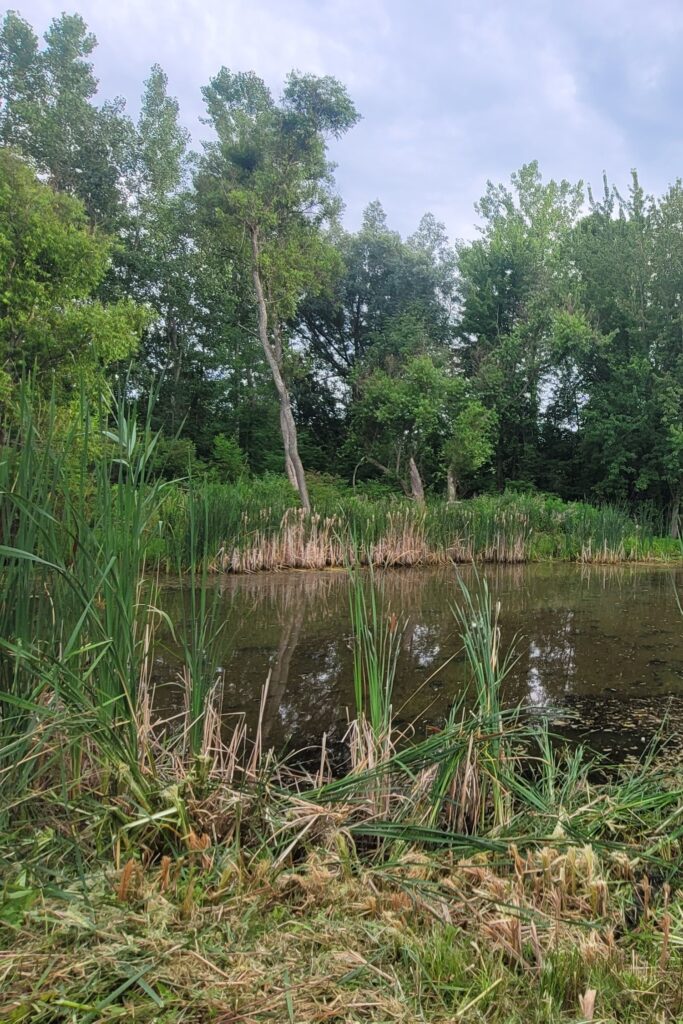
In the evenings, the pond comes alive in a different way. Tree frogs and peepers begin their calls, sometimes so loud you can feel the sound. Bats skim the surface for insects, and barred owls call from the treeline, hunting rodents.
The Sheltered Creek
The creek runs east and is a great source of food and water for so many different species. It’s lined on one side with large willows and red maples, providing cover for smaller animals from predators. The water not only supports the animals but creates the perfect habitat for a variety of plant life, including marsh marigold in early spring, followed by jewelweed, turtlehead, and patches of sensitive fern that fill in as the season warms.
Songbirds like chickadees, yellow warblers, and catbirds use the edges for drinking and bathing. Tree swallows and barn swallows skim the water, making quick, sharp turns to catch insects in flight. In the summer, at dusk, you can hear the sharp calls of the common nighthawk as they swoop and dive for insects overhead.

Wildflowers and Grasses in the North Meadow
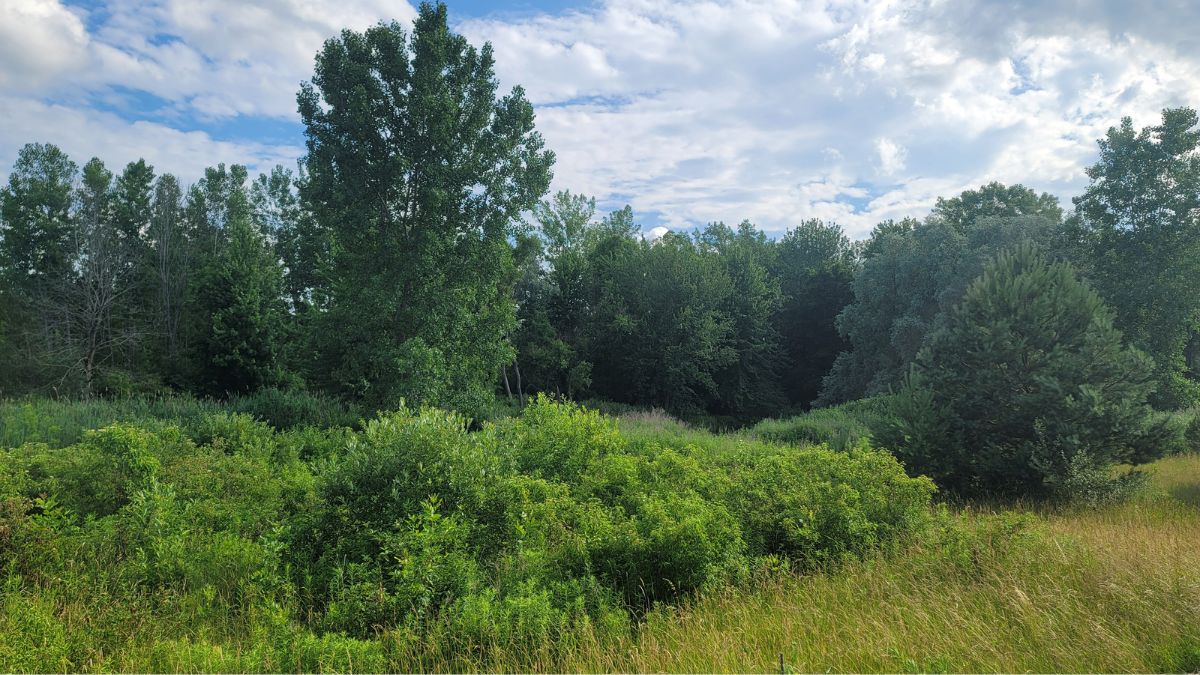
North of the pond is a small meadow that shares many of the same wildflowers as our larger field to the south. Milkweed, asters, black-eyed Susans, Queen Anne’s lace, and goldenrod bloom in succession. These flowers attract bees, butterflies, and other pollinators, providing nectar throughout the growing season. Native grasses, such as little bluestem and switchgrass, also grow here, adding structure and movement. In fall, their seed heads provide food for goldfinches, sparrows, and migrating birds moving through.
Over the years, birds and small mammals have scattered seeds across this meadow. Young white pines and Scotch pines now stand among the grasses, seeded by birds carrying cones and by squirrels caching seeds for winter. These trees offer perches for bluebirds, chickadees, and tree swallows while providing cover for young rabbits and chipmunks making their way through the grass. This is the field that will be bush-hogged this year. You can see the trees are getting a bit large.
Seasonal Variations
Throughout the year, different visitors pass through the meadow. In spring, turkeys move through, searching for insects and seeds. Rabbits feed on tender new grasses, while foxes and coyotes travel the hidden trails at dawn and dusk. Deer come to the pond or creek to drink, leaving narrow paths through the grasses. At night, the calls of barn owls or the sharp, shrill screech of screech owls are heard. They’re mingled with the calls and yips of coyote families, allowing their youngsters to take a turn at vocalizing.
The pond and creek wildlife at Bee’s Haven form a diverse system, along with the meadow, that holds hundreds of native species of plants and wildlife. It’s one of those places that’s never truly quiet, and each season brings different activity and visitors to this part of Bee’s Haven.
Want to learn more about Bee’s Haven’s pollinator habitats? See Inside Bees Haven: What 29 acres of Habitat Can Really Hold, or Wildflower and Meadow Fields at Bees Haven
Ready to grow? Learn how to prepare your garden site for planting.
🌿 Gear Up for a Bee-Friendly Garden
Contains affiliate links, for full disclosure, see FTC Disclosure, here.
Looking for tools that actually work?
We’ve pulled together our favorite picks for beekeeping, gardening, and pollinator-friendly seeds—everything you need to support bees and grow a thriving space.
Browse the full list on Amazon — all in one spot.