
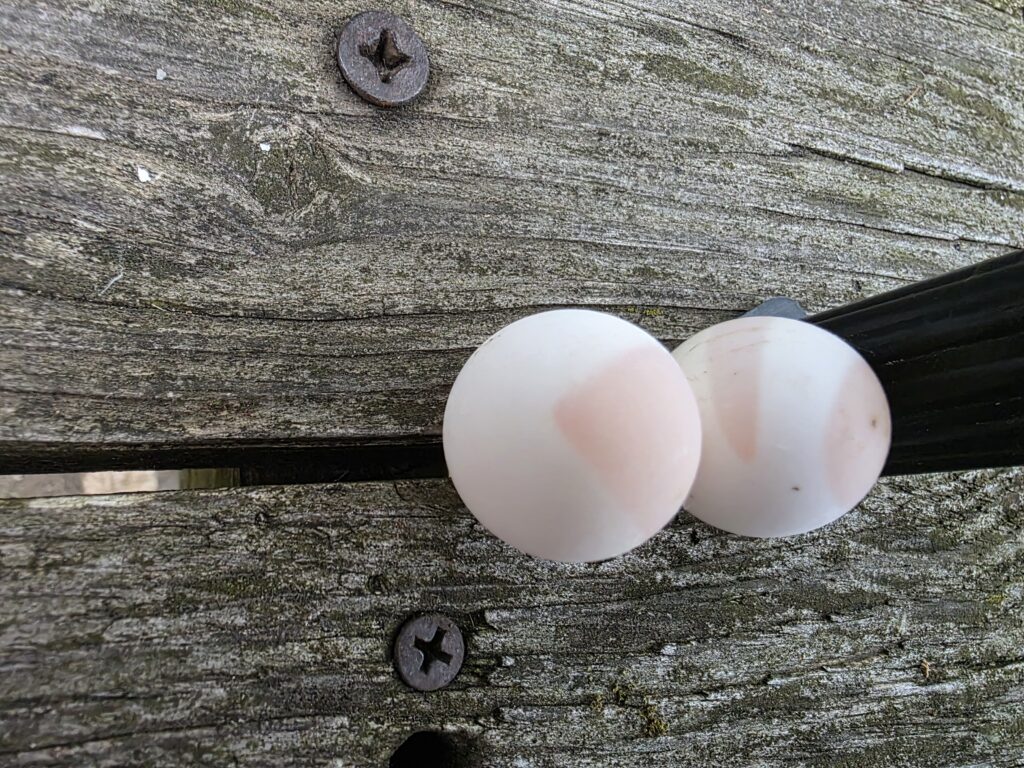
I expected to find sunflower seedlings when I checked one of our newly planted garden beds, which I found. But I also found four strange white spheres sitting on top of the soil. At first, I had no idea what they were. I tapped the “shell” with a fingernail, and they certainly felt and sounded like eggshells.
The objects were nearly perfectly round and measured about 15/16 of an inch across. They were too large for insect eggs and too round for most bird eggs. Even stranger, they were sitting directly on the soil surface after a week of rain.
The first two I gathered had pink/salmon splotches on the outside of the “shell”. One even had a band of pink that made it look like Saturn’s rings. They even rolled over to the pink side because that side was heavier, so I had to prop them up to get this image. After 24 hours sitting on the kitchen counter, the pink areas had disappeared. The next two I found the next evening did not have the pink splotches, leading me to think desiccation had changed the exterior color. Curiosity got the better of me.
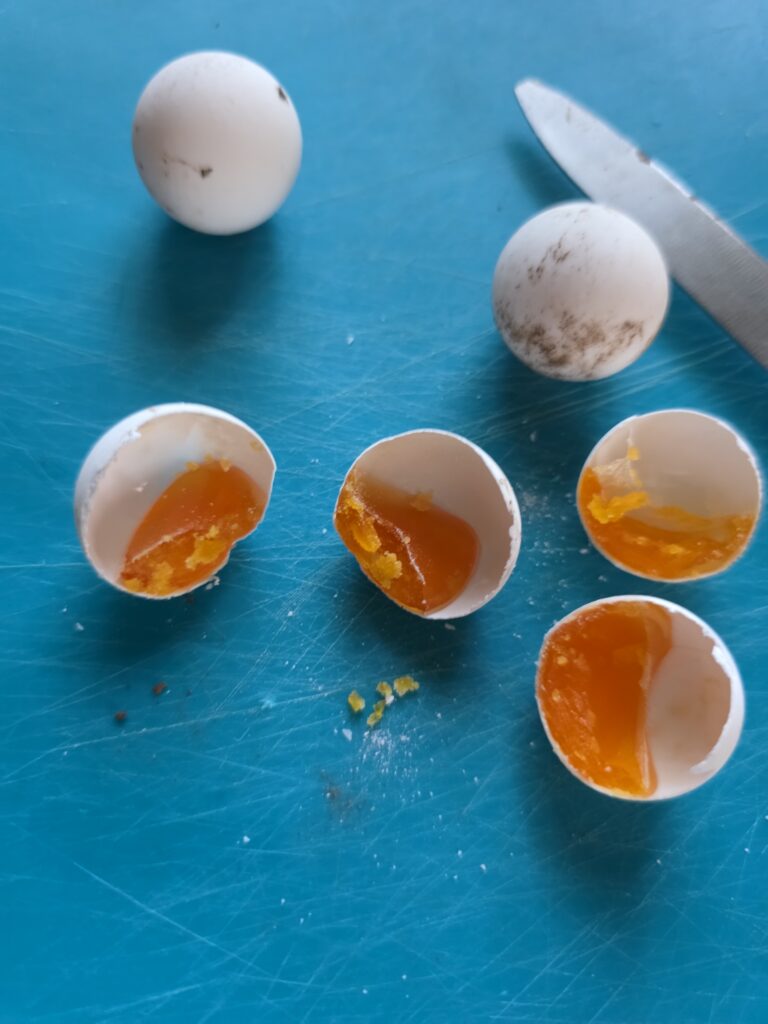
I carefully cut one open and discovered a dried yellow-orange mass attached to the inside wall. It looked remarkably similar to a dehydrated egg yolk. The shell itself felt brittle and hard when cut. That only deepened the mystery.
Why Bird Eggs Did Not Seem Likely
My first thought was that they might be bird eggs. The problem was their shape. Most bird eggs are oval. These were almost perfectly spherical. They were also all nearly identical in size and appearance. The more I looked at them, the less they seemed to fit any common bird species found around our property.
The Clue That Changed Everything
After measuring the remaining specimens, I found that they were all approximately 15/16 of an inch in diameter. That measurement led me down a different path.
The State University of New York College of Environmental School of Forestry (SUNY-ESF) describes snapping turtle eggs as being shaped like small ping-pong balls. The size and shape were surprisingly close to what I had found. Unlike painted turtle eggs, which are generally more elongated, snapping turtle eggs are often nearly spherical.
Since there are only two common turtles in our area, the mystery started making more sense. Common snapping turtles and painted turtles are very common in the area.
Could They Have Been Buried?
The sunflower bed had recently been worked and planted. Heavy equipment had been used in the area earlier, and the bed received significant rainfall while we were away for a week. It is possible that eggs buried below the surface were disturbed or exposed by soil movement and rain.
I did not see the objects when I planted the sunflowers. They appeared later. That raises the possibility that they had been underground and only became visible after the soil settled or washed away.
Why the Habitat Fits
Our property includes ponds, wetlands, swamp habitat, and fields. Snapping turtles are common throughout the region.
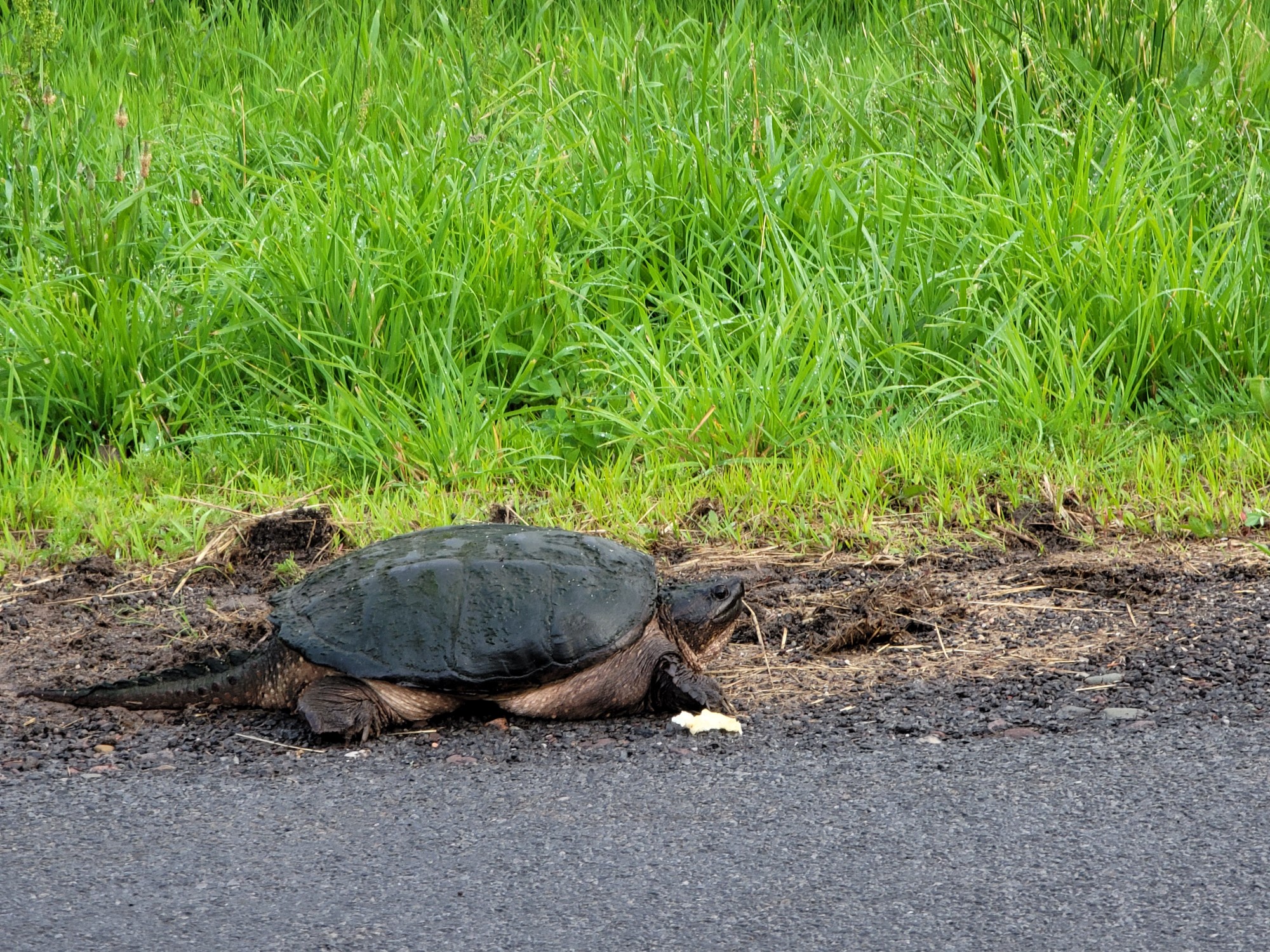
Female snapping turtles often leave the water during late spring and early summer to search for suitable nesting sites. They prefer loose, sunny soil that is easy to dig. Freshly worked garden soil can sometimes look like an ideal nesting location. A sunny sunflower bed may not seem like a turtle habitat to people, but to a nesting female turtle, it may look like the perfect place to lay eggs.
We’ve often seen large female snappers crossing the road in June, so they are certainly common on the property.
Are They Really Snapping Turtle Eggs?
I cannot say with complete certainty. However, the evidence points in that direction. The size, shape, shell structure, yolk-like contents, timing, and habitat all fit what we know about snapping turtle nests.
Sadly, if these were snapping turtle eggs, they were no longer viable when they were discovered. Hopefully, any remaining eggs in the nest fared better than these did.
Whatever they are, they certainly made a routine trip to check the sunflowers much more interesting. Sometimes the best part of spending time outdoors is discovering something you never expected to find.
Frequently Asked Questions
In Upstate New York, snapping turtles typically lay eggs between late May and early July. June is often the busiest nesting period. Female snapping turtles leave ponds, marshes, and wetlands to search for sunny areas with loose soil where they can dig a nest.
Snapping turtles often choose sandy banks, road shoulders, gardens, gravel areas, and other sunny locations with loose soil. Freshly worked garden beds can sometimes attract nesting females because the soil is easy to dig.
A snapping turtle can lay anywhere from 20 to 80 eggs in a single nest. The eggs are usually buried several inches below the surface and left to incubate on their own.
Snapping turtle eggs typically hatch after about 70 to 90 days, depending on weather and soil temperature. In New York, hatchlings usually emerge in late summer or early fall.
For more Bees Haven ecology posts, see;
🌿 Gear Up for a Bee-Friendly Garden
Contains affiliate links, for full disclosure, see FTC Disclosure, here.
Looking for tools that actually work?
We’ve pulled together our favorite picks for beekeeping, gardening, and pollinator-friendly seeds—everything you need to support bees and grow a thriving space.
Browse the full list on Amazon — all in one spot.