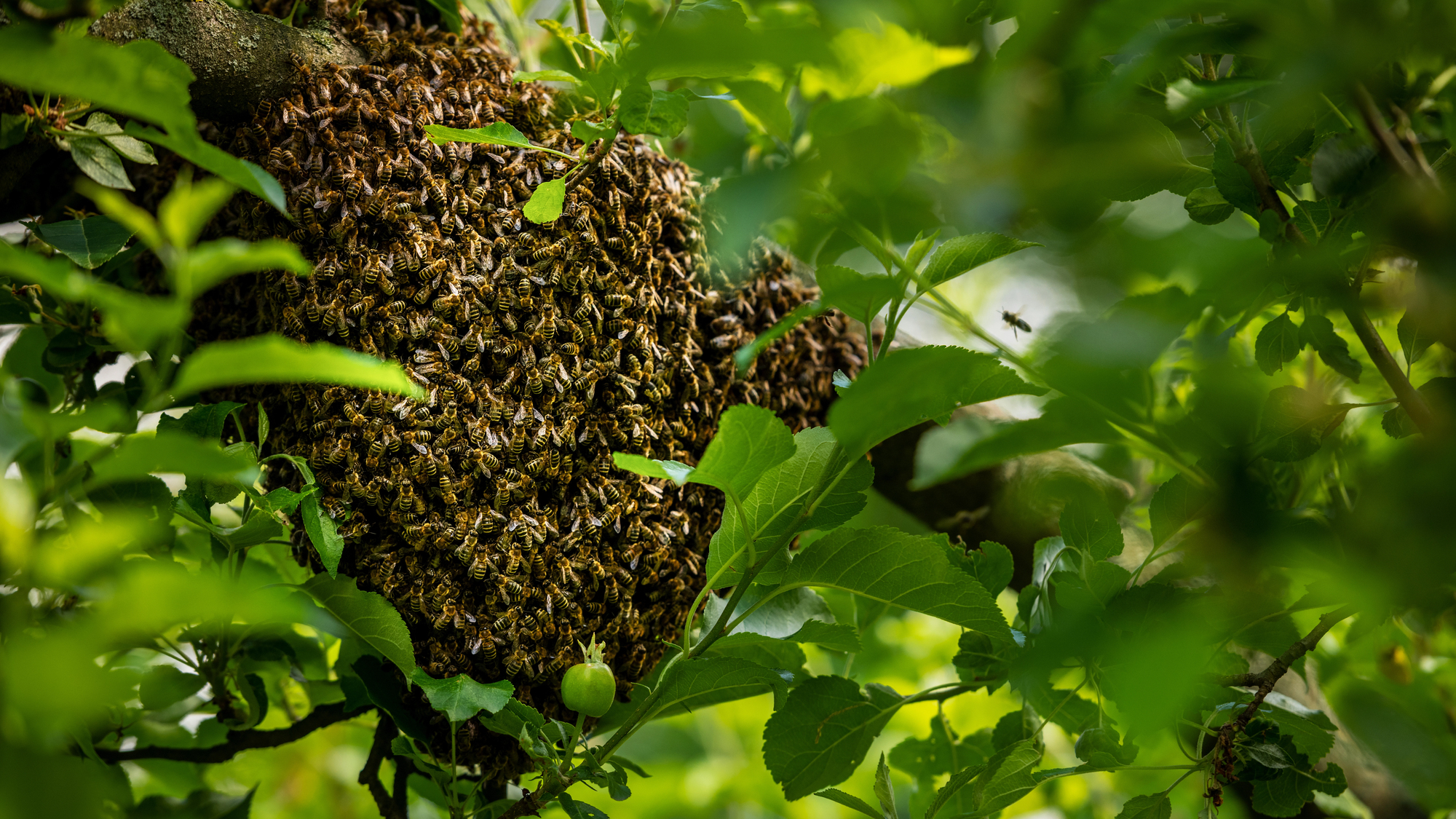

Seeing a swarm of bees can be startling. Thousands of bees moving together, clinging to a tree branch or fence post, look chaotic and dangerous at first glance. In reality, a swarm is simply a group of bees in transition as they search for a new home.
Swarming is not an attack. It is how honey bee colonies reproduce and move forward.
What a Bee Swarm Actually Is
A swarm happens when a honey bee colony becomes crowded and splits. The original queen leaves the hive with a large portion of the workers. They gather temporarily nearby while scout bees search for a new place to live.
During this stage, the bees are focused on survival and relocation. They are not defending a hive, brood, or honey stores. That is why swarming bees are usually calm and uninterested in people.
The cluster you see hanging in a tree or on a structure is often just a resting point. Most swarms stay in one place for a few hours or a few days before moving on.
Why Bees Swarm in the First Place
Swarming is a sign of a strong, successful colony. When resources are plentiful and the hive fills up, bees prepare to divide. This allows the species to spread and occupy new spaces.
Inside the hive, workers raise a new queen before the old one leaves. Once she departs with part of the colony, the remaining bees stay behind to support the new queen.
This process has been happening for millions of years. It is not a failure or a problem. It is how honey bees ensure their future.

When Swarms Are Most Likely to Appear
Most swarms occur in spring and early summer. This is when nectar and pollen are abundant, and colonies grow quickly.
Warm days after a stretch of good weather are common swarm times. Swarms may also happen later in the season, especially in regions with long flowering periods.
Seeing a swarm usually means nearby colonies are healthy and active.
Why Swarms Look Scary but Usually Are Not
A swarm of thousands of bees moving together naturally triggers fear. The key difference is that swarming bees have no hive to defend.
Without brood or stored food to protect, bees are far less defensive. Most stings happen when bees feel their home is threatened. During a swarm, there is no home yet.
That said, giving swarms space is still important. Standing back allows the bees to settle and reduces stress for everyone involved.
What to Do If You See a Bee Swarm
The best response to a swarm is often to do nothing. Most swarms move on without intervention.
If the swarm is in a public or high-traffic area, contacting a local beekeeper is a good option. Many beekeepers are happy to collect swarms and provide them with a safe new home.
Spraying or trying to remove a swarm yourself usually causes more harm than good. It can injure bees and increase the chance of defensive behavior.
What Swarms Tell Us About the Landscape
Swarms are a visible reminder that bees respond to their environment. They need flowering plants, shelter, and safe nesting sites to thrive.
When swarms appear, it often means that conditions nearby are favorable for growth. It is a sign of abundance rather than danger.
Learning to See Swarms Differently
Bee swarms challenge our instincts. They look alarming, but they represent renewal and movement, not aggression.
Understanding what a swarm is helps replace fear with perspective. Bees are doing what they have always done, adapting to the season and the landscape around them.
The next time you see a cluster of bees resting quietly together, you are witnessing a moment of transition. It is brief, purposeful, and essential to the life of the hive.
Want to learn more about bees? See our article How Overwintering Bees Survive the Cold.
🌿 Gear Up for a Bee-Friendly Garden
Contains affiliate links, for full disclosure, see FTC Disclosure, here.
Looking for tools that actually work?
We’ve pulled together our favorite picks for beekeeping, gardening, and pollinator-friendly seeds—everything you need to support bees and grow a thriving space.
Browse the full list on Amazon — all in one spot.