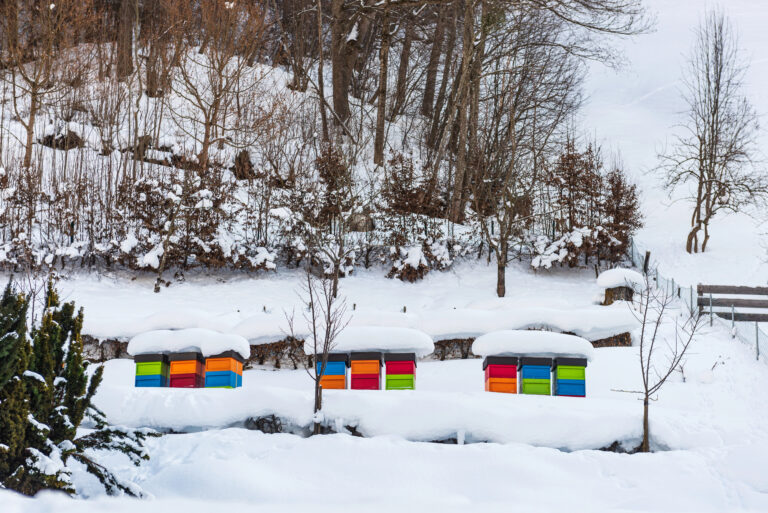
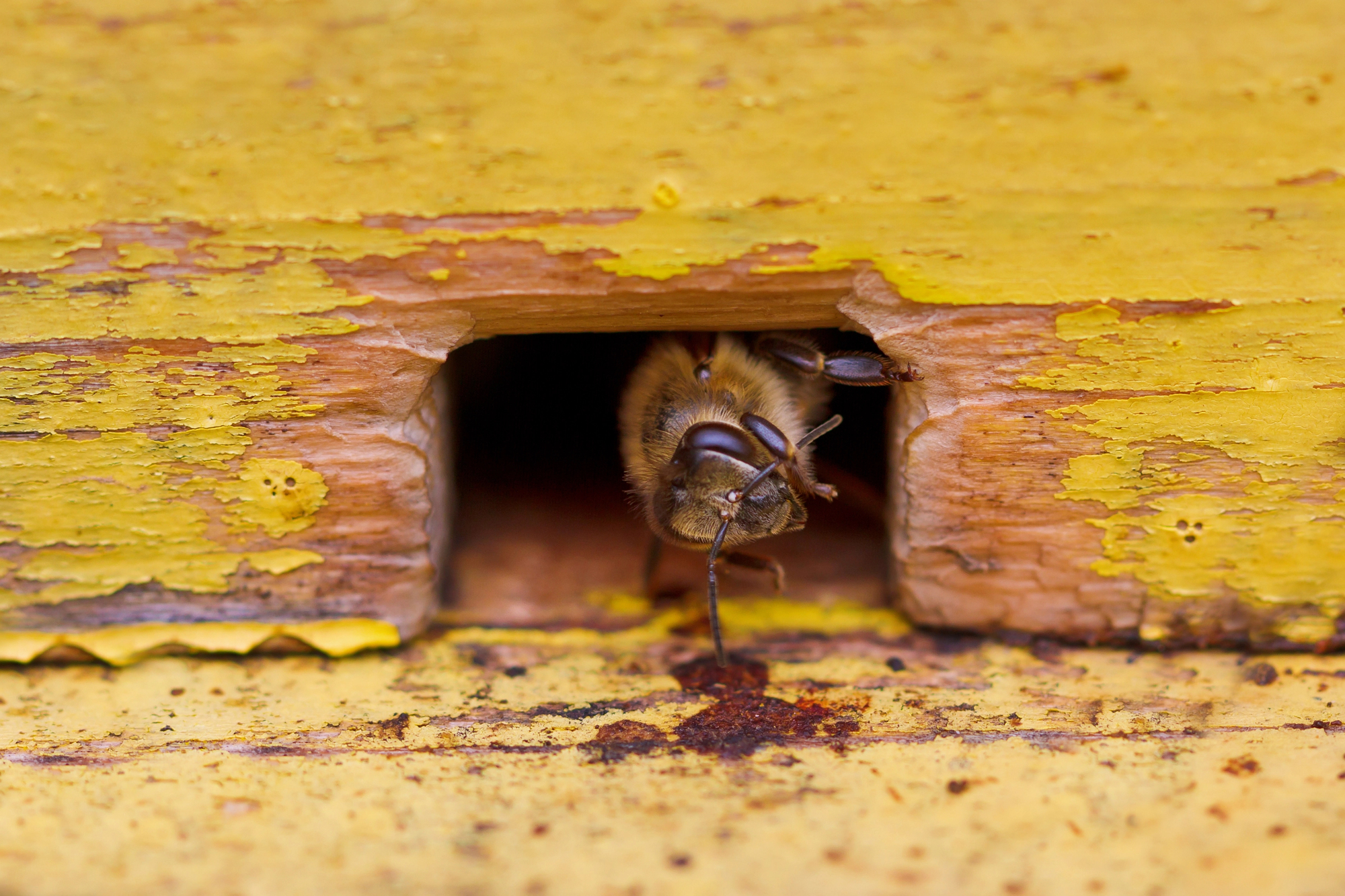
Bees in the Fall: As autumn settles in, bees do not relax. They reorganize. A beehive is a finely tuned matriarchy where every member has a role, and when those roles are finished, the workers waste no time clearing out the dead weight. Fall is when they make choices that keep the colony alive through winter.
By the end of fall, a strong colony can store 60 to 80 pounds of honey. Every drop matters, fueling the cluster through months when there are no flowers to visit. The workers know exactly how much they need and ration it carefully until spring returns.
A Matriarchal Society in Action
Bees live in a system ruled by their queen and powered by her daughters, the worker bees. The queen lays the eggs, but it is the workers who run the hive. They nurse brood, gather food, guard the entrance, and clean every corner. Drones, the only males, exist for a single purpose: to mate with a young queen. Once that job is done, they contribute nothing to the hive’s survival.
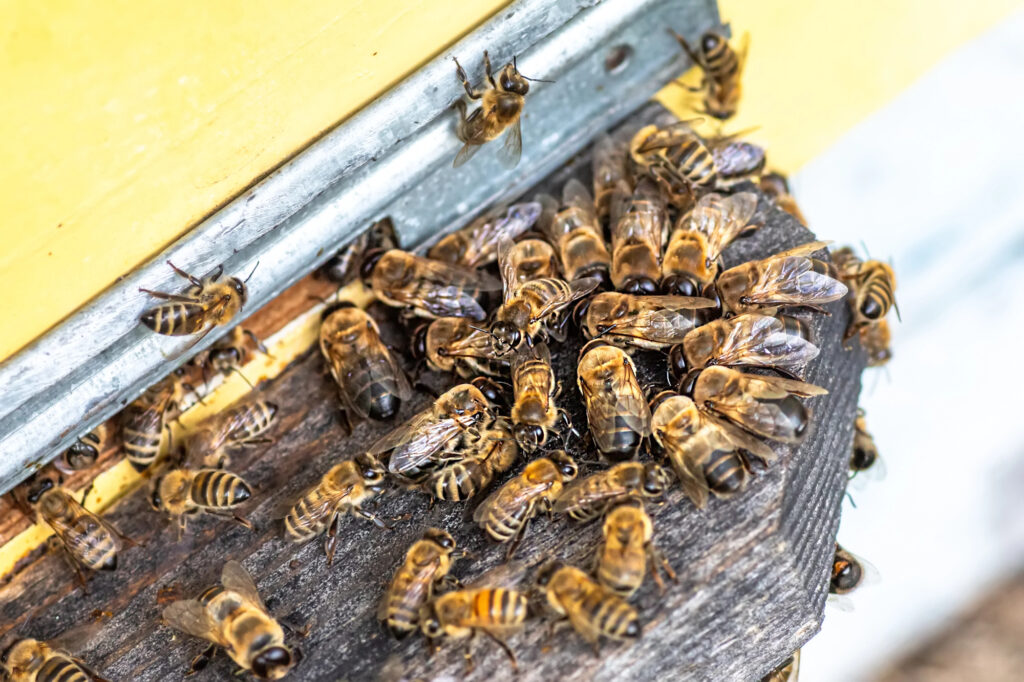
When nectar runs low, the workers turn on them. Drones are dragged from the hive entrance and left to die in the chill air. It sounds harsh, but it is strategic. A colony does not produce new drones again until there is a need for a replacement queen. Once a queen has been successfully mated, she stores the sperm in a special organ called the spermatheca and uses it for the rest of her life to fertilize eggs as needed. The hive has no reason to raise more males until the next swarm or supersedure cycle, replacing an old or failing queen, begins. Keeping them through winter would only waste precious food.
Preparing the Hive for Winter
After the drones are gone, the queen slows her egg laying, and the workers shift their focus to storage and sanitation. They carry out dead bees, sweep debris from cells, and seal cracks with propolis, a sticky tree resin that keeps out moisture and disease. Inside, the hive grows smaller but stronger, packed with just enough bees to maintain warmth and tend to the queen.
As temperatures drop, the colony contracts into a dense ball around the queen. Bees take turns rotating from the chilly outside to the warm center, vibrating their flight muscles to generate heat. This living furnace keeps the core of the hive near 90°F even as snow piles up outside.
Heightened Defenses
Robber bees and wasps sense opportunity when flowers fade. Guard bees respond by tightening security. They inspect every returning worker by scent and fight off intruders to protect their dwindling food stores. Fall brings fewer resources, sharper instincts, and a hive running at peak efficiency.
Solitary Bees Lock Down, Too
For solitary species like mason, leafcutter, and carpenter bees, fall cleanup is their final act before winter. Each female builds her own nest, often inside hollow stems, old beetle tunnels, or small cavities in wood and soil. She lines each cell with mud, resin, or leaves to form neat little chambers, then fills them with a mix of pollen and nectar for her developing young.
By late fall, her work is complete. Inside those sealed chambers, larvae spin cocoons and transform into pupae, resting safely until spring. The adult female dies soon after, leaving behind next year’s generation tucked inside nature’s best insulation.
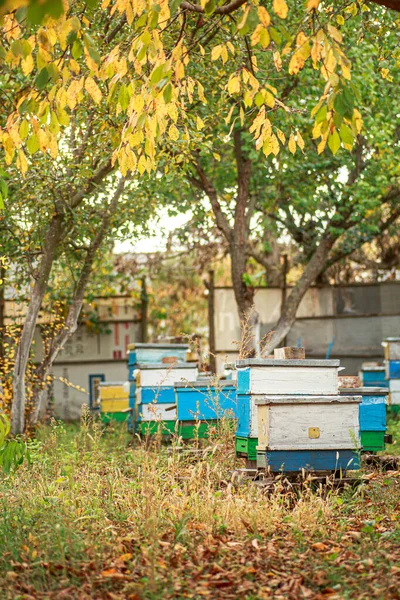
Different species use different materials and strategies. Mason bees use damp clay to seal their nest entrances, creating a firm, weatherproof wall. Leafcutter bees prefer layers of cut leaves, wrapping each cell like a tiny green sleeping bag. Carpenter bees carve tunnels in soft wood, where their offspring remain protected through the freeze.
These hidden nests are fragile but vital. When gardeners leave old stems standing, bare soil exposed, and dead wood undisturbed, they give solitary bees a chance to survive the cold months. Come spring, those small chambers open one by one, releasing the new generation of pollinators ready to begin again.
Solitary Bee Male to Female Egg Ratio
Female solitary bees lay both male and female eggs, but they control the ratio based on available resources and nest position. Here’s how it works:
Like honeybee queens, solitary females store sperm after mating and choose whether to fertilize an egg. Fertilized eggs become females, while unfertilized eggs become males.
She usually lays male eggs near the nest entrance and female eggs deeper inside. This way, the males emerge first in spring, ready to mate as soon as the females hatch.
The sex ratio depends on food supply and nesting conditions. When pollen is scarce, she lays more males, since they require fewer resources. In good conditions, she invests in more females because they carry on the species.
So, each solitary bee nest contains a planned mix of male and female offspring, never all one sex.
Lessons for Gardeners
Bees show us that cleanup is not about perfection; it is about purpose. When you tidy your own garden, think like a bee. Leave hollow stems, dry grasses, and small brush piles to shelter overwintering pollinators. Skip pesticides and late-season mowing. Your backyard can be a haven while theirs is sealed tight for the season.
Understanding what bees do in the fall helps explain why late-blooming flowers and undisturbed nests are so important. Every decision they make now determines which bees emerge next spring. It’s a reminder that even as nature slows down, it is still very much at work.
See our article for How Overwintering Bees Survive the Cold for more seasonal information.
🌿 Gear Up for a Bee-Friendly Garden
Contains affiliate links, for full disclosure, see FTC Disclosure, here.
Looking for tools that actually work?
We’ve pulled together our favorite picks for beekeeping, gardening, and pollinator-friendly seeds—everything you need to support bees and grow a thriving space.
Browse the full list on Amazon — all in one spot.