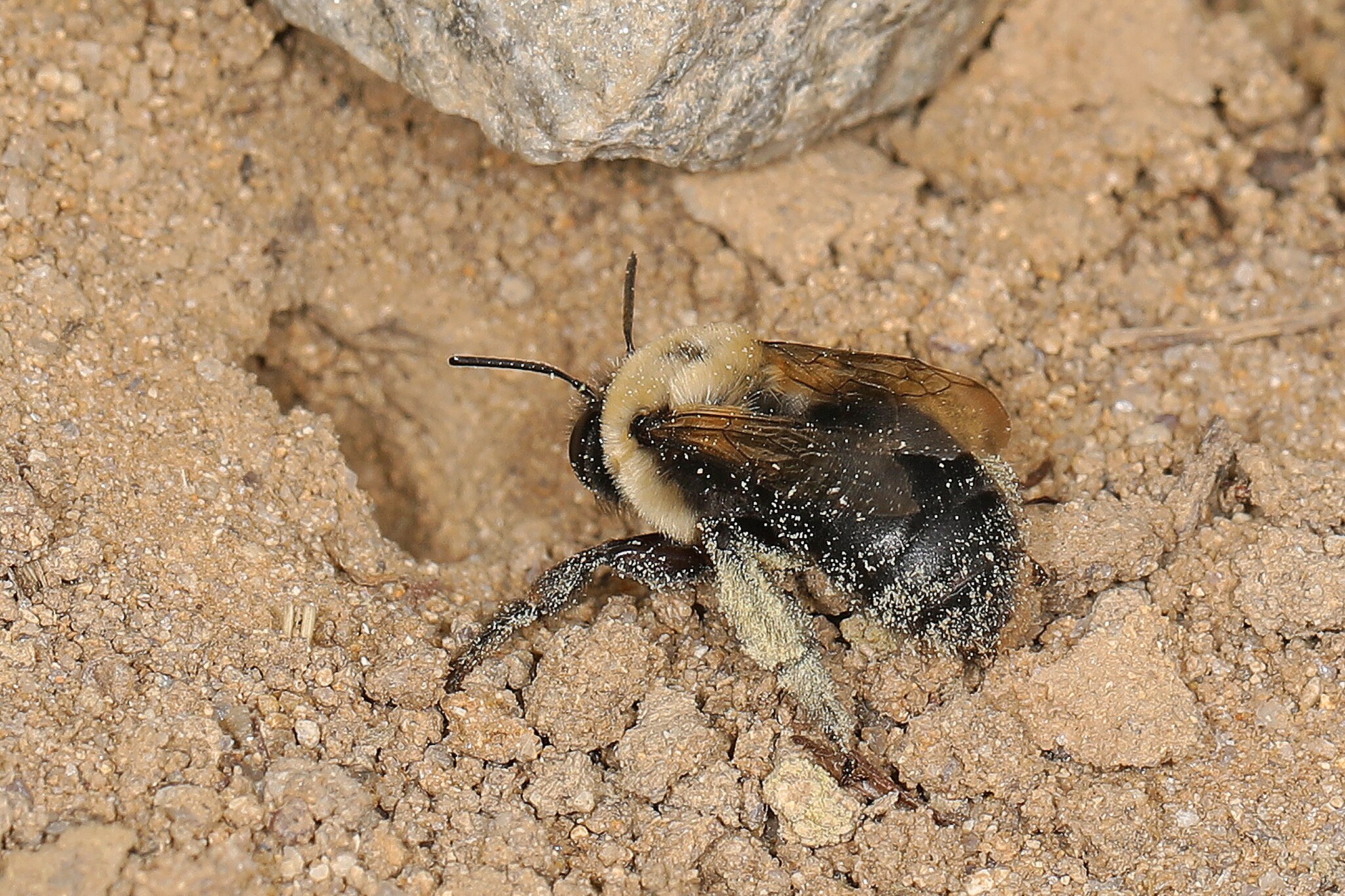

Chimney bees, or miner bees, are solitary ground-nesting bees known for the tall mud towers they build over the entrances of their burrows. These towers look like miniature chimneys and can rise several inches above the soil.
The best-known species in North America is Anthophora abrupta. These bees do not have queens or colonies. Each female builds and manages her own nest, but many choose the same soil patch, creating large groups of chimneys in warm months.
Life Underground
Chimney bees spend most of their life underground. Their development is slow, and only a small part of their yearly cycle happens above the surface. In mid-spring, you may see adults flying around the chimneys, but the rest of the time, the young bees stay sealed inside their chambers.
The emergence pattern is one of the most interesting parts of their biology. Males emerge first when the soil warms. They patrol areas around the chimneys and wait for females to appear. Females emerge a few days later. Since there is no queen, every female takes on all the work herself. She mates soon after emerging, begins to feed, and then starts digging her own burrow for the season.
The Chimney Structure
Chimney structure helps the nest in several ways:
- Protection: It reduces the chance of rain washing into the entrance.
- Ventilation: It may help with airflow in the tunnel.
- Navigation: It gives the female an unmistakable landmark to find her burrow in a crowded area.
The chimney is built by stacking rings of wet mud. The female adds new layers at different times, allowing the tower to grow slowly throughout the season.
Identification and Behavior
These bees look somewhat like bumble bees because of their fuzzy bodies, but their behavior is very different. They are quick fliers and are active in warm daylight hours. They collect pollen on dense hairs and shake loose pollen from flowers with their rapid wingbeats. Their work helps many native plants and garden flowers. They carry heavy loads and make frequent trips between blossoms and their burrows.
Nest Construction
Chimney bees choose firm, dry soil with little plant cover. They dig several inches down and create a narrow tunnel that branches into brood chambers.
Each chamber holds one developing bee. The mother lines each chamber with a thin, waterproof layer made from her own secretions. This lining protects the young bee from moisture and helps keep the chamber stable during storms. After the chamber is lined, she forms a pollen-and-nectar ball and lays a single egg on top. She seals the chamber and then starts a new one.
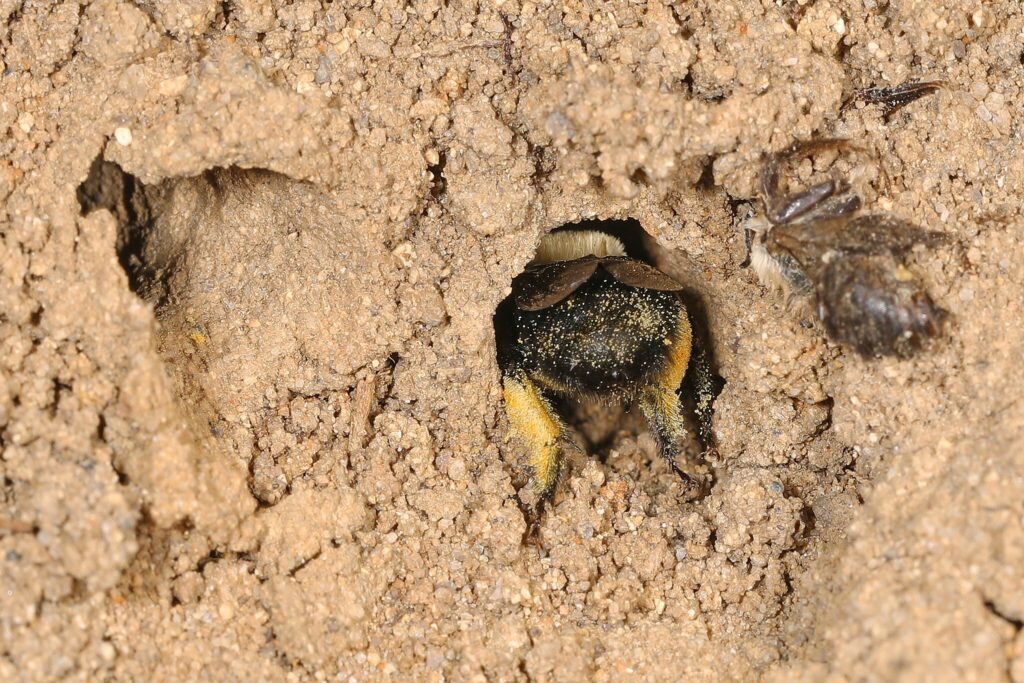
Life Cycle of a Chimney Bee
The early stages of the life cycle all take place underground. Here is the sequence for chimney bees, based on their actual development pattern.
1. Egg: The female lays one egg in a sealed chamber. The egg rests on a ball of pollen and nectar that will serve as the larva’s only food supply.
2. Larva: The egg hatches into a larva in about 5 days. It stays inside the chamber and eats the pollen. This feeding stage lasts only a few weeks.
3. Prepupa (Overwintering Stage): After the larva finishes eating, it becomes a prepupa. This is a resting form that does not feed. It remains in this state through fall and winter. This is the main overwintering stage for chimney bees.
4. Pupa: When warmer temperatures return in spring, the prepupa begins to change into a pupa. During this stage, the adult structures form. The bee becomes entirely shaped but still stays inside the sealed chamber.
5. Adult Males Emerge: Once development is complete, the males emerge first. They chew through the chamber wall, move up the tunnel, and break through the chimney. They fly around the nesting area, waiting for females.
6. Adult Females Emerge: Females emerge several days after the males. They mate shortly after surfacing. Then they feed and begin digging new burrows. There are no queens. Each female creates her own nest and completes all nesting tasks on her own.
Conclusion
This development pattern shows how little time chimney bees spend as active adults compared to the long period underground. Their early male emergence helps ensure successful mating each spring. After mating, males live for only a short part of the season, while females continue the more demanding work of digging, collecting pollen, building chambers, and preparing the next generation.
Chimney bees offer a clear view of how solitary bees survive without colonies or social roles. Their chimneys, their timing of emergence, and their underground life cycle make them an interesting species to watch and a helpful one to have in any garden.
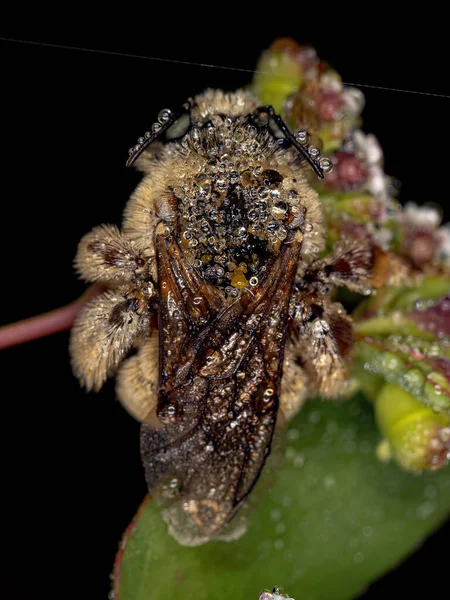
Interesting related information: National Geographic has chosen an image of a sunflower chimney bee as one of its best photos of 2025 for its December magazine.
If your interested in various types of pollinators, see our article on the Types of Honey Bees: Which Breed Is Right for Your Hive? and Chestnut Mining Bee Rediscovered in Syracuse.
🌿 Gear Up for a Bee-Friendly Garden
Contains affiliate links, for full disclosure, see FTC Disclosure, here.
Looking for tools that actually work?
We’ve pulled together our favorite picks for beekeeping, gardening, and pollinator-friendly seeds—everything you need to support bees and grow a thriving space.
Browse the full list on Amazon — all in one spot.