

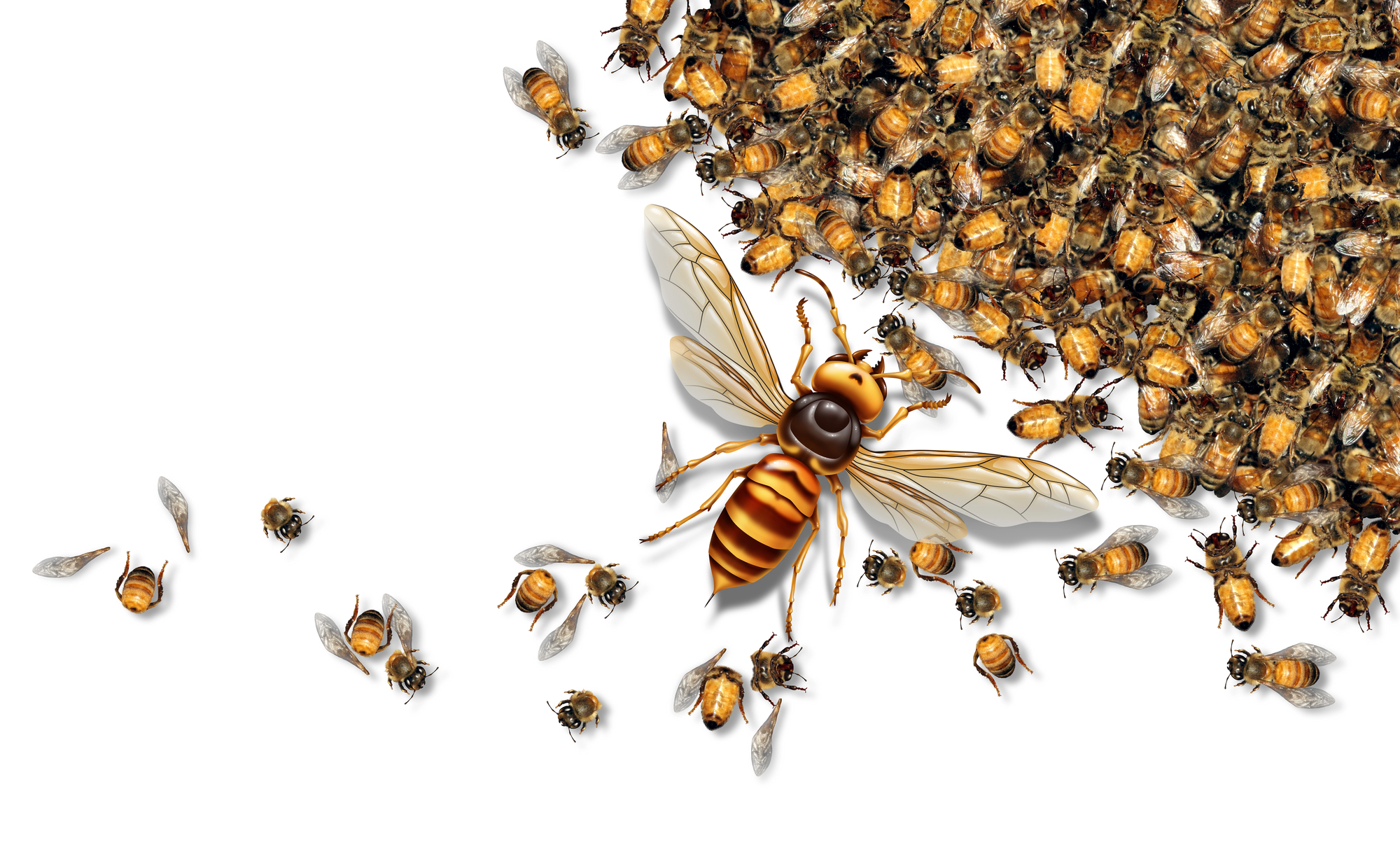
“Murder hornets” caused a wave of alarming headlines when they were discovered in Washington State in 2019. These enormous hornets could attack honey bee colonies, deliver painful stings, and potentially become another damaging invasive species.
This story has an unusually happy ending. After years of searching, trapping, tracking, and destroying nests, officials declared the northern giant hornet eradicated from the United States in December 2024.
What Is a Murder Hornet?
The insect widely called the murder hornet is Vespa mandarinia. Its accepted common name is now the northern giant hornet.
The Entomological Society of America adopted the name northern giant hornet in 2022. “Murder hornet” was a dramatic nickname used heavily by news outlets, but it is not the insect’s official name.
Northern giant hornets are native to parts of eastern Asia. They are the largest hornet species in the world and can grow to nearly two inches long. Queens are larger than workers.
Their size alone is enough to frighten almost anyone who encounters one.
Were Murder Hornets Really Found in the United States?
Yes, but their known range was extremely small.
The first confirmed United States sightings occurred near Blaine, Washington, in December 2019. The area sits close to the Canadian border, where the hornets had also been found in British Columbia.
Additional hornets were detected in Washington during 2020 and 2021. Officials eventually found and destroyed four nests in Whatcom County.
No northern giant hornets were detected in Washington from 2022 through 2024. Federal eradication guidelines required three consecutive years without a confirmed detection before officials could declare the population eradicated.
On December 18, 2024, the Washington State Department of Agriculture and the USDA officially announced that northern giant hornets had been eradicated from Washington and the entire United States.
How Officials Found the Nests
Finding a hornet nest hidden in wooded land was not simple.
State and federal workers placed traps throughout the affected area. Members of the public also reported possible sightings and helped officials narrow the search.
When workers captured live hornets, they attached tiny radio transmitters to them. The released hornets then flew back toward their colonies, allowing researchers to track them through forests and locate their underground nests.
That work led to the removal of four nests during 2020 and 2021. The combination of public reports, trapping, radio tracking, and nest destruction directly contributed to the successful eradication effort.
It is an excellent example of government agencies, researchers, beekeepers, and ordinary residents working together before an invasive insect became established.
Why Were Beekeepers So Worried?
Northern giant hornets prey on many insects, but honey bee colonies can become especially valuable food sources.
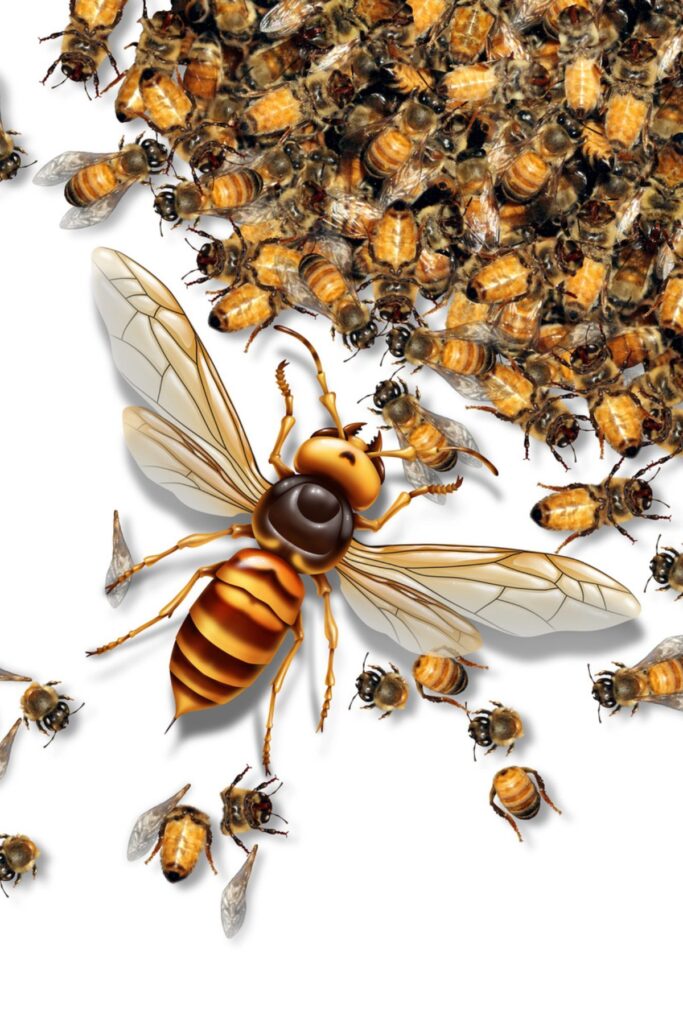
A few hornets may begin by catching individual bees near the entrance of a hive. Later, a group of hornets can enter what is sometimes called the slaughter phase.
During this attack, the hornets kill large numbers of adult bees, often by removing their heads. They then occupy the hive and carry bee larvae and pupae back to their own nest as food.
A strong honey bee colony may contain tens of thousands of bees, yet northern giant hornets can destroy a hive within hours.
European honey bees do not have the same defenses used by some Asian honey bee species that evolved alongside these hornets. This made the possibility of an established United States population troubling.
The danger was not limited to managed beehives. Fewer honey bees could also affect crops and wild plants that depend on insect pollination.
Are Murder Hornets Dangerous to People?
Northern giant hornets can sting through some protective clothing, and their stings are extremely painful. Like other social wasps, they may sting repeatedly when defending themselves or their nest.
That does not mean they actively hunt people.
The USDA says northern giant hornets generally do not attack humans unless they feel threatened. People face the greatest risk when approaching a nest, disturbing a colony, or attempting to capture a hornet.
Anyone who suspects that they have found an invasive hornet should keep a safe distance. Do not swat it, step on it, disturb a possible nest, or attempt to catch it barehanded.
How to Identify a Northern Giant Hornet
Northern giant hornets have several noticeable features:
- A large, solid yellow or orange head
- Very large eyes
- A dark brown or black thorax
- Alternating dark and yellow-orange bands across the abdomen
- A body that may approach two inches long
- A wide head that looks unusually large compared with the body
Size is helpful, but it should not be the only identification feature. Camera angles and close-up photographs can make ordinary wasps look enormous.
A clear photograph showing the head, abdomen, and overall body shape is far more useful than a description based only on size.
Common Murder Hornet Lookalikes
Most supposed murder hornet sightings in the eastern United States turn out to be native or long-established insects.
Common lookalikes include:
- Eastern cicada killers
- European hornets
- Great golden digger wasps
- Bald-faced hornets
- Paper wasps
- Yellowjackets
- Pigeon horntails
- Large bumblebees
The eastern cicada killer causes frequent confusion because it is large and has yellow markings across its abdomen. However, cicada killers are solitary native wasps that hunt cicadas. They are not northern giant hornets and do not attack honey bee colonies.
European hornets are also large and are commonly found across much of the eastern United States. They have been present in North America since the 1800s.
New York has never had a confirmed northern giant hornet sighting.
Are Murder Hornets Still a Threat?
Northern giant hornets are currently considered eradicated from the United States. That means officials believe the small Washington population was eliminated before it could become established.
Eradicated does not mean that another hornet could never enter the country. Invasive insects can arrive in cargo, shipping materials, soil, plants, and other products.
Continued awareness still matters, but there is no reason to panic over every large wasp seen in a garden.
People in the eastern United States are far more likely to encounter a cicada killer, European hornet, bald-faced hornet, or another local species.
It is also important not to kill native wasps simply because they are large or intimidating. Many solitary wasps pollinate flowers or help control other insects.
What Should You Do If You Find One?
Take a clear photograph from a safe distance. Try to include an object that shows scale, but do not move close enough to risk being stung.
Record the exact location and the date. Then contact the state department of agriculture or local Cooperative Extension office.
Do not set homemade traps unless officials in the area specifically request public trapping. Poorly designed traps can kill native bees, moths, flies, and beneficial wasps without catching the intended pest.
The successful eradication of the northern giant hornet shows why early reporting matters. A handful of careful observations helped officials stop a dangerous invasive insect before it spread across the country.
That is a much better ending than the frightening murder hornet headlines predicted.
See our article on Oil Beetles, another insect that feeds on bees.
🌿 Gear Up for a Bee-Friendly Garden
Contains affiliate links, for full disclosure, see FTC Disclosure, here.
Looking for tools that actually work?
We’ve pulled together our favorite picks for beekeeping, gardening, and pollinator-friendly seeds—everything you need to support bees and grow a thriving space.
Browse the full list on Amazon — all in one spot.
