When the days are still chilly, and the garden looks mostly asleep, certain plants start to bloom anyway. These earliest blooming plants are a lifeline for native bees, flies, and beetles that emerge long before most flowers open. Here are 13 plants that offer food and support for pollinators from late winter through early spring.
Witch Hazel (Hamamelis virginiana)

This shrub’s bright yellow, spidery flowers often bloom in February or early March, well before the leaves appear. It offers one of the earliest nectar sources for foraging insects. I earn a commission if you buy through these affiliate links, at no extra cost to you.
Hamamelis virginiana.
Snowdrops (Gilanthus nivalis)

These small, white bulb flowers pop through the snow and open in late winter. Though not native, they help feed early solitary bees and hoverflies when few options are available.
Galanthus nivalis
Silver Maple (Acer saccharinum)
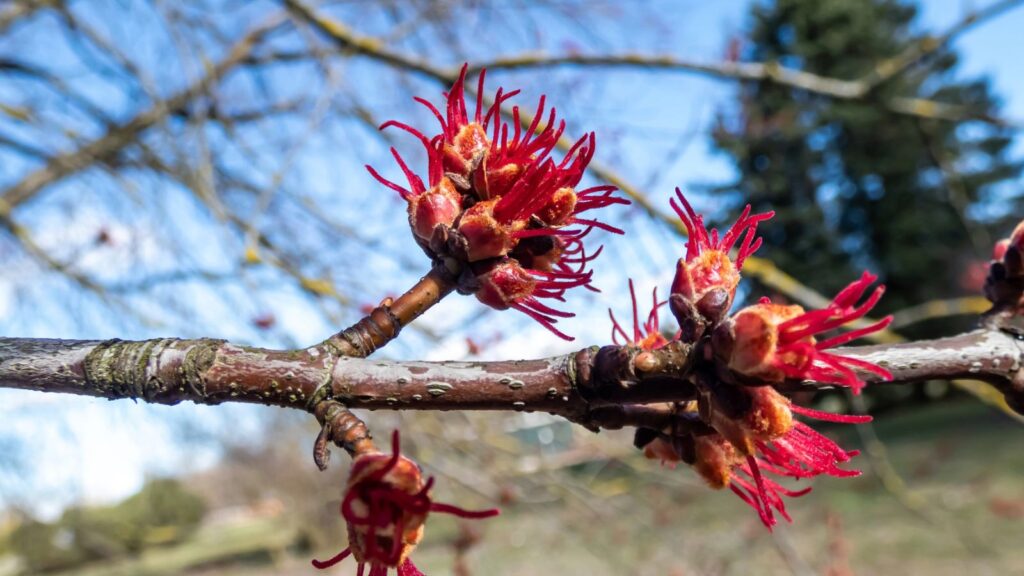
This native tree blooms early with clusters of red or yellow flowers. Its pollen is an important early-season food source for bees and beetles. NOTE: Silver maple flowers are among the first food sources bees can find in late winter. Keep in mind this tree spreads aggressively, its seedlings show up everywhere, and it is often considered weedy. It’s also weak- wooded and is prone to storm damage. It is more useful to value existing trees for pollinator forage than to plant new ones. See Acer rubrum below for a better new purchase.
Acer saccharinum.
Skunk Cabbage (Lysichiton americanus)

This plant generates its own heat to emerge through frozen soil. It attracts flies and beetles looking for pollen in damp woodlands and lowlands.
Lysichiton americanus.
Cornelian Cherry Dogwood (Cornus mas)

A small tree that blooms in March, offering nectar-rich golden clusters that attract early native bees.
Cornus mas.
Winter Aconite (Eranthis hyemalis)

These cheerful yellow flowers are among the first bulbs to bloom. They open wide on sunny days, making them accessible to early pollinators.
Eranthis hyemalis.
Red Maple Acer rubrum)
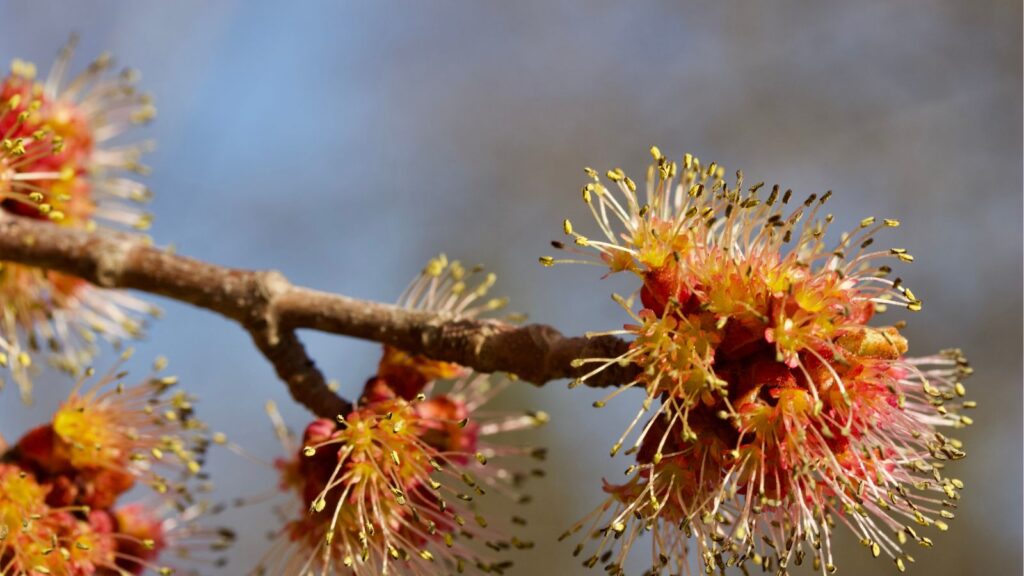
Red maple trees are native and bloom just before leaf-out. Their small red flowers provide early-season pollen for bees and beneficial beetles.
Acer rubrum.
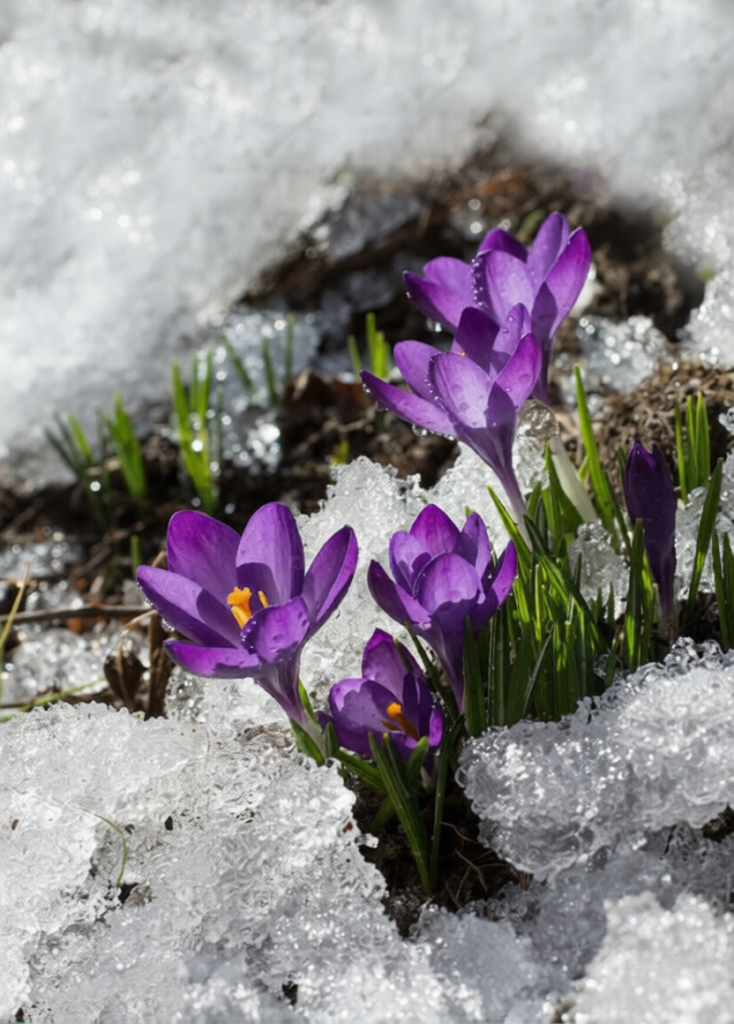
Crocus (Crocus sativus)

These low-growing bulbs bloom as early as late February. They’re a favorite for early honey bees and bumble bee queens looking to recharge after winter.
Crocus Spp.
Pussy Willow (Salix discolor)

These fuzzy catkins are more than a spring decoration. Willows offer both nectar and pollen, especially valuable to native bees and butterflies.
Salix discolor.
Hellebore (Helleborus niger)

Often called Lenten rose, hellebores bloom while snow is still on the ground. They feed bees when not much else is flowering.
Helleborus niger.
Violets (Viola spp.)

Violets are among the earliest bloomers. They are small and white or shades of purple and grow in lawn areas that are untreated by pesticides and herbicides.
Viola spp
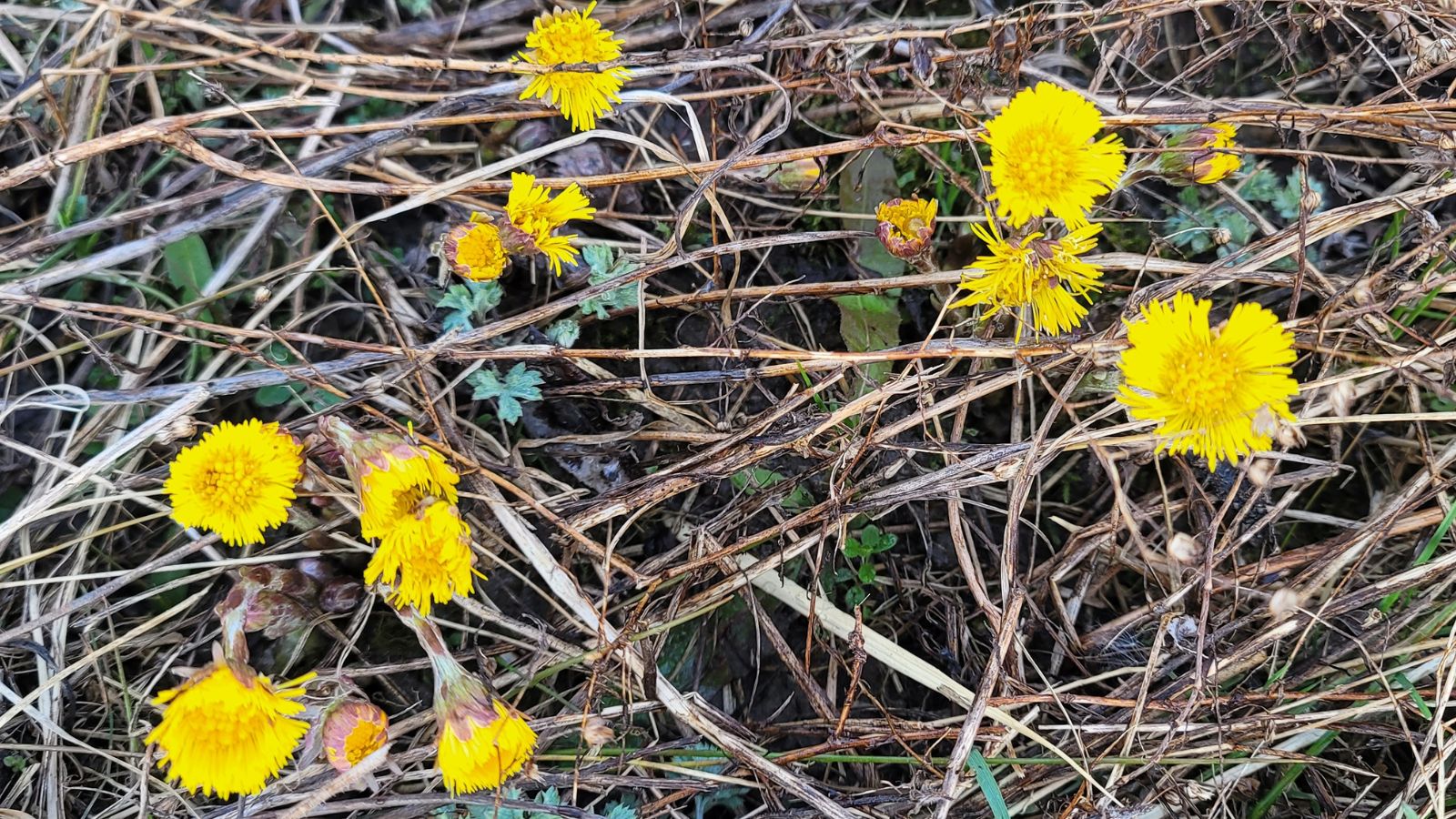
Coltsfoot (Tussilago farfara)
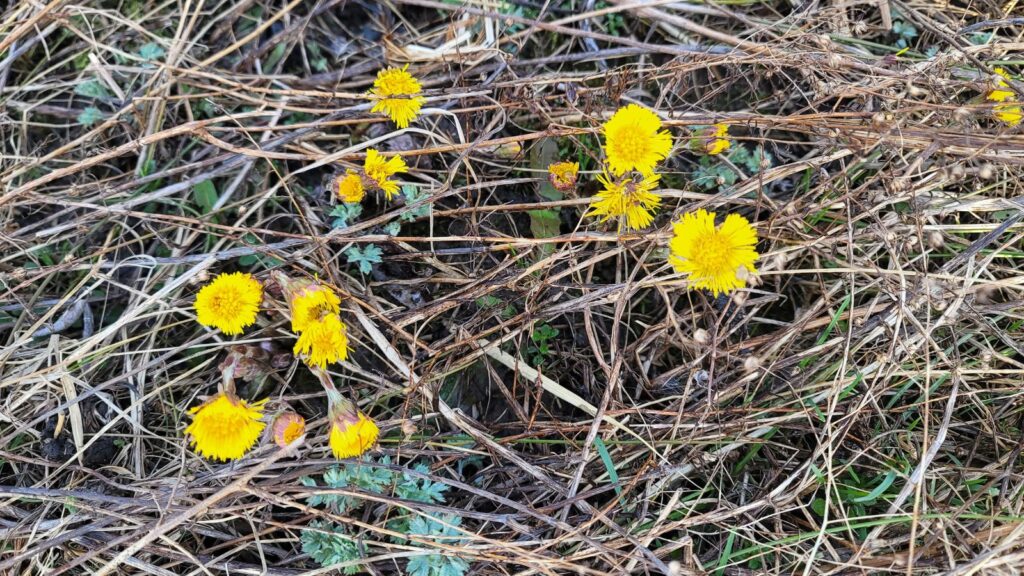
This dandelion look-alike blooms before it puts out any leaves. It grows in rough areas and offers early-season nectar and pollen.
Tussilaga farfara
Oregon Grape (Mahonia aquifolium)

Mahonia is an evergreen shrub that blooms in very early spring with fragrant yellow flowers that draw bees in before most other plants are active.
Mahonia aquifolium.
Need ideas for what flowers to add this season? Our bee seeds and plants list covers great options for every time of year.
See our guides for What to Plant in April and a follow-up with more options April Planting Guide.
Contains affiliate links, for full disclosure, see FTC Disclosure, here.
🌿 Gear Up for a Bee-Friendly Garden
Contains affiliate links, for full disclosure, see FTC Disclosure, here.
Looking for tools that actually work?
We’ve pulled together our favorite picks for beekeeping, gardening, and pollinator-friendly seeds—everything you need to support bees and grow a thriving space.
Browse the full list on Amazon — all in one spot.