Where do monarch butterflies go when it rains? They don’t disappear, but they do become much harder to find. Monarchs usually take shelter in trees, shrubs, and other vegetation until the rain passes and conditions are good enough to fly again.
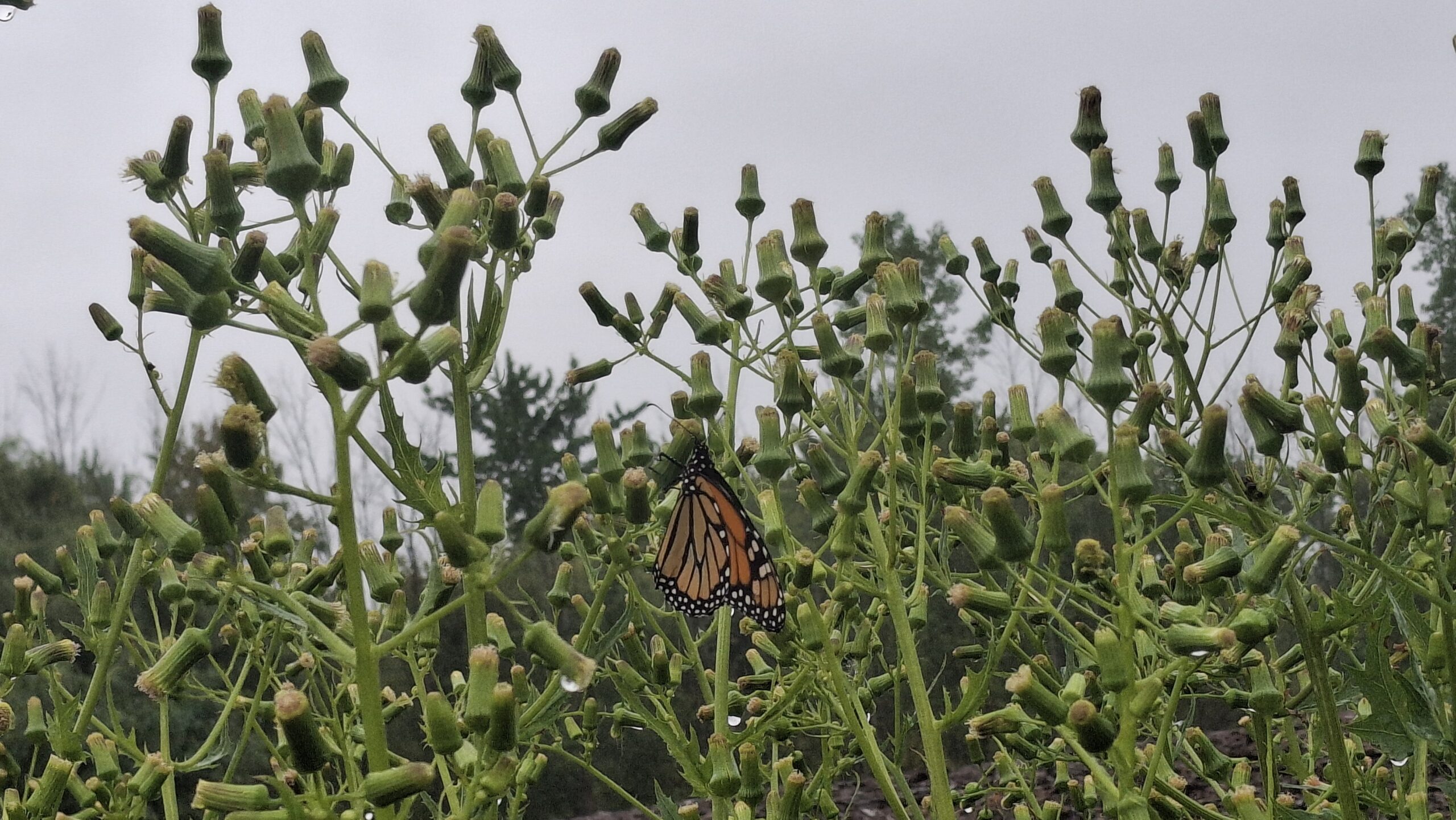
We got a good look at this behavior recently without even looking for it. Eric was sitting in his truck, which has doubled as his office since our barn fire, while the dogs were running around in the flowers. They startled several monarchs into the air. It was sprinkling, so he went down to investigate what they were doing, tucked into the vegetation.
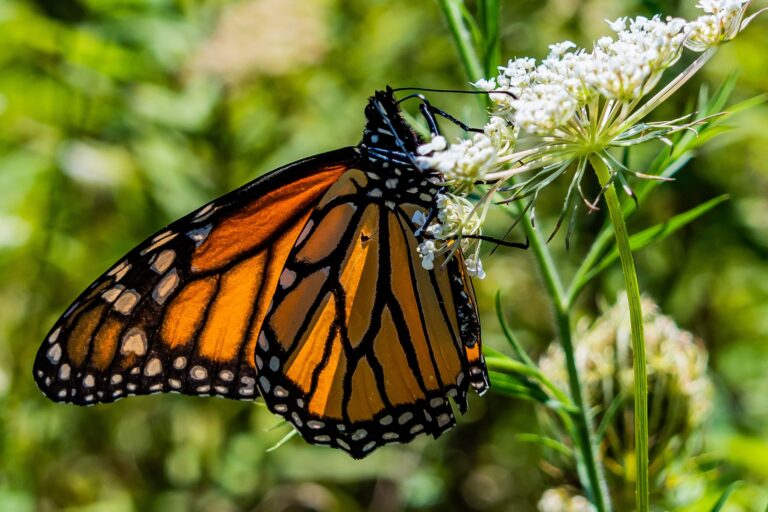
That’s when he found this female monarch resting among the plants.
Where Do Monarchs Go When It Rains?
Monarch butterflies look for protected places when rain makes flying difficult. They may shelter in trees, shrubs, tall grasses or other dense vegetation that provides some protection from rain and wind.
That explains why Eric didn’t notice the monarchs until the dogs disturbed them. They weren’t flying from flower to flower as they normally would on a warm, sunny day. They were sitting quietly in the vegetation.
Monarchs have good reason to stay put. Wet wings make flying difficult. Monarchs rely on their large wings not only for powered flight but also for gliding and riding rising columns of warm air called thermals. Flying around in the rain isn’t worth the energy or the risk when they can simply hang onto a protected plant and wait.
Can Monarch Butterflies Fly in the Rain?
A monarch caught in the rain can still move, but rain isn’t good flying weather. Water on the wings makes flight difficult, and heavy rain and strong winds can stop migrating monarchs from making progress altogether. Monarchs may remain grounded for hours or even days when weather conditions are poor.
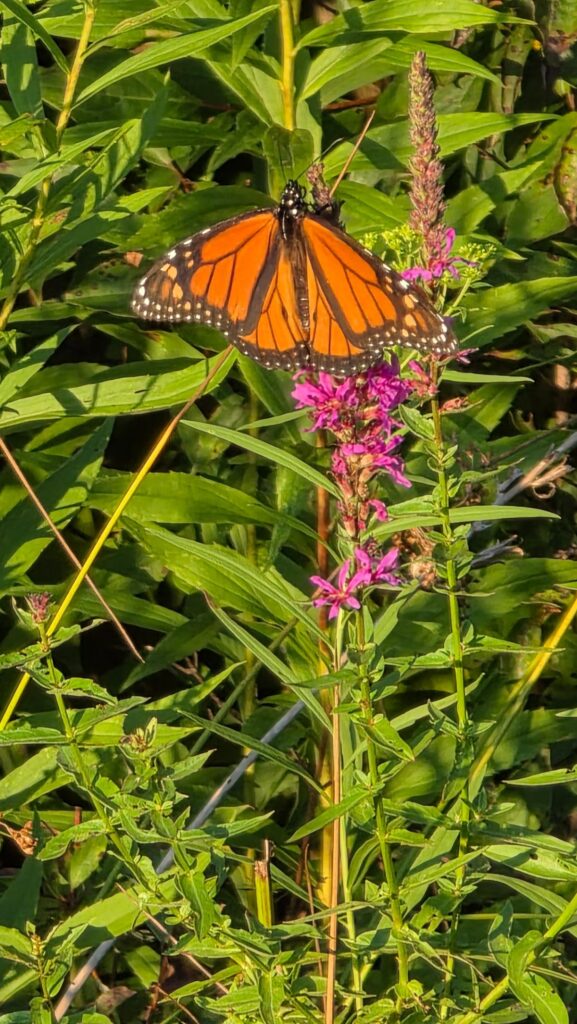
After the rain stops, you may see a monarch sitting with its wings open. It isn’t necessarily posing for a picture. Opening the wings can help the butterfly warm its flight muscles and dry wet wings before taking off again.
How Cold Is Too Cold for Monarchs to Fly?
Temperature matters almost as much as rain. Monarchs generally need their flight muscles to reach about 55°F before they can fly. On cool mornings, they may remain perched until the sun warms them enough to become active.
Sunlight can warm a monarch above the surrounding air temperature, so a butterfly may sometimes become active even when the air itself is fairly cool. Cloudy, cool weather is another matter. Without sunshine to help warm those flight muscles, monarchs may simply stay put. That becomes increasingly important here in Upstate New York as summer turns to fall.
What Do Monarchs Do When It’s Windy?
They may wait that out too. Wind can be helpful during fall migration when it is blowing in the right direction. Monarchs can take advantage of favorable winds and thermals to travel while using less energy.
Strong winds from the wrong direction can stop them. Migrating monarchs may fly lower, seek cover, feed on available nectar, or wait in protected areas until conditions improve. Large numbers can sometimes accumulate in sheltered locations while waiting for favorable winds.
For a butterfly traveling hundreds or even thousands of miles, waiting for better weather makes a lot more sense than fighting a strong headwind.
Where Do Monarch Butterflies Go at Night?
Monarchs are active during the day. At night, they rest in trees, shrubs, and other sheltered places. This resting state is called torpor. Their activity and metabolism slow, allowing them to conserve energy until temperatures and light increase again. During fall migration, monarchs may also gather together in overnight roosts.
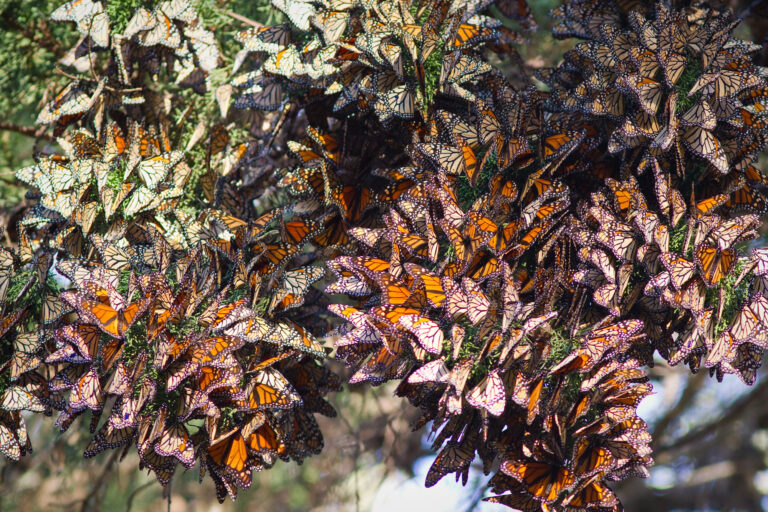
They don’t migrate south in organized flocks like birds. Individual monarchs travel during the day, then may gather in protected trees toward evening. Some roosts contain large numbers of butterflies and may be used for only a night or two before the monarchs continue south. Shelter from wind and nearby nectar sources appear to be important features of these temporary roosting sites.
Do Monarchs Need Shelter in a Butterfly Garden?
We tend to think about flowers when creating habitat for butterflies, and flowers are certainly important. Adult monarchs need nectar, especially during fall migration when they are building the energy reserves needed for the journey south. But a good pollinator habitat isn’t only flowers.
Trees, shrubs, tall plants, and other vegetation give monarchs places to get out of wind and rain and places to rest overnight. Monarch Joint Venture specifically recommends including areas where monarchs and other pollinators can shelter from bad weather.
That means the slightly wild edges of a property can be valuable too. Not every stem needs to be cut down, and not every corner needs to be tidy.
What Should You Do If You Find a Monarch in the Rain?
Usually, nothing. A monarch sitting quietly on a plant during a rain shower isn’t necessarily injured or in trouble. It may simply be doing exactly what monarchs have evolved to do: hold onto a protected spot and wait.
Once the rain stops, its wings dry and its flight muscles are warm enough, it can leave on its own. The female Eric found was a good example. If the dogs hadn’t gone tearing through the flowers, we probably never would have known she was there.
She wasn’t feeding. She wasn’t laying eggs. She was simply tucked into the vegetation during a sprinkle, waiting for better butterfly weather.
Want to learn about Monarchs? See our article Why Aren’t There Monarch Caterpillars on My Milkweed? and A Potential Win for Monarchs Happening Along Roadsides.
🌿 Gear Up for a Bee-Friendly Garden
Contains affiliate links, for full disclosure, see FTC Disclosure, here.
Looking for tools that actually work?
We’ve pulled together our favorite picks for beekeeping, gardening, and pollinator-friendly seeds—everything you need to support bees and grow a thriving space.
Browse the full list on Amazon — all in one spot.