
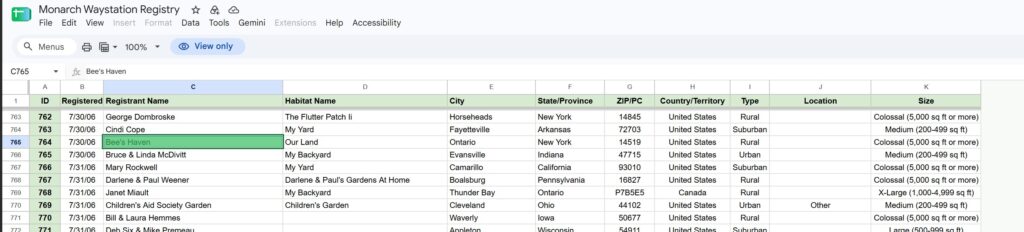
Here at Bee’s Haven, we’ve been interested in pollinators for many years. In 2006, I heard of Monarch Watch at monarchwatch.org. They had started a Monarch Waystation database, so with our almost 30 acres of habitat, I decided to apply. We were approved on July 30, 2006, and we’re Monarch Waystation #764.
To date, there are more than 58,000 waystations from all over the world, with the majority in the US. In a nutshell, Monarch Watch began at the University of Kansas, in Lawrence, Kansas, to draw attention to the monarch’s decline and encourage people to create habitat for them. The University of Kansas is Waystation No. 1.
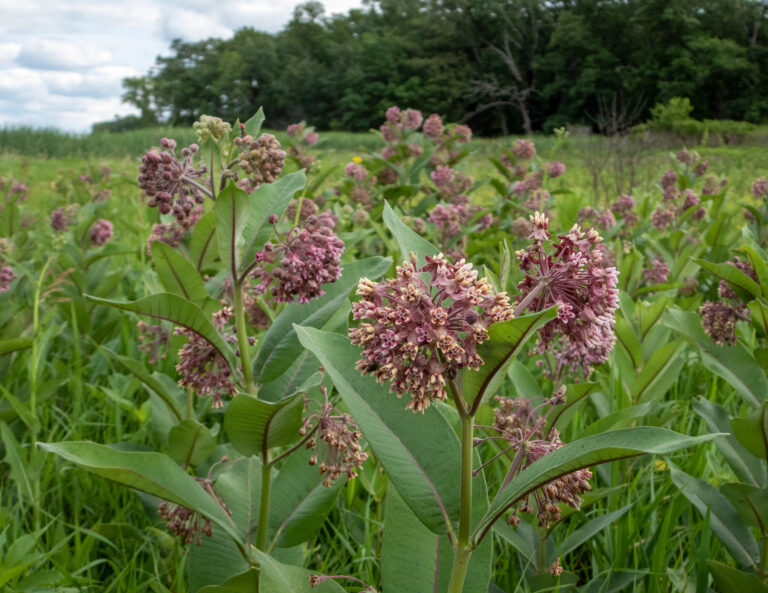
Over a hundred native milkweed (Genus Asclepias) species exist in North America. Here at Bee’s Haven, we’ve identified three species, scattered across the 30 acres. We have A. incarnata, swamp milkweed; A. syriaca, common milkweed; and A. tuberosa, butterfly weed. These plants are vital to the survival of the species.
The larvae have evolved to feed exclusively on this genus. But since there are generally at least two generations born in the Northeast, the adults require plenty of other flowering plants as well.
What Makes a Monarch Waystation?
A Monarch Waystation does not have to be huge. Monarch Watch says even a relatively small garden can qualify if it provides the right plants and growing conditions. A larger planting is even better, especially when it includes several milkweed plants and nectar sources that bloom at different times through the season.
Monarchs need two different types of plants. Milkweeds are the host plants for their caterpillars, while adult monarchs depend on nectar plants for food. A good waystation should provide flowers from spring through fall, with special attention to late summer and fall blooms that help migrating monarchs build energy for the trip south.
Monarch Watch also recommends planting more than one milkweed species when possible. Here at Bee’s Haven, we are lucky to have three species growing naturally across the property. That gives monarchs several places to lay eggs and gives the caterpillars plenty of food as they develop.
Why Nectar Plants Matter Too
Milkweed gets most of the attention because monarch caterpillars cannot survive without it, but adult butterflies need a much broader menu. Goldenrods, asters, coneflowers, sunflowers, blazing stars, and many other native flowers can provide nectar during different parts of the growing season.
This is especially important in late summer and fall. The final generation of monarchs in the Northeast is preparing for migration rather than reproduction, so access to abundant nectar can make a real difference as they build the fat reserves needed for the long flight to Mexico.
Keeping the Habitat Safe
Monarch Watch recommends avoiding pesticides whenever possible, especially systemic pesticides that can remain inside plant tissue. This is important when buying milkweed and other pollinator plants because a plant may look perfectly healthy while still containing pesticide residues.
Whenever possible, choose untreated native plants and leave some areas a little wild. A perfect-looking garden is not always the best habitat. Monarchs, bees, and other pollinators often benefit from places left a little less tidy.
What Does It Take to Become a Monarch Waystation?
Monarch Watch’s requirements are surprisingly flexible. There is no minimum size for a certified Monarch Waystation, although they recommend at least 100 square feet for an effective habitat. A waystation can even consist of several separate garden areas rather than one continuous planting.
Ideally, the habitat should receive at least six hours of sunlight each day and provide some protection from wind and weather. Monarch Watch recommends at least 10 milkweed plants, preferably representing two or more species, along with a variety of nectar plants that bloom throughout the growing season.
It’s easy to apply. Just go to Monarch Watch. To qualify, Monarch Watch asks whether the habitat provides shelter, has at least 10 milkweed plants, provides nectar plants throughout the growing season, and has a plan for maintaining the habitat. That’s it. Your habitat can be anything from a small home garden to a farm.
Our property easily exceeded those requirements when we applied in 2006. In fact, the Monarch Watch Registry classifies Bee’s Haven as “Colossal,” its category for habitats of 5,000 square feet or more. Our nearly 30 acres give us room for milkweed, wildflowers, fields, woodland edges, and other natural areas rather than one designated butterfly garden.
A Waystation Isn’t Just for Monarchs
One of the things I’ve learned over the years is that creating habitat for monarchs benefits far more than monarchs. The same asters, goldenrods, coneflowers, and other flowering plants provide nectar and pollen for native bees, honeybees, moths, and many other insects.
Monarch Watch recommends planting nectar sources that bloom one after another throughout the growing season. Diversity matters because a garden filled with flowers in June doesn’t provide much help to a migrating monarch passing through in September.
Don’t Forget the Fall Flowers
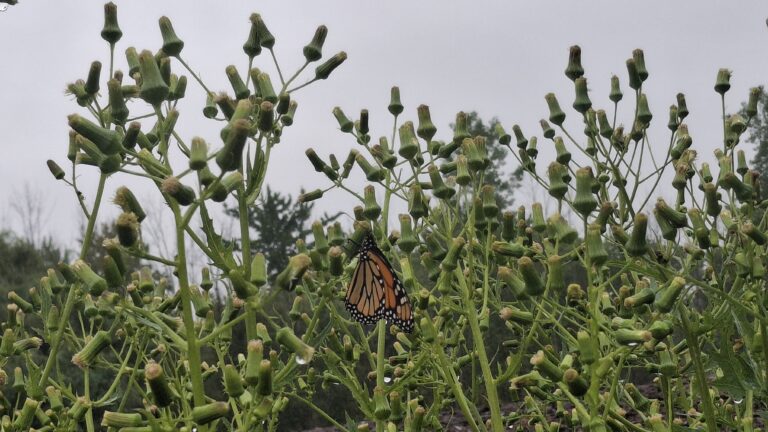
This is especially important here in the Northeast. The monarchs we see late in the season are preparing for a completely different life than the summer generations. Summer adults generally live only two to five weeks, while the migratory generation can survive for eight or nine months, including the winter spent in Mexico.
That makes our late-blooming plants particularly important. Goldenrods and asters may not get the attention that milkweed does, but they provide food at exactly the time migrating monarchs need it.
Twenty Years Later
When we registered Bee’s Haven in 2006, I certainly didn’t expect that nearly 20 years later I would be writing about monarchs, photographing their entire life cycle, and still watching them use the same property.
Our waystation has changed over those years, and so has my understanding of what monarchs need. Some areas are intentionally planted, while others are simply allowed to grow. Milkweed pops up where it wants to, native plants move around, and every year is a little different.
But the basic idea behind Monarch Waystations hasn’t changed: give monarchs a place to reproduce, a place to feed, and enough habitat to help the next generation continue the journey.
See our new post on Tagging Monarchs for an interesting view of how and why you can tag monarchs to assist in Monarch Watch’s study of their migration.
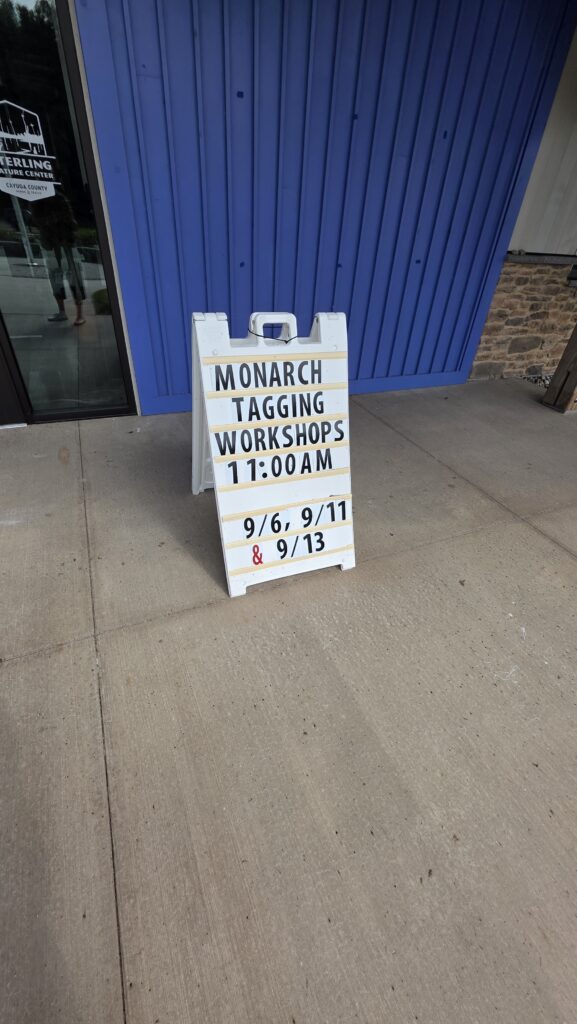
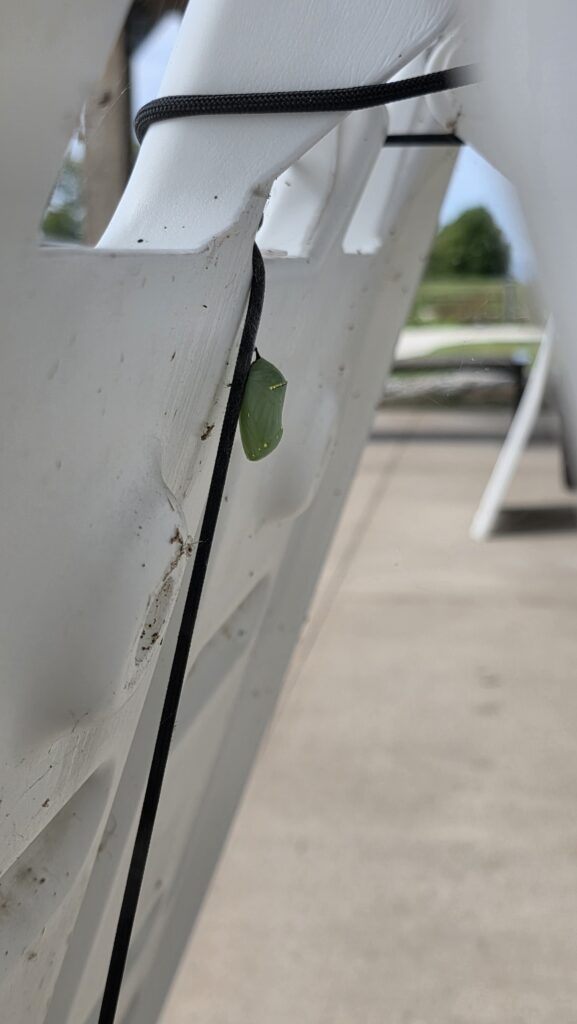
I recently went to a Monarch tagging workshop at Sterling Nature Center, in Sterling, NY and we found this chrysalis inside the sign. Apparently, the monarchs approve of the program, too. At a recent Monarch Watch tagging event, we found this chrysalis attached directly to the Monarch Tagging sign. The caterpillar had traveled quite a distance from the nearest milkweed before choosing its spot to pupate.
🌿 Gear Up for a Bee-Friendly Garden
Contains affiliate links, for full disclosure, see FTC Disclosure, here.
Looking for tools that actually work?
We’ve pulled together our favorite picks for beekeeping, gardening, and pollinator-friendly seeds—everything you need to support bees and grow a thriving space.
Browse the full list on Amazon — all in one spot.