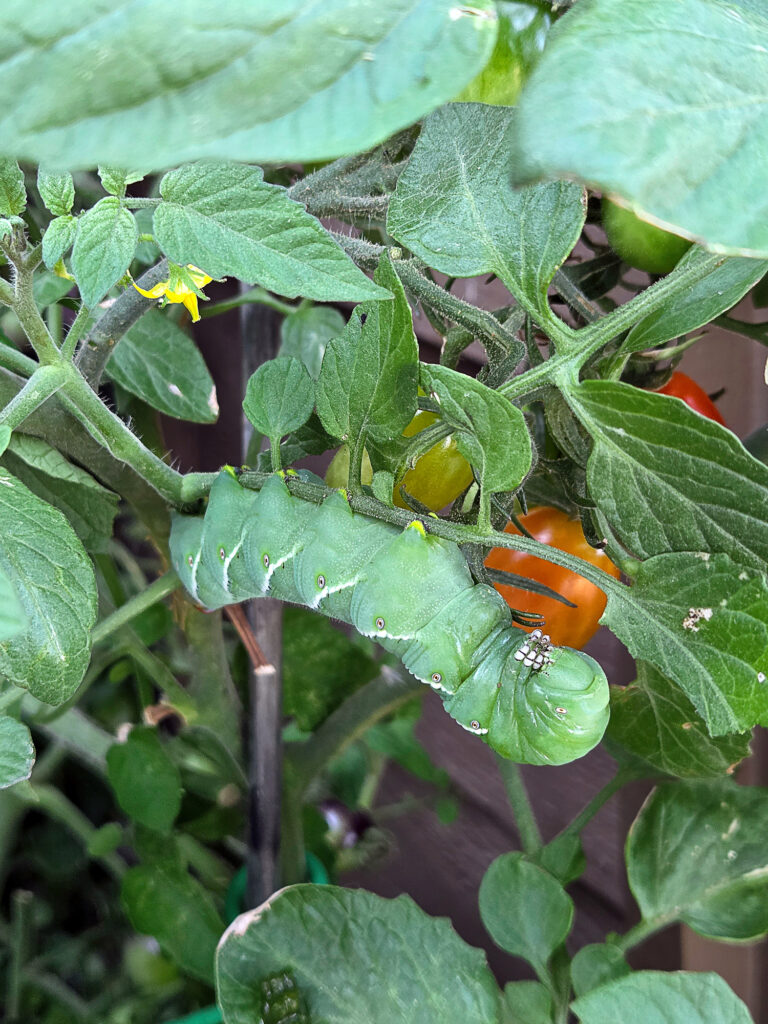
Anyone who’s grown tomatoes has probably seen a tomato hornworm. A tomato hornworm can strip the leaves from a tomato plant in days. These large green caterpillars are hard to spot until the damage is done. But the caterpillar that causes so much trouble in the vegetable garden eventually becomes a large moth that visits flowers and helps pollinate them.
Tomato hornworms are the larvae of the five-spotted hawkmoth (Manduca quinquemaculata). A close relative, the tobacco hornworm (Manduca sexta), becomes the Carolina sphinx moth. Both belong to the sphinx moth family, Sphingidae.
Tomato Hornworm vs. Tobacco Hornworm
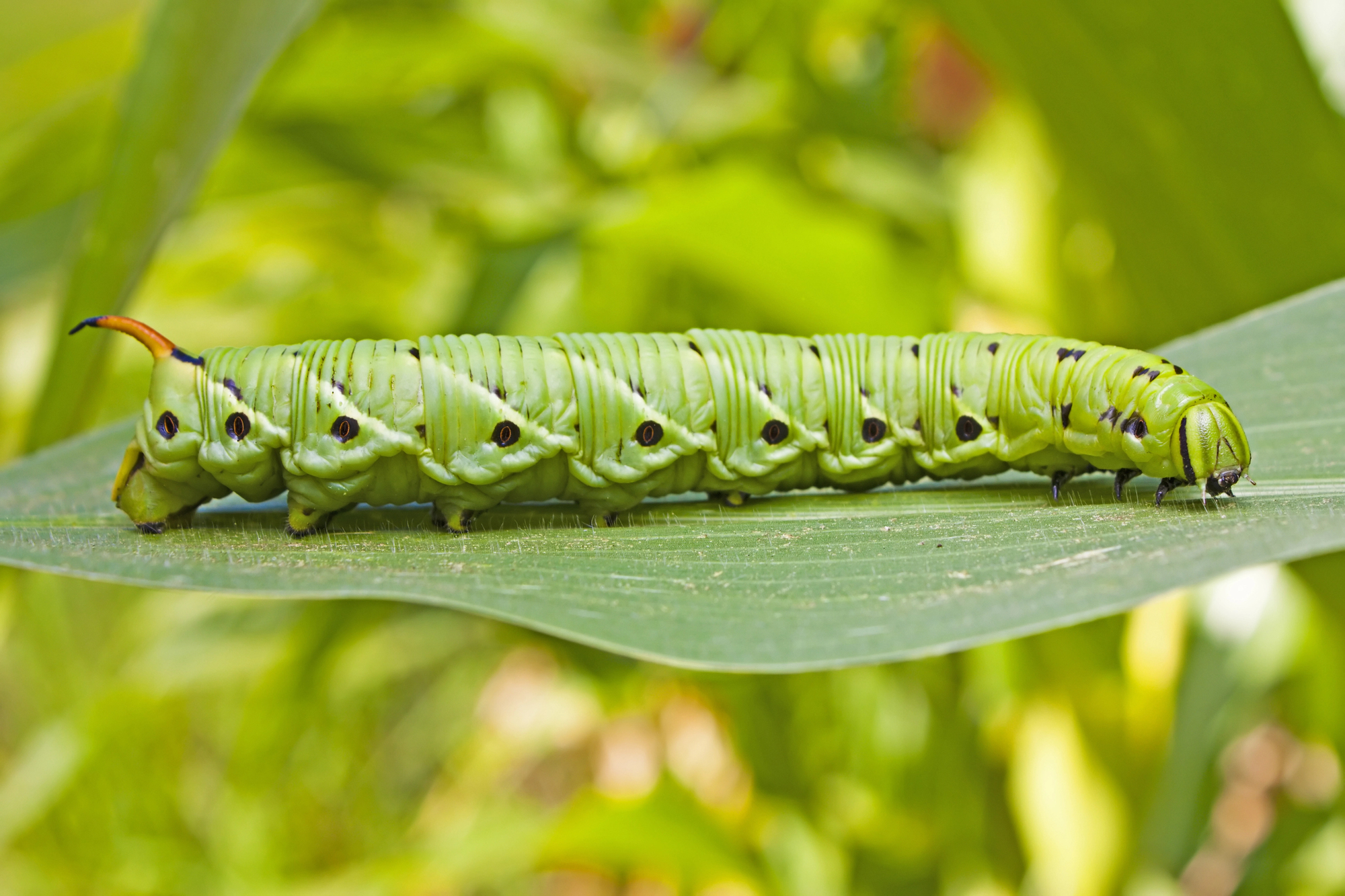
Gardeners often call any large green caterpillar on a tomato plant a tomato hornworm. However, two different species commonly feed on tomatoes.
| Feature | Tomato Hornworm | Tobacco Hornworm |
|---|---|---|
| Scientific name | Manduca quinquemaculata | Manduca sexta |
| White markings | Eight V-shaped markings on each side | Seven diagonal stripes on each side |
| Tail horn | Usually black or blue-black | Usually red or orange-red |
| Adult moth | Five-spotted hawkmoth | Carolina sphinx moth |
Despite their names, both species feed on tomatoes and other plants in the nightshade family.
The horn at the rear of the caterpillar looks threatening, but it isn’t a stinger. Neither species can sting.
The Life Cycle of a Tomato Hornworm
Like butterflies, sphinx moths undergo complete metamorphosis. They pass through four stages: egg, caterpillar, pupa and adult.
1. Eggs on Tomato Leaves
Adult females lay small, pale green eggs on host plants during the growing season. The eggs hatch into tiny caterpillars that begin feeding on the leaves. At this stage, they’re much harder to notice than the large hornworms that appear later.
2. The Hungry Caterpillar Stage
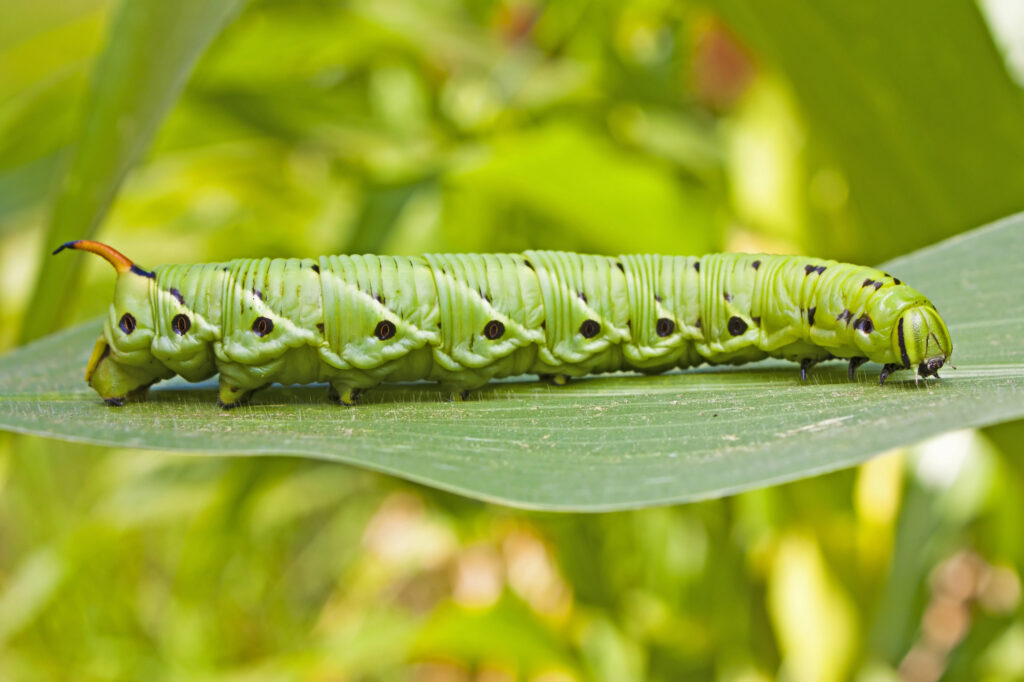
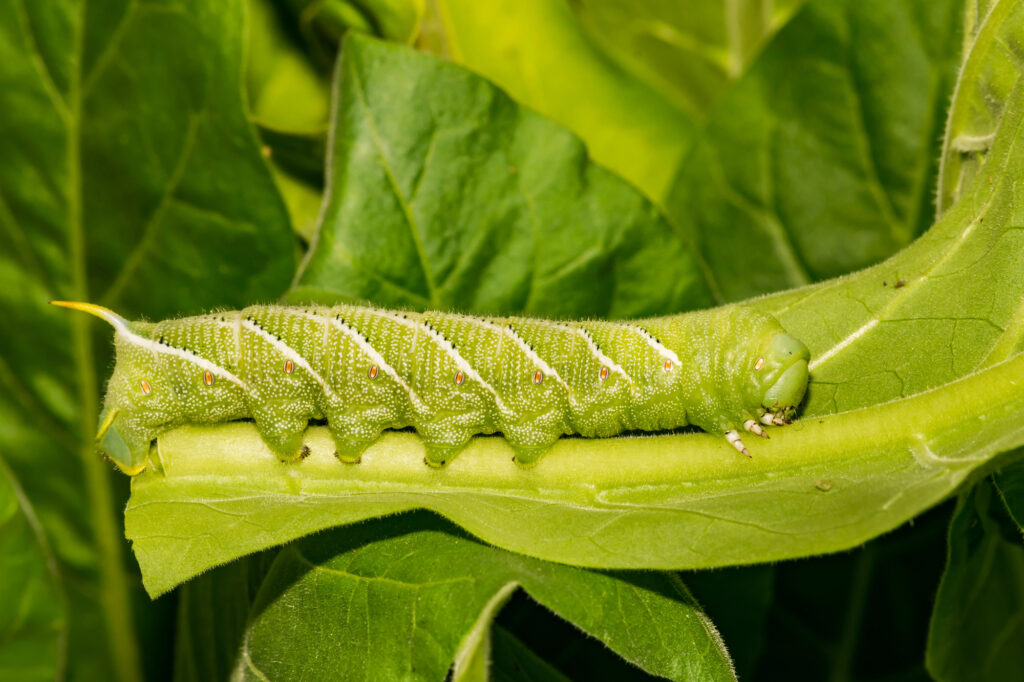
Hornworms spend roughly three to four weeks feeding and growing. They shed their skins several times before reaching their full size of about four inches. Much of their feeding occurs during the final stages of growth.
Even a single large caterpillar can remove a surprising amount of foliage. They also feed on flowers and occasionally chew holes in developing tomatoes. One of the easiest ways to locate a hornworm is to look for dark green or black droppings beneath damaged leaves. The caterpillars blend remarkably well into the foliage.
3. Pupation Underground
When a hornworm finishes feeding, it leaves the plant and burrows into the soil. There, it transforms into a reddish-brown pupa. Unlike a monarch butterfly chrysalis hanging from a plant, a hornworm pupa usually remains hidden underground.
The pupa has an unusual curved structure that resembles the handle of a tiny pitcher. This protects the developing moth’s long feeding tube, called a proboscis. In warm weather, an adult moth may emerge within a few weeks. Caterpillars that pupate late in the season generally spend the winter underground.
4. The Adult Sphinx Moth
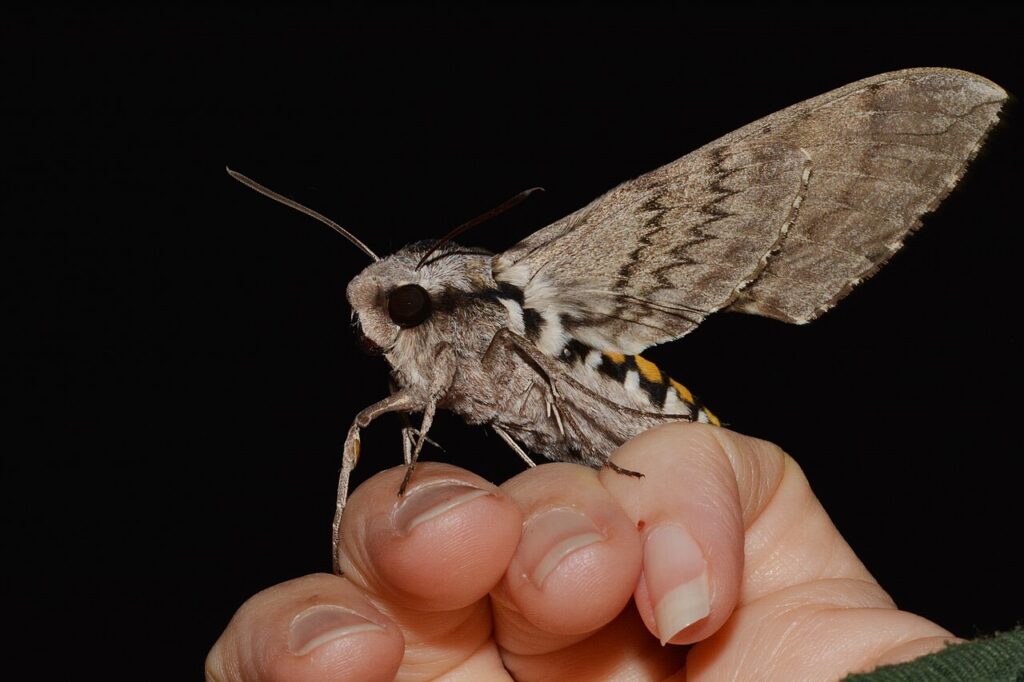
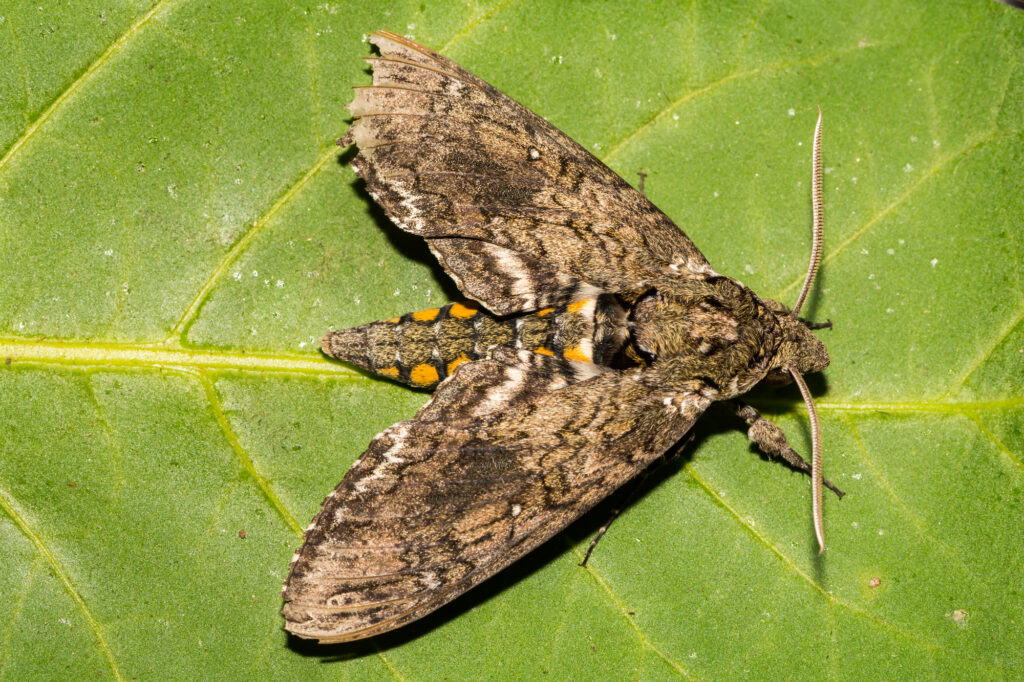
The adult moth looks nothing like the caterpillar. Five-spotted hawkmoths are large, gray-brown moths with wingspans reaching four to five inches. They have narrow wings, heavy bodies and yellow spots along the sides of their abdomens.
Carolina sphinx moths look similar, but they have different markings. Both species are strong fliers and usually visit flowers around dusk or after dark.
Sphinx Moths Are Pollinators
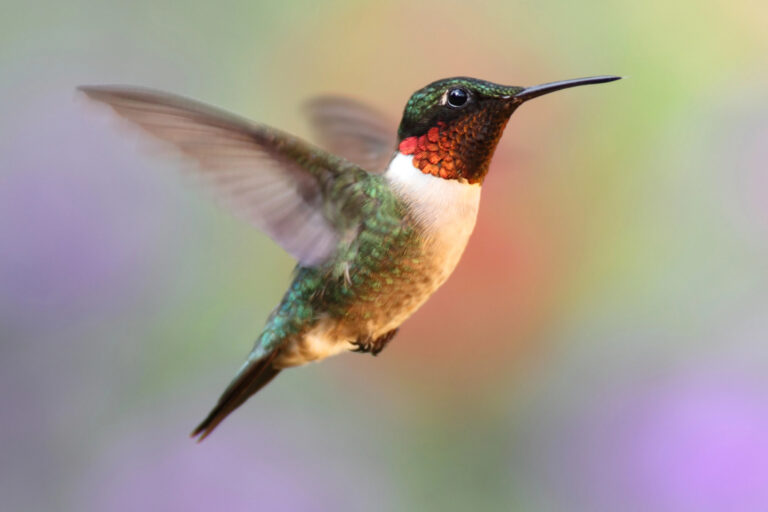
The destructive caterpillar becomes a nectar-feeding adult. Sphinx moths have a long proboscis that allows them to reach nectar deep inside tubular flowers. Many hover in front of blossoms while feeding, much like hummingbirds.
As they move between flowers, pollen can cling to their bodies and transfer to other blossoms. Their activity is especially useful for some flowers that open or release their strongest fragrance in the evening. Sphinx moths are part of a much larger group of nighttime pollinators. While bees receive most of the attention, moths also contribute to pollination.
What About Hornworms Covered in White Cocoons?
Occasionally, gardeners find hornworms with dozens of white, rice-like structures attached to their backs. These are cocoons belonging to small parasitic wasps, often Cotesia congregatus.
The female wasp lays eggs in the caterpillar. After developing inside it, the wasp larvae emerge and spin cocoons on the hornworm’s body. Leave a hornworm covered in these cocoons alone. Adult wasps will emerge and continue controlling hornworm populations. These tiny wasps are natural enemies of hornworms and are beneficial insects in the garden.
Should Tomato Hornworms Be Removed?
Hornworms can seriously damage vegetable plants, especially when the caterpillars are nearly full-grown. Handpicking is usually enough to manage them in a small garden. Checking plants regularly helps catch the caterpillars before they remove too much foliage. Leave hornworms carrying parasitic wasp cocoons where they are.
There’s an old saying along the lines of “Plant enough for yourself and enough for the wildlife.” Meaning if you plant 10 plants, you may have enough to tolerate a few hornworms. If you can, just leave them since they turn into beautiful moths that pollinate plants.
A Garden Pest With Another Side
It’s easy to see a large hornworm eating tomato leaves and think only about the damage. But that same insect has another role in the environment. As an adult, it becomes a moth that feeds on nectar and may carry pollen between flowers.
The hornworm is a good example of how an insect’s role can change completely during its life cycle.
A few chewed leaves aren’t necessarily a bad thing. As discussed in our article on growing a pollinator garden, sharing a little of the garden with insects helps support wildlife.
🌿 Gear Up for a Bee-Friendly Garden
Contains affiliate links, for full disclosure, see FTC Disclosure, here.
Looking for tools that actually work?
We’ve pulled together our favorite picks for beekeeping, gardening, and pollinator-friendly seeds—everything you need to support bees and grow a thriving space.
Browse the full list on Amazon — all in one spot.