Wood ducks are one of the birds I never get tired of seeing around our pond and swamp. They are beautiful, but they are also incredibly wary. Often, I only get a quick look before they disappear into the trees.
Unlike many ducks that prefer open water, wood ducks prefer wooded wetlands. Swamps, shallow ponds, creeks and flooded forests provide the food, cover and nesting sites they need.
That makes them a common visitor to wetlands across New York, including here in Wayne County.
How to Identify a Wood Duck
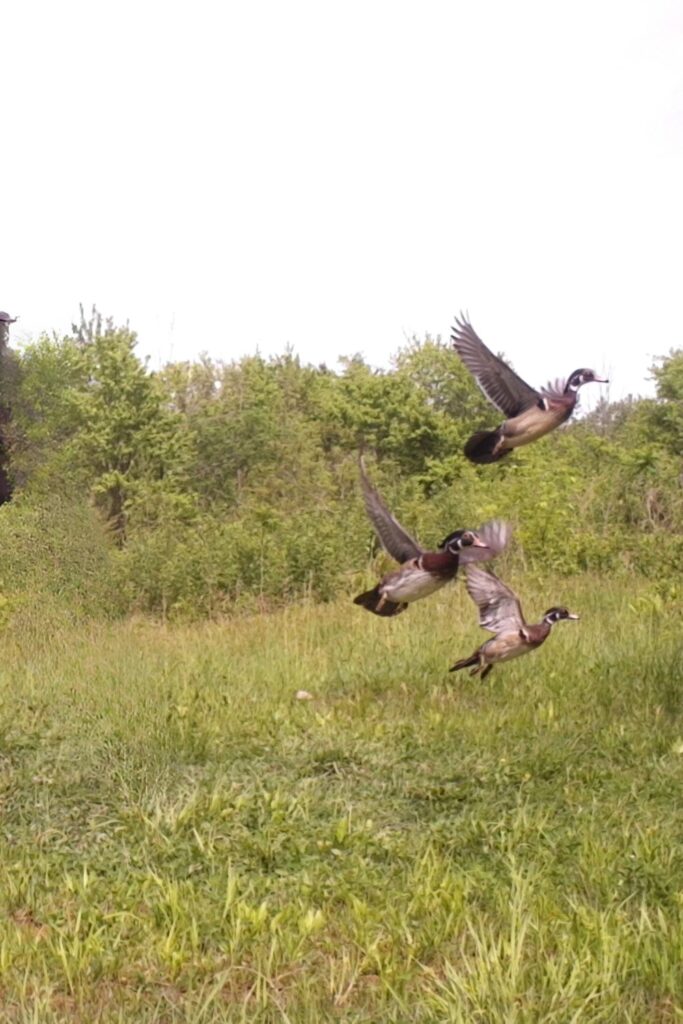
A male wood duck is hard to mistake for anything else during breeding season. The drake has a glossy green-and-purple head with bold white markings. His eyes are bright red. The breast is chestnut-colored, and the sides are pale gold.
Females are much less colorful but still easy to recognize. They are gray-brown with a noticeable white ring and teardrop-shaped patch around each eye.
Both males and females have a slightly crested head. Wood ducks are smaller than mallards. They are usually about 18 to 21 inches long with a wingspan of about 26 to 29 inches.
Wood Ducks Really Do Live in Trees
Wood ducks are sometimes called perching ducks. Their feet have strong claws that help them grip branches and tree bark. Seeing a duck sitting on a tree limb can seem strange, but it is normal behavior for this species. Those feet are also important during nesting season.
Wood ducks are cavity nesters. Instead of building a nest on the ground, a female searches for a hollow tree. She may choose a cavity anywhere from a few feet above the ground to 60 feet high. Wood ducks cannot make their own nesting cavities. They rely on holes that already exist in living or dead trees. Large trees near wetlands are especially valuable for this reason.
Baby Wood Ducks Take Quite a First Trip
A female usually lays several creamy white eggs inside the cavity and lines the nest with down from her breast. The ducklings hatch covered with down and ready to move. About a day after hatching, the female leaves the nest and calls to them from below.
Then the ducklings jump. Wood duck nests can be dozens of feet above the ground. Cornell has documented ducklings jumping more than 50 feet without being injured. After landing, they follow their mother toward the water. It is one of the more remarkable starts to life in the bird world.
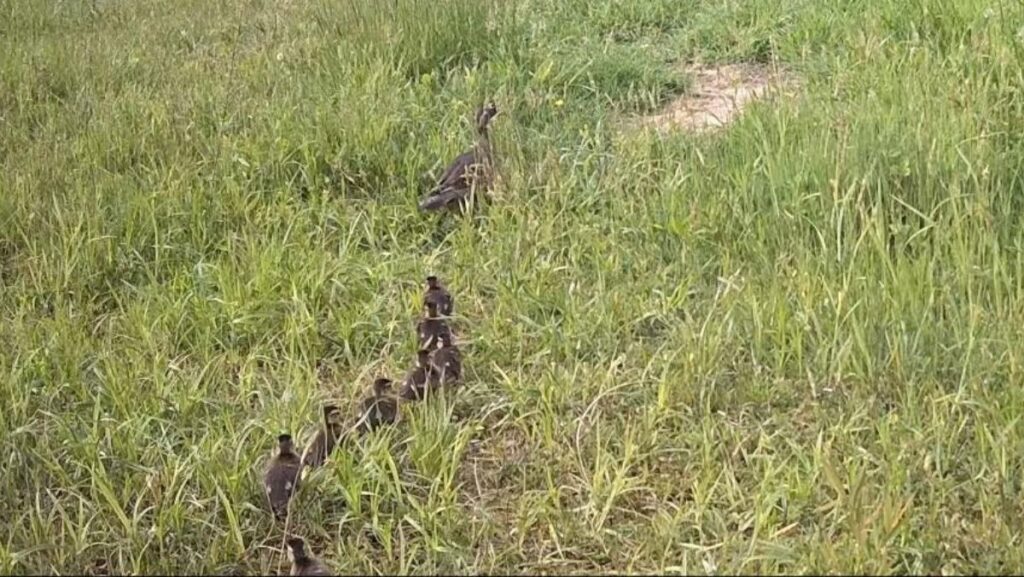
The photo above was taken on May 22, 2026. A hen wood duck with 8 chicks following single file. This is the height of nesting season out in our swamp.
What Do Wood Ducks Eat?
Wood ducks eat a wide variety of foods. Most adults eat plant material. Acorns are especially important. Wood ducks also eat seeds, berries, duckweed and other aquatic plants.
They will feed on fallen nuts and seeds in wooded areas and sometimes visit agricultural fields for grain. Insects, snails and other small invertebrates are also part of the diet.
This variety is another reason wooded wetlands work so well for them. A pond surrounded by trees, shrubs and wetland plants offers far more food than an open lawn surrounding a decorative pond.
The Best Habitat for Wood Ducks
Wood ducks prefer shallow water with plenty of cover. They are often found in wooded swamps, beaver ponds, marshes, slow creeks and small lakes. Fallen trees, shrubs and wetland vegetation give them places to hide and feed.
Cornell reports that wood ducks do especially well where open water is mixed with about 50 to 75 percent vegetation and woody cover. A tidy pond is not necessarily the best wildlife pond.
Dead trees, fallen logs, brush and shoreline vegetation can all provide valuable habitat. That has been one of the biggest lessons from restoring wildlife habitat here over the years. What looks messy to people often looks like food, shelter or a nesting site to wildlife.
Wood Ducks in New York
Wood ducks breed throughout much of New York. The New York State Department of Environmental Conservation manages wood duck habitat at several wildlife management areas. They often install nest boxes where natural tree cavities are limited.
Wood ducks are also listed among the main waterfowl species at Lake Shore Marshes Wildlife Management Area along Lake Ontario in Wayne County. Many wood ducks that breed in northern states migrate south during fall. They are early migrants, so numbers usually begin dropping as cold weather arrives. In spring, pairs return to wooded wetlands to nest.
Do Wood Ducks Need Nest Boxes?
Not always. Natural tree cavities are the original wood duck nest box, and mature trees near wetlands remain important habitat. Nest boxes can help where suitable cavities are scarce.
A proper wood duck box needs enough depth for the nest and a rough interior that allows ducklings to climb toward the opening. Predator guards are also important. Place boxes where good brood habitat is nearby. A nest box alone does little good if newly hatched ducklings have nowhere safe to feed and hide. We have a couple of nest boxes, and we’ve seen increased populations in recent years, which is encouraging.
Putting many boxes close together can also cause problems. Female wood ducks sometimes lay eggs in another female’s nest. Too many boxes clustered in one visible location can increase this behavior and result in nests containing far more eggs than one female laid.
Helping Wood Ducks Around a Pond or Wetland
Protecting the wetland itself is one of the best ways to help wood ducks. You can leave large cavity trees standing when they do not pose a safety hazard. Native shrubs and wetland plants provide cover and food. Fallen trees and woody debris can also remain along parts of the shoreline.
A wooded buffer around the water gives adults and young birds more protection than a closely mowed shoreline. Nest boxes can fill in when natural cavities are limited, but good habitat still comes first.
Wood ducks are a good example of how valuable an untidy wetland can be. Hollow trees, brush, shallow water and thick vegetation may not look manicured, but together they create exactly the kind of habitat these remarkable little ducks need.
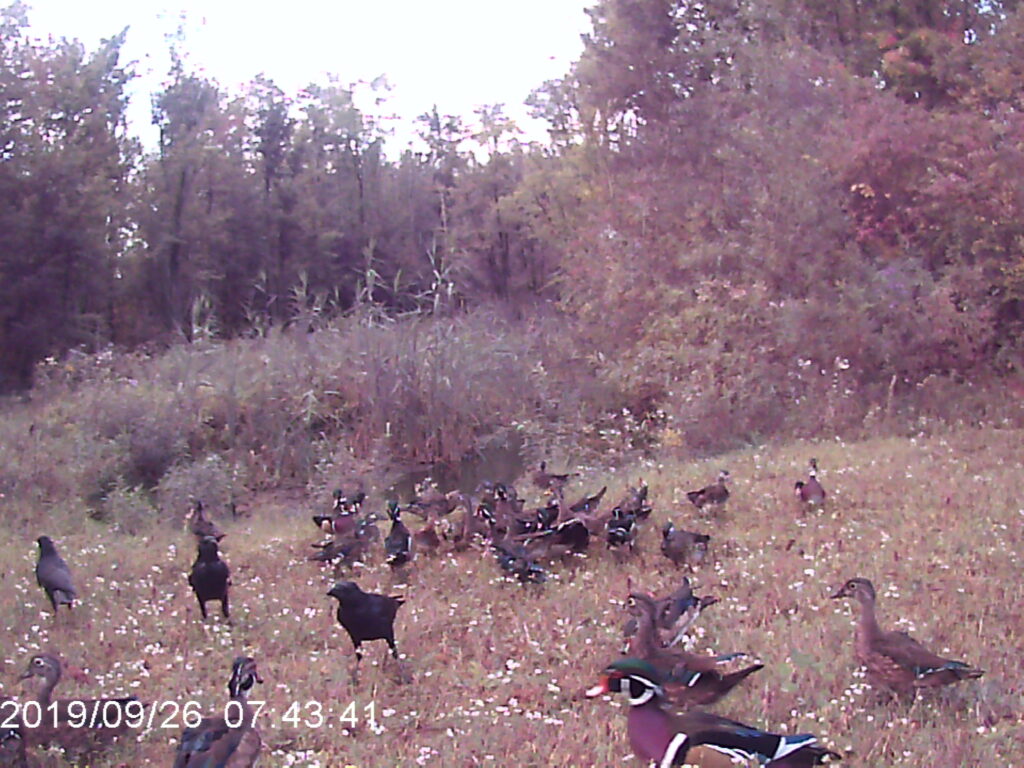
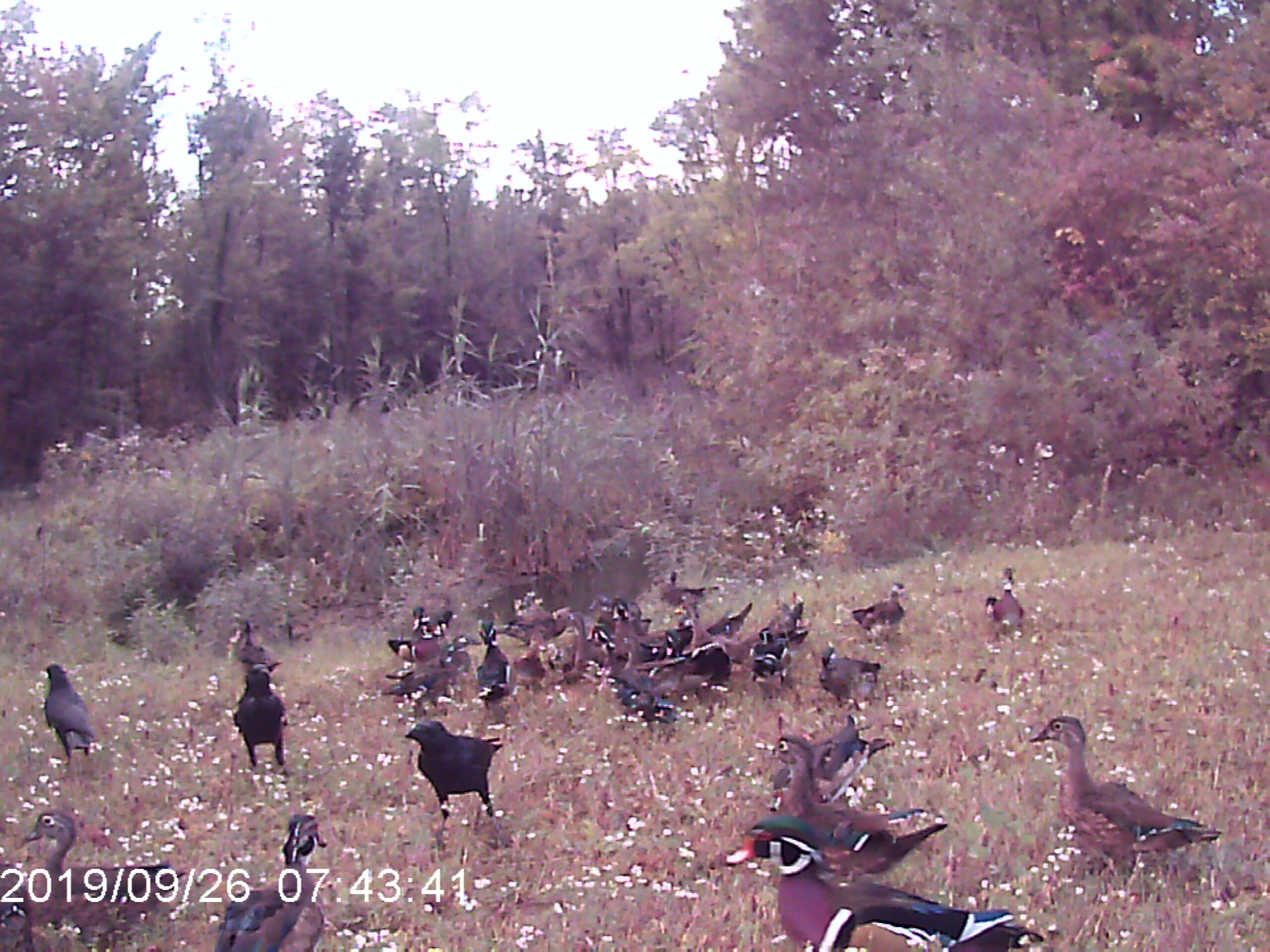
In late September 2019, our trail camera captured this large flock of wood ducks feeding near our swamp. Wood ducks often gather in large groups during early fall, feeding and building energy reserves before their southward migration. This photo has over 30 ducks.
Video of a large flock of wood ducks.
🌿 Gear Up for a Bee-Friendly Garden
Contains affiliate links, for full disclosure, see FTC Disclosure, here.
Looking for tools that actually work?
We’ve pulled together our favorite picks for beekeeping, gardening, and pollinator-friendly seeds—everything you need to support bees and grow a thriving space.
Browse the full list on Amazon — all in one spot.