New bumblebee queens spend the end of the growing season feeding, mating, and finding sheltered places to survive the coming cold months. In the Northeast, these young queens carry the next generation through winter alone, making the flowers still blooming in fall and the undisturbed ground beneath them important parts of a garden’s habitat long after most of its color has faded.
The Colony Does Not Survive Winter Together
A bumblebee colony lasts for one growing season in cold climates like Upstate New York. The queen that founded it in spring raises workers, and a successful colony eventually produces males and new queens.
As the season ends, the old queen, workers, and males die. The newly mated queens leave to find their own winter shelter, rather than remaining together in the summer nest.
Cornell’s guide to bumblebees explains this annual cycle. The queens that survive emerge the following spring to establish new colonies.
Fall Flowers Help Queens Prepare
Before settling in for winter, new queens need to build their energy reserves. They feed on flowers and store fat to sustain them through months without foraging.
An unusually large bumblebee visiting fall flowers could be one of these new queens. Size alone is not a certain identification, but it is a reason to look more closely before cutting down the last blooming plants.
Keeping flowers available through the end of their natural bloom gives these bees more opportunities to feed. A garden may look nearly finished to its gardener while still providing food for a queen preparing for winter.
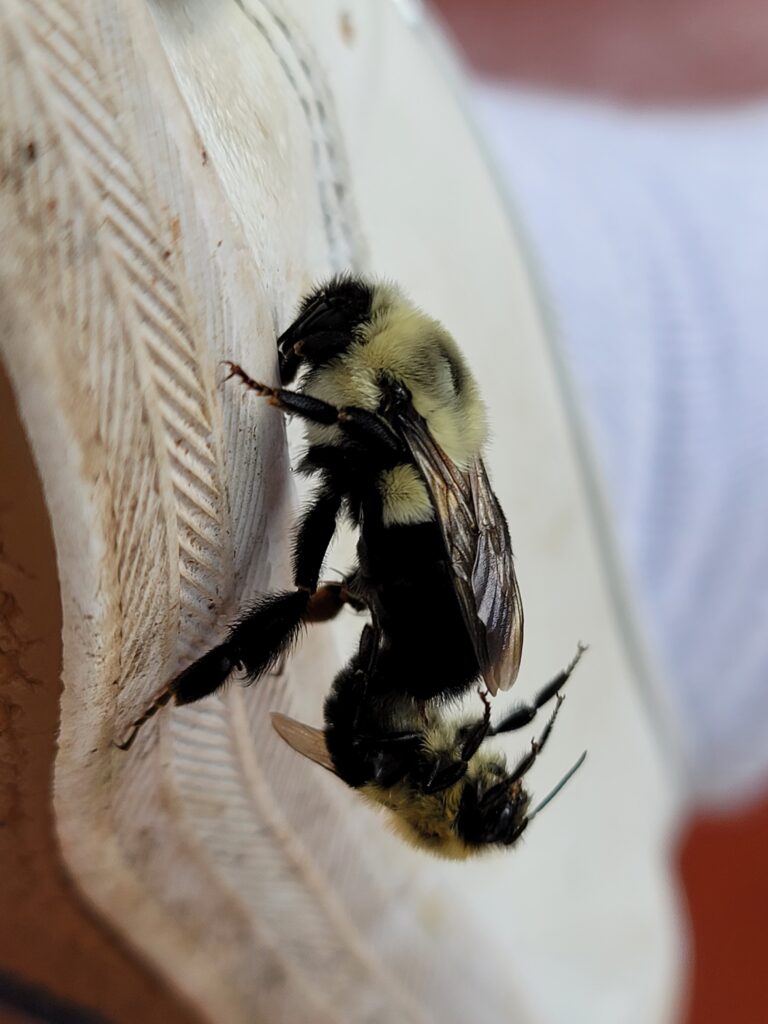
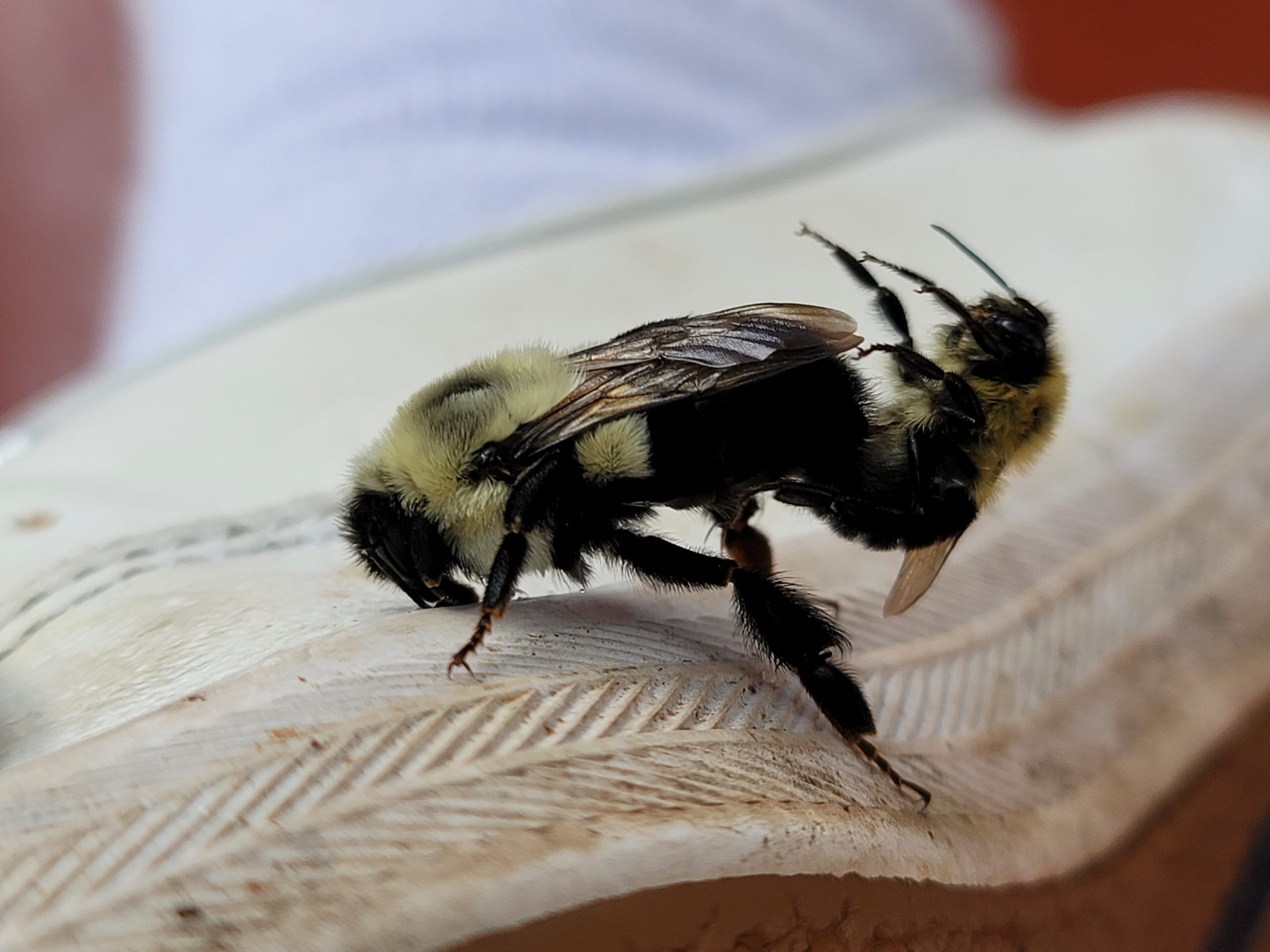
This new queen and drone decided to mate on my shoe on September 23rd. My leg fell asleep after about an hour, and I had to relocate them.
Where Do Bumblebee Queens Spend Winter?
Many queens dig small chambers in loose soil. Others shelter beneath leaf litter or in protected spaces associated with moss, bark, and decaying wood.
The spot where a queen spends winter is separate from the nest she will establish to raise workers. It needs to shelter one bee through the cold months, rather than hold an entire colony.
The Bumblebee Conservation Trust describes soft, well-drained soil and sheltered patches of leaf litter among potential winter sites. Some queens choose shaded locations where winter sunshine is less likely to warm the ground and bring them out too early.
What Happens While She Is Underground?
The queen enters diapause, a period of dormancy that allows her to wait through unfavorable conditions. Her activity and energy use fall dramatically, helping her survive on the reserves built before winter.
She is alive, even if a dormant queen uncovered during gardening barely moves. This quiet stage is part of the normal bumblebee life cycle, not a sign that every motionless bee needs warming up or to be brought indoors.
Fall Cleanup Can Disturb Hidden Queens
A queen tucked beneath leaves or just below the soil surface is easy to overlook. Digging, turning soil, and clearing sheltered corners can disturb a winter site that appears empty.
Leaving selected areas alone helps preserve those places. Leaf litter beneath shrubs, garden edges, and patches of loose soil can remain useful even after the flowers above them have finished.
Avoid covering potential habitat with tarps or weed barriers that could obstruct a bee’s spring emergence. UMass Extension also recommends minimizing winter disturbance and retaining designated areas of leaf litter.
If a dormant queen is accidentally uncovered, the Bumblebee Conservation Trust recommends gently replacing the material that covered her and leaving her undisturbed. You don’t need to dig further to check for more bees.
Spring Starts With One Queen Doing Every Job
When conditions are suitable, the queen emerges and begins feeding again. She must then find a nest site, lay eggs, and gather the food needed to raise her first workers.
Until those workers mature, she handles both foraging and care of the developing brood. Once her daughters can take over collecting food, she can spend more of her time in the nest laying eggs.
That makes early flowers the next part of the same job begun by fall blooms. A queen needs food before winter, shelter through winter, and food again when she emerges.
Making Room for Next Year’s Bumblebees
Supporting queens involves more than planting flowers for summer visitors. A garden also needs places where bees can remain safely out of sight during the months when little appears to be happening.
Leaving a sheltered patch of ground undisturbed is a small task to take off the cleanup list. Next spring, a queen emerging from that undisturbed corner may begin a colony of her own.
🌿 Gear Up for a Bee-Friendly Garden
Contains affiliate links, for full disclosure, see FTC Disclosure, here.
Looking for tools that actually work?
We’ve pulled together our favorite picks for beekeeping, gardening, and pollinator-friendly seeds—everything you need to support bees and grow a thriving space.
Browse the full list on Amazon — all in one spot.