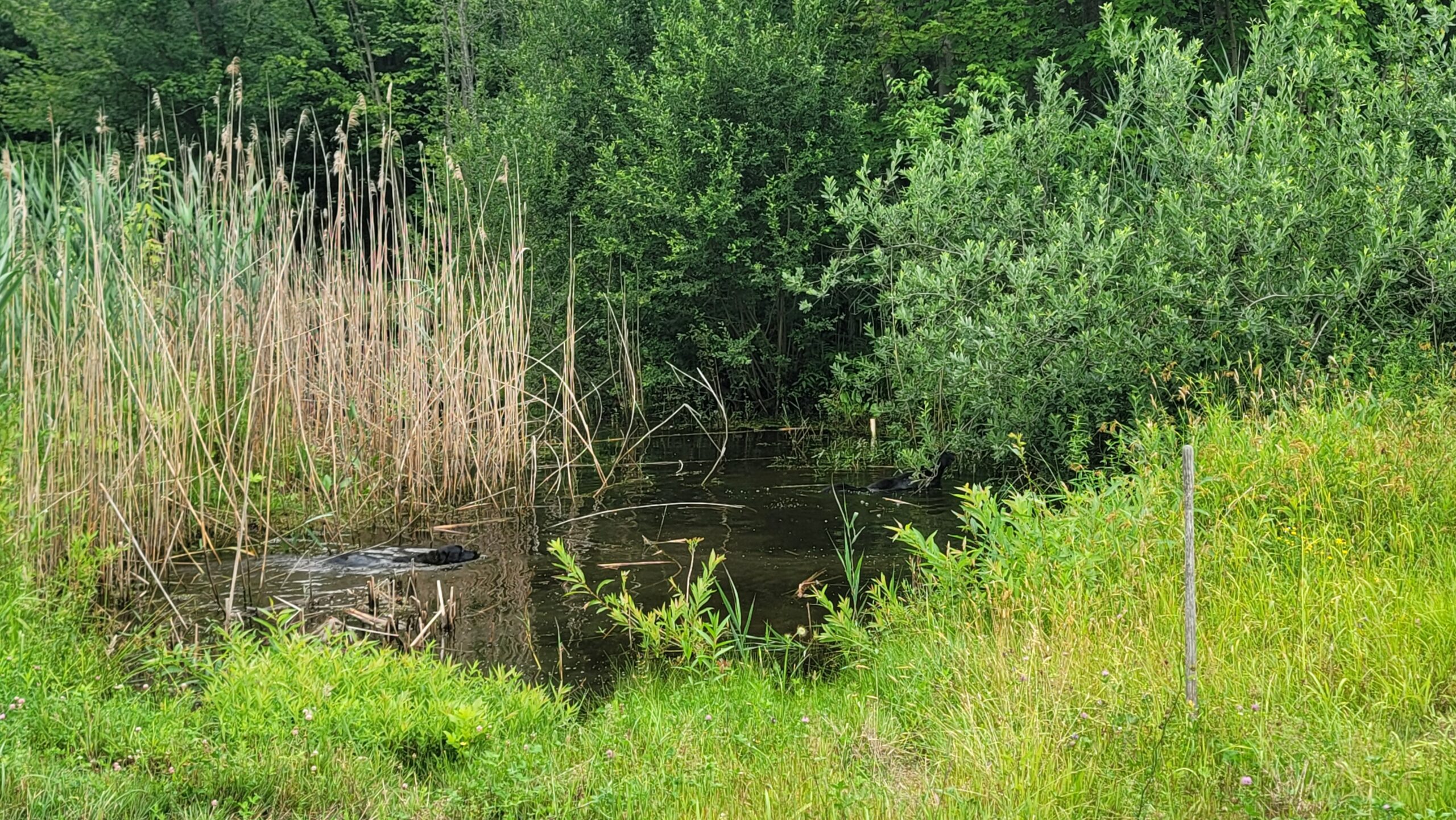

The large swamp and wet woodlands cover about 10 acres of our 29-acre property. While they are not the best spots for pollinators to find food, these areas are vital habitats for many species. They sit on the southernmost border of the property. On the north are the two large wildflower fields.

The Woodlands
These woodlands stay wet for much of the year. They sit on low ground and were never plowed when this land was a working farm, so some of the oldest trees on our property grow here.
The major species include Cherry (Prunus serotina), green ash (Fraxinus pennsylvanica), swamp or red maple (Acer rubrum), and black or river birch (Betula nigra). Along the edges of the woods, apples (Malus spp.) sprouted from seeds dropped by birds and mammals, a reminder of the orchards that once stood here.
The understory is full of wild grape (Vitis riparia), Boston ivy (Parthenocissus tricuspidata), an introduced, invasive species, and poison ivy (Rhus radicans). Those sensitive to poison ivy should wear protective clothing when walking through these woods. Interestingly, jewelweed (Impatiens capensis) often grows nearby, and making a tea from its leaves was once a common folk remedy to soothe poison ivy rashes. In spring, you’ll see white trillium (Trillium grandiflorum), marsh marigold (Caltha palustris), and coltsfoot (Tussilago farfara).
Many species of birds and insects thrive in these areas. Amphibians do well here, along with snakes (none venomous in our area), frogs, and toads. Birds like cedar waxwings, grouse, turkeys, finches, and grosbeaks are regular visitors. Large trees provide homes for pileated woodpeckers and their fledglings. These wet areas also create vernal pools, which are essential for amphibians that migrate here to breed and feed. Insects like the lightning bugs will use these areas for breeding and laying their eggs.
Mammals such as red and gray squirrels, raccoons, possums, skunks, and deer use these woods daily. Deer bedding areas and buck rubs are common signs.
These wetlands help filter water and return it to the groundwater. There is even an old well that we used when we first moved here that has never gone dry.
These woods also support native pollinators. Ground-nesting bees use the undisturbed soil, and water is plentiful.

The Swamp
The swamp is a large, essential habitat filled with life. Plant species here are similar to those in the wet woodlands, with cattails (Typha spp.) and sedges (Carex spp.) lining parts of the edges. Silky dogwoods (Cornus amomum) also line the edges. Aquatic plants and algae flourish in the water. The edges of the swamp are home to several London plane trees (Platanus x acerifolia), characterized by their beautiful, exfoliating bark that peels away to reveal a range of colors. There are lots of ostrich ferns (Matteuccia struthiopteris), NY ferns (Thelypteris noveboracensis), and jewelweed (Impatiens capensis) in the shaded edges.
Many of the trees are standing dead wood because the land has changed, and the water has become too deep. These dead trees are crucial for insects and woodpeckers.
The swamp is home to many aquatic birds. Black ducks, green-winged teal, and wood ducks nest here in spring and summer. We added a wood duck house, and one year, we watched the chicks fledge. It’s comical to see them dive out of the box and plop into the water, only to paddle away comfortably. Canada geese have also nested on some of the small islands within the swamp. We once watched a mother woodcock and her baby dancing and bathing in a puddle by the swamp in the pouring rain.
Obviously, the amphibians are quite at home. Sitting by the swamp from spring through fall, you will hear bullfrogs, peepers and various tree frogs. It is so loud at times that the sound is deafening and seems to travel right through your body. Painted turtles sun themselves on a sunny log when the weather cools in the fall.

In the 25+ years we have been here, the swamp has only become mostly dry one particularly hot year, so it is deep enough and very reliable.
Did you know that amphibians like salamanders, frogs, and spring peepers are an indication of a healthy ecosystem? They are some of the first species to be affected by pollution and chemicals.
Both of these areas support native bees like mason bees and carpenter bees. They also ensure there is always water for honeybees and other pollinators.
Consider leaving wet spots undrained if you have them, to support frogs, birds, and insects on your property. This wraps up our series on the 29-acre sanctuary that is Bees Haven. If you missed any part of the series, explore the full Bees Haven zones to see how each area helps pollinators and wildlife thrive.
Want to keep exploring? See our article on the restoration area and The White Spruce Field at Bees Haven.
🌿 Gear Up for a Bee-Friendly Garden
Contains affiliate links, for full disclosure, see FTC Disclosure, here.
Looking for tools that actually work?
We’ve pulled together our favorite picks for beekeeping, gardening, and pollinator-friendly seeds—everything you need to support bees and grow a thriving space.
Browse the full list on Amazon — all in one spot.