

One of the white-tailed does on our property this year had triplets this year! We’ve been documenting the family for months. It’s fairly common for white-tailed deer to have twins, but triplets are uncommon. Pennsylvania’s Game Commission puts them at 5% or less among adult does.
We noticed a button buck on our game camera last week, and the close view left little doubt about those bumps on his head. We suspect he is one of the triplets we’ve watched for months. Lately, we’ve been seeing the big doe with two young females, while this little fellow has been showing up separately.
Why Some Does Have Triplets
A doe’s age and physical condition influence how many fawns she produces. Young does often have a single fawn, while mature does commonly have twins. With good nutrition and favorable habitat, some adult does produce triplets, according to Cornell’s deer management guide. Three fawns are unusual, but they fall within the normal reproductive range for white-tailed deer.
The number born is only part of the story. Seeing three youngsters following a doe later in the season means all three have survived to that point. Our cameras and sightings have given us a chance to follow this particular group as the fawns grew.
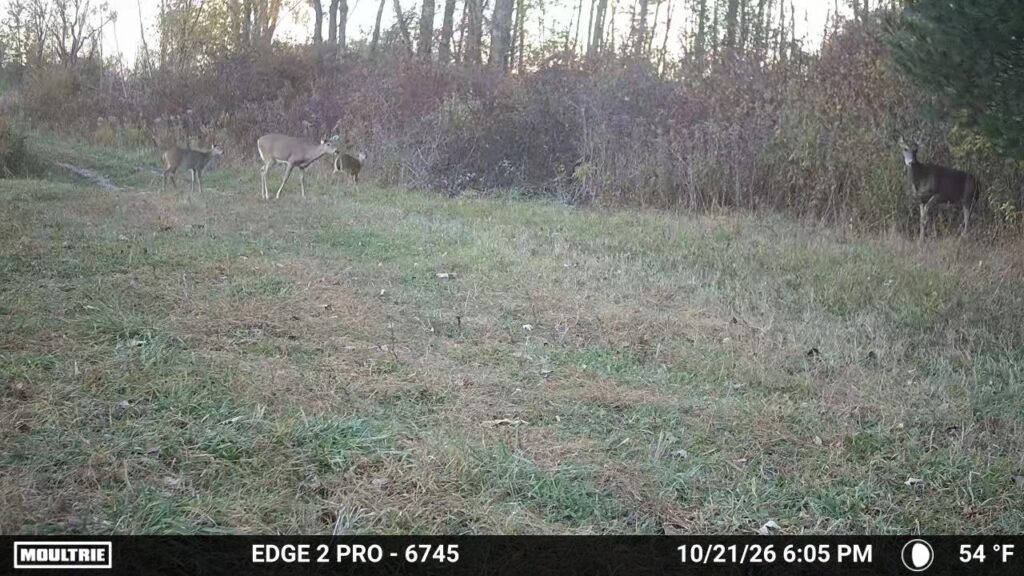
What Makes Him a Button Buck
A button buck is a male fawn in his first year. The small bumps on his head mark the developing antler bases, called pedicles. They can be difficult to see without a close look, especially while the young buck still resembles a female fawn. New York’s deer identification guide notes that buck fawns may have a flatter-looking head between the ears, with visible nubs or “buttons.”
Those little buttons are not the antlers he will carry as a yearling. His first substantial set begins growing the following spring, when he is roughly 10 months old. By autumn, fawns have also lost their spotted coats, making a close camera image especially useful for figuring out who is who.
Has He Left the Family?
Seeing him alone made us wonder if his mother had given him his marching orders. However, a solitary button buck hasn’t necessarily left his family for good. New York’s hunting guide specifically notes that button bucks often travel alone. A camera records a moment, so separate appearances don’t tell us how much time he still spends with the others.
Permanent departure from the area where a deer was born is called dispersal. In Penn State’s research, about 75% of young males dispersed as yearlings. The main departure periods were spring, around the arrival of the next crop of fawns, and fall during the breeding season. Those findings concern males around a year old or older, rather than this year’s button bucks.
For now, our little buck is appearing on his own while the two young females remain with the doe. We suspect we’re still watching the same family, but we’ll need more sightings to follow what happens next. That gives us another reason to check the cameras. The video below is of the family in early August. The fawns still have spots.
🌿 Gear Up for a Bee-Friendly Garden
Contains affiliate links, for full disclosure, see FTC Disclosure, here.
Looking for tools that actually work?
We’ve pulled together our favorite picks for beekeeping, gardening, and pollinator-friendly seeds—everything you need to support bees and grow a thriving space.
Browse the full list on Amazon — all in one spot.