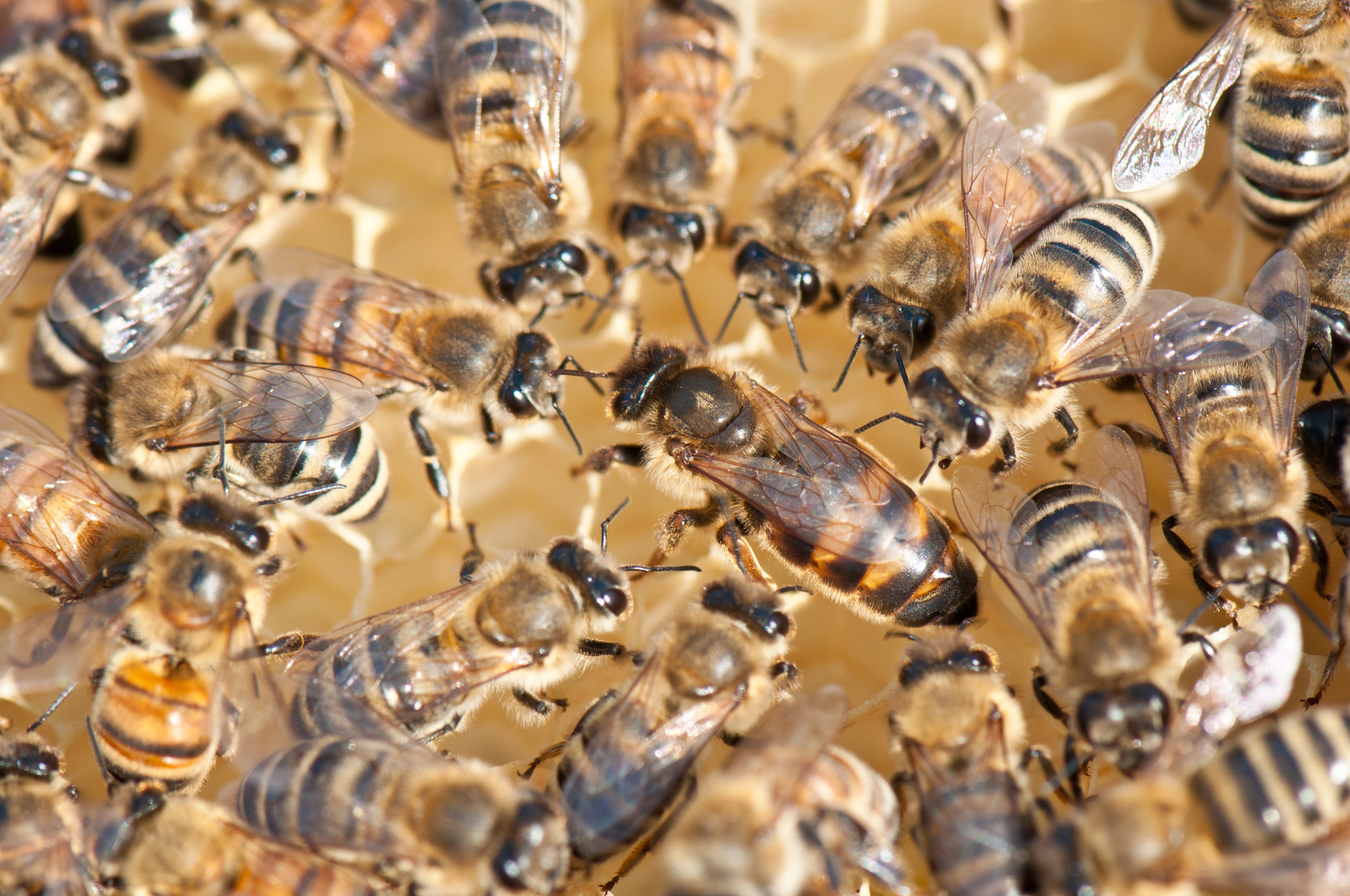
Queen bee facts go way beyond “she lays all the eggs.” The queen controls the hive, signals with scent, and can live for years while her workers live just weeks. This post breaks down what really sets her apart.
Queen bees don’t come from royalty; they’re made that way. Every queen starts life just like any other bee: as a regular egg. What sets her apart isn’t genetics, it’s food, timing, and the decisions made by the rest of the hive.
Here’s a closer look at how queen bees are created, what they do, and why they’re so important to the life of a hive.
👑 She’s Not Born, She’s Built
All female honey bees—workers and queens—have the same DNA. What turns a larva into a queen isn’t biology alone, but what she’s fed. Larvae that are chosen to become queens get royal jelly, a protein-packed substance made by nurse bees.
Royal jelly jumpstarts her development:
- Her ovaries fully form, so she can lay eggs
- Her lifespan stretches from just weeks (worker) to years
- Her body size gets bigger
- Her scent glands develop to produce pheromones that keep the colony in order
The result? A queen who’s biologically capable of producing thousands of eggs, every single day.
🐝 A Queen’s Only Job Is to Lay Eggs
She doesn’t gather nectar or build a comb. She doesn’t defend the hive or clean it. A queen’s job is to keep the population going. During peak season, a healthy queen can lay more than 1,500 eggs per day.
Her egg-laying pattern shapes everything:
- The colony’s size
- The timing of swarms
- The hive’s overall health and future
If she slows down or becomes infertile, the bees will replace her.
🚨 Emergency Queens Happen Fast
If the hive suddenly loses its queen, the workers don’t panic—they get to work. Within hours, they’ll start raising a new queen by choosing very young larvae and feeding them royal jelly.
This emergency move is called supersedure if the old queen is still around but failing. If she’s completely gone, it’s called a queenless emergency response.
Either way, the hive doesn’t just wait and hope. It acts.
🐝 Fun Queen Bee Facts
- She takes one mating flight and stores enough sperm to last her entire life (3–5 years if she’s healthy).
- Her pheromones help keep the colony calm and organized.
- Only one queen per hive: if a second emerges, one will usually be killed.
- If multiple queen cells hatch at once, they fight until only one remains.
- Beekeepers can mark queens with different colors to track their age by year.
🧬 The Entomology Bit
Insect scientists (entomologists) love queen bees because they’re one of the best examples of epigenetics, where gene expression changes due to environment or nutrition, not DNA. Royal jelly doesn’t rewrite her genes. It flips certain switches during larval development that cause her body to grow and function differently.
This is also why you can raise a queen from an ordinary worker larva, it’s all in the timing and treatment, not special lineage.
🐝 The Hive Revolves Around Her
Even though she doesn’t rule in a human sense, the queen is essential to hive survival. Without her:
- The population dwindles
- The structure breaks down
- The future disappears
Bees instinctively know this. That’s why they always have a backup plan, and why understanding how queens work helps you understand how the entire hive works.
🌿 Gear Up for a Bee-Friendly Garden
Contains affiliate links, for full disclosure, see FTC Disclosure, here.
Looking for tools that actually work?
We’ve pulled together our favorite picks for beekeeping, gardening, and pollinator-friendly seeds—everything you need to support bees and grow a thriving space.
Browse the full list on Amazon — all in one spot.