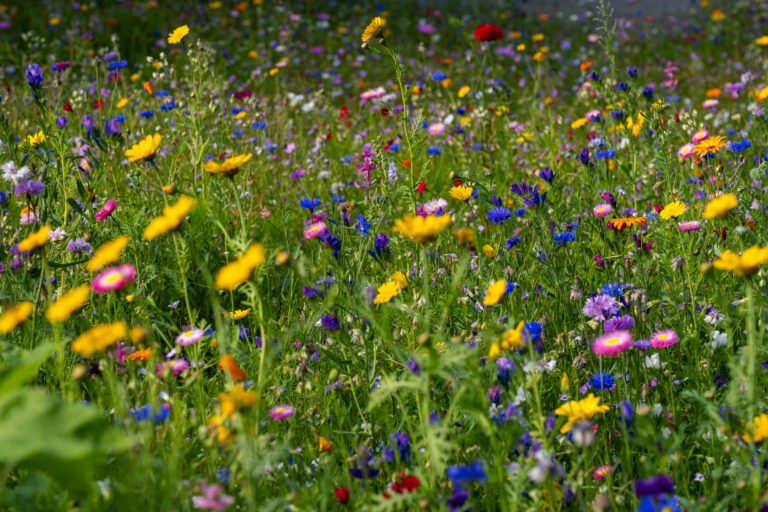


Bee-friendly gardens start with the right seeds. Plant these wildflowers and you’ll have blooms that attract pollinators from spring through fall, turning your yard into a nectar-rich hotspot. These bee-friendly wildflower seeds are easy to grow, widely available, and proven to support pollinators. Mixing annuals and perennials will keep your garden colorful and buzzing all season long.
Contains affiliate links. For full disclosure, see FTC Disclosure here.
1. Purple Coneflower (Echinacea purpurea)

A hardy perennial with large pinkish-purple petals surrounding a spiny orange center. It blooms from midsummer into fall, drawing in native bees, honeybees, and butterflies. Plant in full sun for the strongest stems and the longest-lasting blooms.
Echinacea purpurea. I earn a commission if you buy through these affiliate links, at no extra cost to you.
2. Black-Eyed Susan (Rudbeckia hirta)

Bright yellow petals and dark brown centers make this a summer favorite for pollinators. Bees, butterflies, and beetles visit regularly for nectar and pollen. It’s drought-tolerant once established and thrives in sunny borders or meadow plantings.
Rudbeckia hirta.
3. Lanceleaf Coreopsis (Coreopsis lanceolata)

Cheerful golden-yellow blooms appear in early summer and last for weeks. This perennial thrives in poor, sandy soils where many other flowers struggle. It attracts a wide variety of native bees and is perfect for naturalized plantings.
Coreopsis lanceolata.
4. Blanketflower (Gaillardia pulchella)

A heat-loving annual with fiery red and yellow petals that bloom nonstop until frost. Its nectar draws in bumblebees, solitary bees, and butterflies. Deadheading will encourage even more blooms through the season.
Gaillardia pulchella.
5. Blue Flax (Linum perenne)
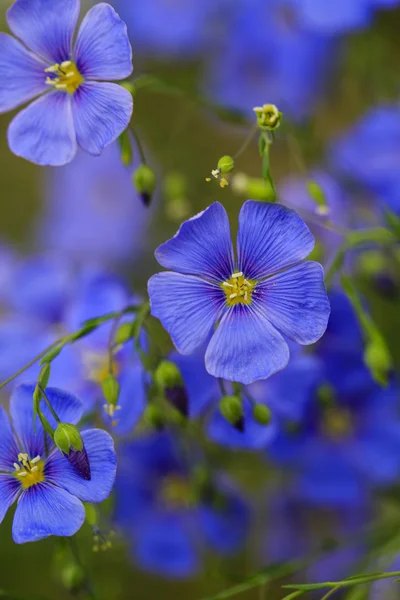
Delicate sky-blue flowers open in the morning and close by midday, offering a steady food source for small native bees. This perennial is drought-tolerant and self-seeds easily once established. Plant in clusters for the best visual impact and pollinator draw.
Linum perenne.
6. Plains Coreopsis (Coreopsis tinctoria)

Bicolor petals in shades of gold and red make this annual a striking addition to any pollinator garden. It’s easy to grow from seed and blooms quickly in full sun. Bees and hoverflies flock to its pollen-rich centers all summer.
Coreopsis tinctoria.
7. Wild Bergamot (Monarda fistulosa)

Also known as bee balm, this native perennial produces lavender-pink flower clusters in midsummer. Its tubular blooms are rich in nectar, attracting bumblebees, honeybees, hummingbirds, and butterflies. Plant in sunny spots with well-drained soil for the best results.
Monarda fistulosa.
8. California Poppy (Eschscholzia californica)

Golden-orange flowers brighten up the garden from late spring through summer. Bees are drawn to their abundant pollen, and the plants thrive with little water once established. Scatter seeds in fall or early spring for the earliest blooms.
Eschscholzia californica.
9. Cosmos (Cosmos bipinnatus)

Tall, airy stems with daisy-like flowers make this annual a favorite for both gardeners and pollinators. Bees, butterflies, and even beneficial predatory insects visit daily. Deadheading encourages more blooms, and it reseeds easily year after year.
Cosmos bipinnatus.
10. Cornflower (Centaurea cyanus)

Bright blue blooms provide a rich nectar source that’s especially attractive to honeybees and bumblebees. This hardy annual thrives in poor soils and can handle light drought. Plant in large drifts for a showy display and a steady stream of pollinator visitors.
Centaurea cyanus.
11. Zinnia (Zinnia elegans)
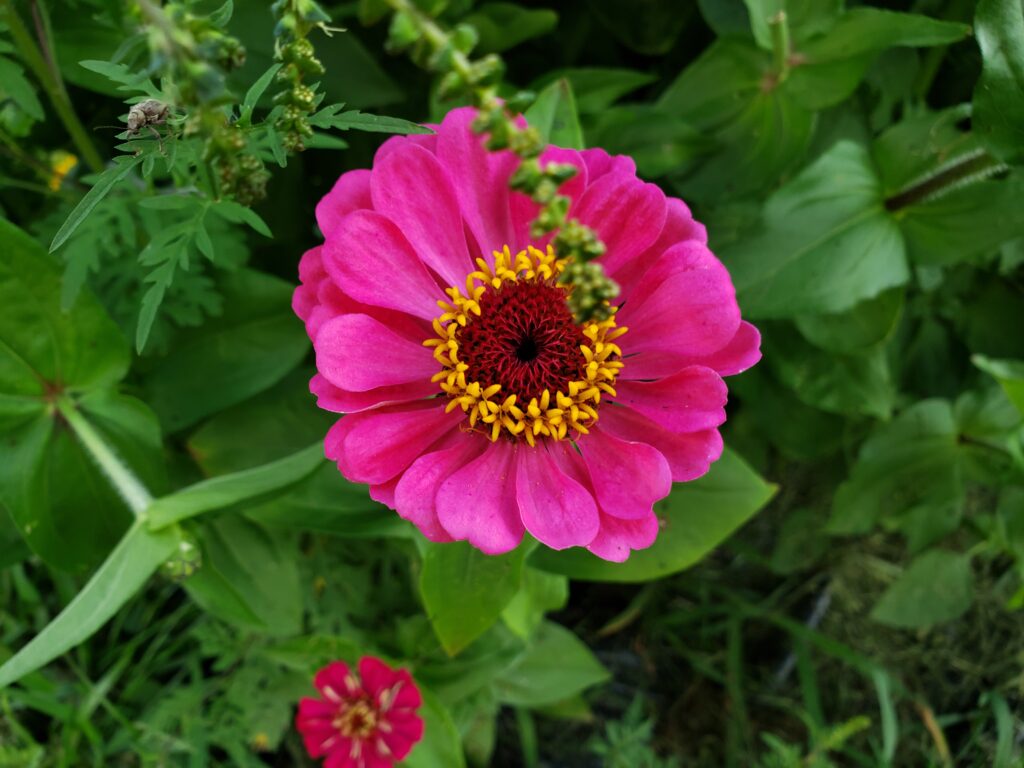
Available in nearly every color except blue, zinnias are long-lasting annuals that bloom until frost. Bees, butterflies, and hummingbirds all visit for nectar. They’re heat-tolerant and ideal for cutting gardens and pollinator borders.
Zinnia elegans.
12. Sunflower (Helianthus annuus)

Towering stems topped with large, pollen-rich blooms provide food for bees during summer. Once flowers fade, seeds feed birds through fall and winter. Choose branching varieties for multiple blooms and extended pollinator activity.
Helianthus annuum.
13. Lupine (Lupinus perennis)

Spikes of pea-like flowers bloom in late spring, feeding bumblebees and specialist butterflies like the Karner blue. This perennial prefers well-drained soil and sunny to lightly shaded spots. Plant in groups to create a bold early-season display.
Lupinus perennis.
14. Goldenrod (Solidago spp.)

A vital late-season nectar source for bees preparing for winter. Its bright yellow blooms also support butterflies, moths, and beneficial wasps. Plant in full sun and allow space for spreading over time.
Solidago spp.
15. New England Aster (Symphyotrichum novae-angliae)

Tall stems covered in purple flowers bloom from late summer into fall. These perennials provide essential nectar when few other plants are in flower. They thrive in sunny, moist soils and can naturalize into larger clumps.
Symphyotrichum movae-angliae.
Help Pollinators Thrive
Planting a variety of these bee-friendly wildflower seeds will ensure you have blooms throughout the season. The more diversity you plant, the more pollinator species your yard will support.
For more planting ideas, see our guide to Native Plants for Pollinators.
Contains affiliate links, for full disclosure, see FTC Disclosure, here.
🌿 Gear Up for a Bee-Friendly Garden
Contains affiliate links, for full disclosure, see FTC Disclosure, here.
Looking for tools that actually work?
We’ve pulled together our favorite picks for beekeeping, gardening, and pollinator-friendly seeds—everything you need to support bees and grow a thriving space.
Browse the full list on Amazon — all in one spot.